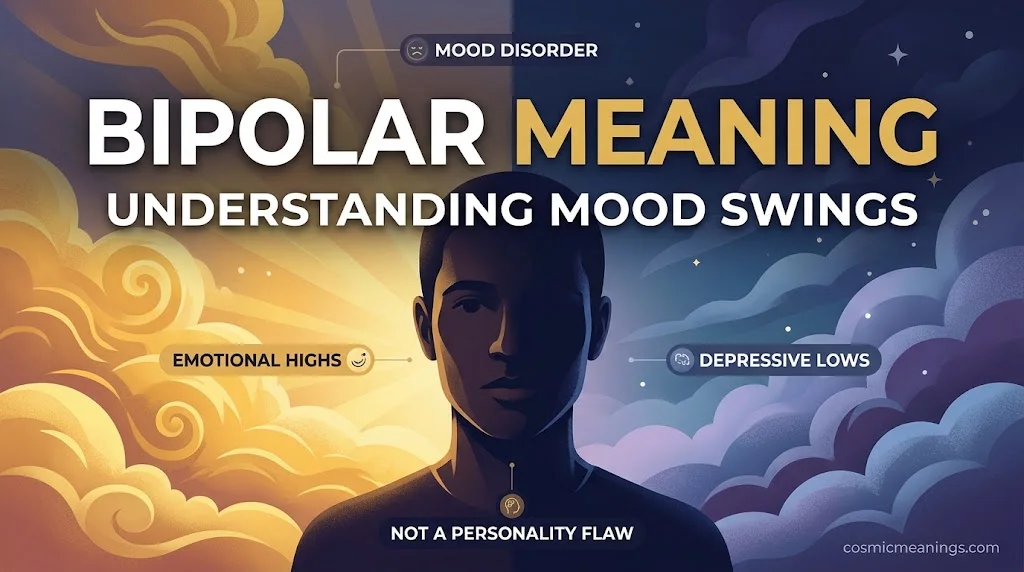
The bipolar meaning is simple. It describes a mental health condition that causes big swings in mood, energy, and activity.
About 3 in 100 US adults live with bipolar disorder in a given year. This guide explains the bipolar definition, the main symptoms, the causes, and when to get help.
Table of Contents
Bipolar Meaning: What Is Bipolar Disorder?
What does bipolar mean? The word means “two poles.” In health, bipolar disorder is a lifelong mood disorder with emotional highs (mania or hypomania) and lows (depression). Doctors once called it manic depression.
A dictionary traces the word to 1806. It also covers other uses, such as electronics and the polar regions. Here, it means the mental health condition.
Everyone has good and bad days. Bipolar mood changes are different. They are stronger, last longer, and disrupt sleep, work, and relationships.
A depressive episode is not a bad week. The WHO says symptoms last most of the day, nearly every day, for at least two weeks.
Between episodes, many people feel steady again. Doctors call this euthymia.
Bipolar disorder is not:
- A weakness or a character flaw
- A “split personality”
- Simple moodiness
It also isn’t one fixed pattern. Classic cases affect about 1 to 2% of people. Counting milder forms, the figure may pass 5%.
Understanding bipolar disorder involves recognizing how mood, behavior, and emotions can shift over time. Similarly, knowing the meaning of “indeed” helps you express agreement, emphasize a point, or confirm something clearly in everyday conversations and writing.
Bipolar Disorder Symptoms and Types Explained
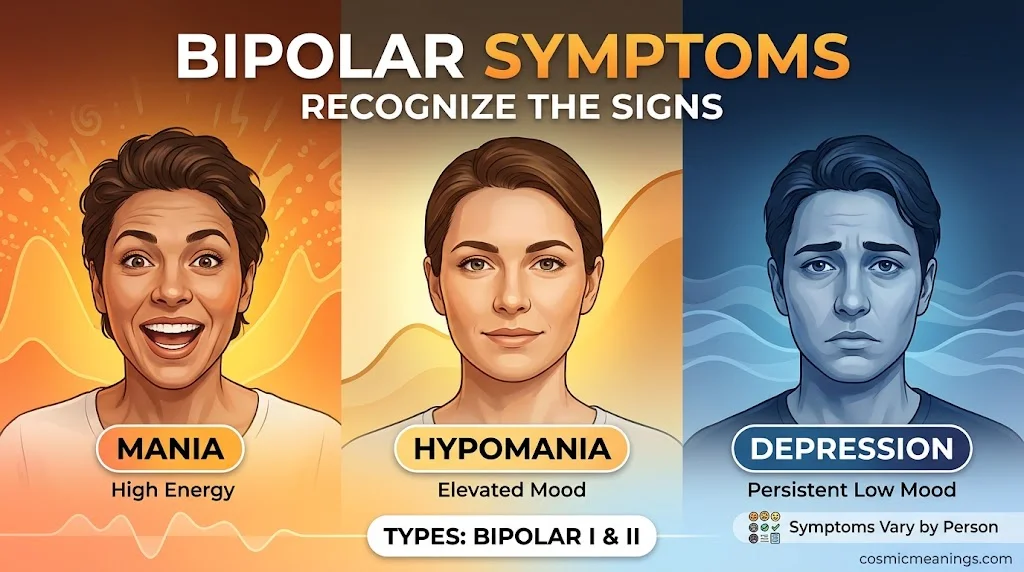
What are the symptoms of bipolar disorder? They fall into three groups: mania, hypomania, and depression.
Manic episode symptoms include:
- Very high energy or euphoria
- Racing thoughts and fast talking
- Little need for sleep
- Inflated self-confidence (grandiosity)
- Impulsive or risky choices, such as overspending
Mayo Clinic says an episode includes three or more of these signs. Severe mania can cause psychosis, a break from reality. It may need hospital care.
Hypomania is a milder form. A person may feel productive and sharp. Friends often notice the change before the person does.
Depressive episode symptoms include:
- Deep sadness or hopelessness
- Loss of interest in things once enjoyed
- Fatigue and trouble focusing
- Sleep and appetite changes
- Thoughts of death or suicide
Mayo Clinic says depression needs five or more symptoms.
Some people have a mixed episode, with high energy and low mood at once. Others have rapid cycling, which means four or more episodes in a year.
What are the types of bipolar disorder?
| Type | Key pattern |
|---|---|
| Bipolar I | At least one full manic episode, lasting a week or more |
| Bipolar II | Hypomania plus major depression, never full mania |
| Cyclothymia | Mild highs and lows for two years or more |
| Other specified | Patterns that don’t fit the types above |
Bipolar II is not “mild bipolar.” Depression often lasts longer in this type, as Cleveland Clinic and Mayo Clinic explain.
Bipolar disorder can look like major depression, ADHD, or anxiety. That is why misdiagnosis is common, as the WHO notes.
In children and teens, the main sign is severe mood swings that differ from their usual ones.
If you are in crisis, call or text 988 in the US, or go to the nearest emergency room. The 988 Lifeline is free and open 24/7.
Causes and Risk Factors of Bipolar Disorder
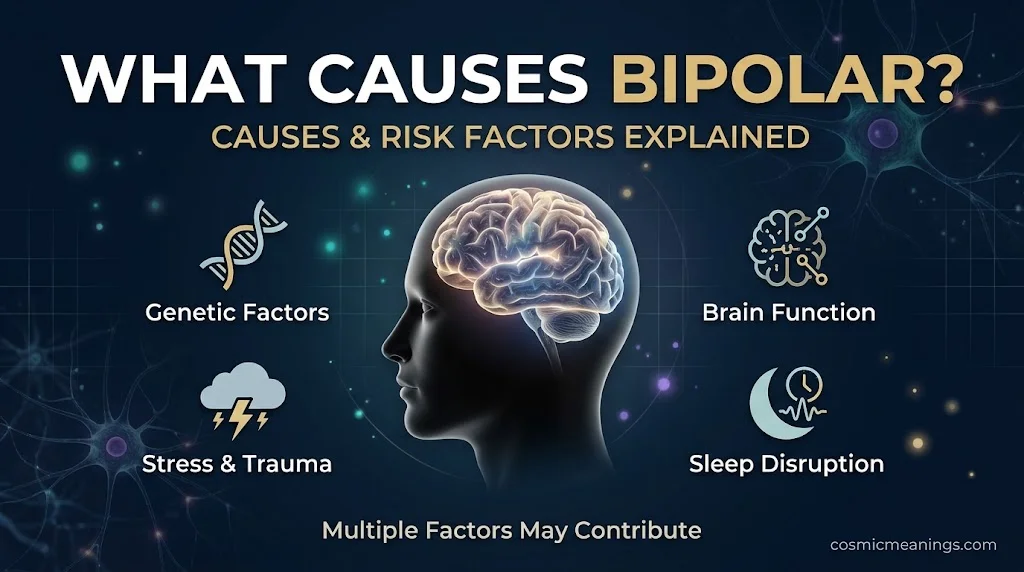
What exactly causes bipolar? No one knows for sure. Experts think several factors add up over time.
Main contributors:
- Genetics: A parent or sibling with the condition raises risk. No single gene causes it.
- Brain chemistry: Differences in neurotransmitters like dopamine and serotonin may play a role.
- Brain structure: Some scans show small differences in how brain areas connect.
- Epigenetics: Stress and life events can change how active certain genes are.
Common risk factors and triggers:
- Childhood trauma, such as abuse or neglect
- Major stress, like a death, divorce, or job loss
- Alcohol or drug misuse
- Sleep disruption
- Antidepressants taken without a mood stabilizer
Bipolar disorder is not caused by poor parenting or lack of willpower. And because the cause is unknown, there is no sure way to prevent it. Early treatment can still keep symptoms from getting worse.
Bipolar Disorder Diagnosis, Treatment & When to Get Help
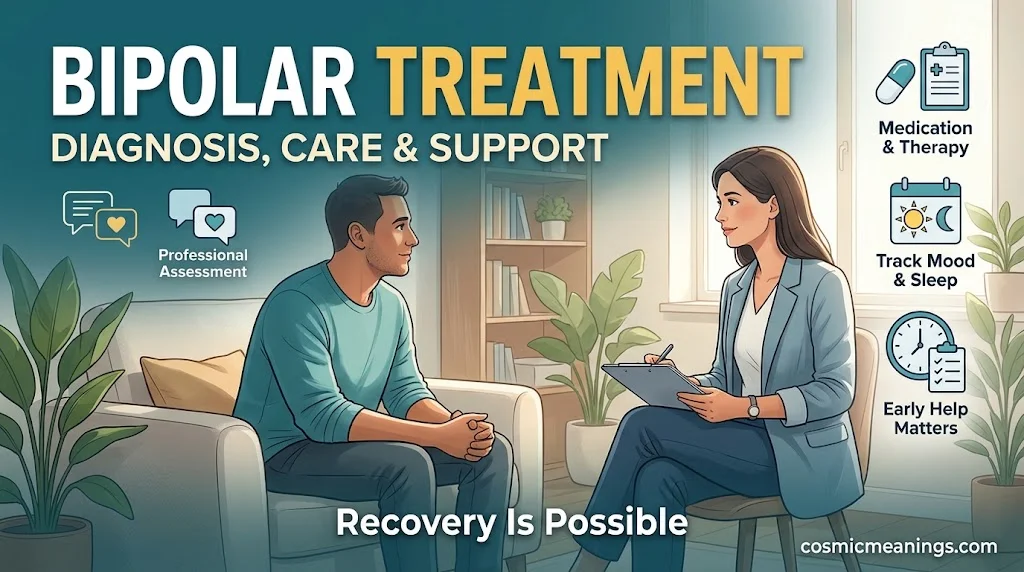
How is bipolar disorder diagnosed? No blood test or brain scan can confirm it. A doctor reviews your symptoms, your history, and your mood patterns over time. They use DSM-5 criteria. They may also speak with a loved one, who can spot changes you miss.
Diagnosis can take time. A mood diary that tracks sleep and mood helps.
How is bipolar disorder treated? Treatment usually combines medicine and therapy. The WHO says medicine is essential but rarely enough alone.
Medicines:
- Mood stabilizers, such as lithium or valproate
- Atypical antipsychotics
- Antidepressants, only alongside a mood stabilizer
Therapy:
- Cognitive behavioral therapy (CBT)
- Interpersonal and social rhythm therapy (IPSRT)
- Psychoeducation and family therapy
For hard-to-treat cases, doctors may suggest ECT, TMS, or ketamine.
Daily habits also help. Keep a steady sleep routine, avoid alcohol and drugs, and learn your early warning signs. Take your medicine as prescribed, even when you feel well. Stopping on your own can bring symptoms back.
See a doctor or mental health professional if you notice:
- Several days of unusually high energy with little sleep
- Low mood that lasts two weeks or more
- Risky behavior that is out of character
- Mood changes that affect work, school, or relationships
Bipolar disorder is serious, and care matters. The WHO reports that people with the condition die about 13 years earlier on average, often from untreated physical illness and suicide risk. But recovery is possible. With steady care, many people live full, productive lives.
For support, NAMI and the Depression and Bipolar Support Alliance offer free resources for patients and families.
FAQs
What is a bipolar person like?
There is no single “type.” A person with bipolar disorder has moods that swing between highs and lows, with steady times in between. Behavior during episodes comes from the illness, not their character.
What is bipolar in a woman?
The condition is about equally common in men and women, but women are diagnosed more often, per the WHO. Women may have more depressive episodes and faster mood switches. Symptoms can also appear during pregnancy.
What are 5 symptoms of bipolar disorder?
Five common signs are extreme highs or irritability, racing thoughts, little need for sleep, deep sadness or hopelessness, and risky or impulsive behavior.
What exactly causes bipolar?
No single cause is known. Genetics, brain chemistry, and stress or trauma likely combine over time.
At what age does bipolar start?
It can start at any age. Most people are diagnosed in their teens or early 20s, according to Mayo Clinic.
Conclusion
Now you know the bipolar meaning. It is a treatable mood disorder, not a weakness or a personality flaw. Knowing the symptoms, types, and causes helps you spot problems early. Early help leads to better outcomes. If any of this sounds familiar, talk to a doctor or mental health professional soon.
This article is for education only. It does not diagnose or replace medical advice.

Timmy Vicky is a passionate spiritual writer, researcher, and the creative mind behind CosmicMeanings.com. With a deep fascination for the universe, symbolism, and the hidden messages of life, Timmy dedicates his work to helping people uncover the deeper meaning behind everyday experiences.