It’s 2 a.m. Your body is tired, but your mind won’t switch off. You check the clock again and dread the alarm. For millions of Americans, this is a regular night.
The insomnia meaning is simple: it’s a sleep disorder that makes it hard to fall asleep or stay asleep. This guide covers the insomnia definition, key insomnia symptoms, and the early warning signs of insomnia. You’ll also learn when to get help.
Table of Contents
What Is Insomnia? Insomnia Definition in Plain Words
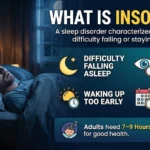
What is insomnia meaning? It’s a common sleep disorder. You struggle to fall asleep, stay asleep, or sleep long enough, even with time and a quiet bed. You then feel tired the next day.
The word comes from Latin. In means “not,” and somnus means “sleep.”
Is one bad night insomnia? No. Almost everyone has a rough night. Insomnia is different. It shows up often and hurts your daytime life.
Doctors use a clear rule for chronic insomnia. Trouble sleeping happens at least three nights a week. It lasts three months or more. It also happens even when you have a good chance to sleep.
Is insomnia the same as sleep deprivation? Not quite. With insomnia, you can’t sleep even when you try. With sleep deprivation, you simply don’t give yourself enough time to sleep.
How common is it? About 30% of adults report at least one insomnia symptom. Around 10% meet the full medical definition. Most adults need 7 to 9 hours of sleep a night.
Understanding insomnia often involves looking beyond sleep habits to identify factors that affect your overall well-being, including financial stress and major life changes. For those planning to buy their first home, understanding the meaning of a mortgage and how home financing works can help make one of life’s biggest financial decisions less overwhelming.
Types and Causes of Insomnia
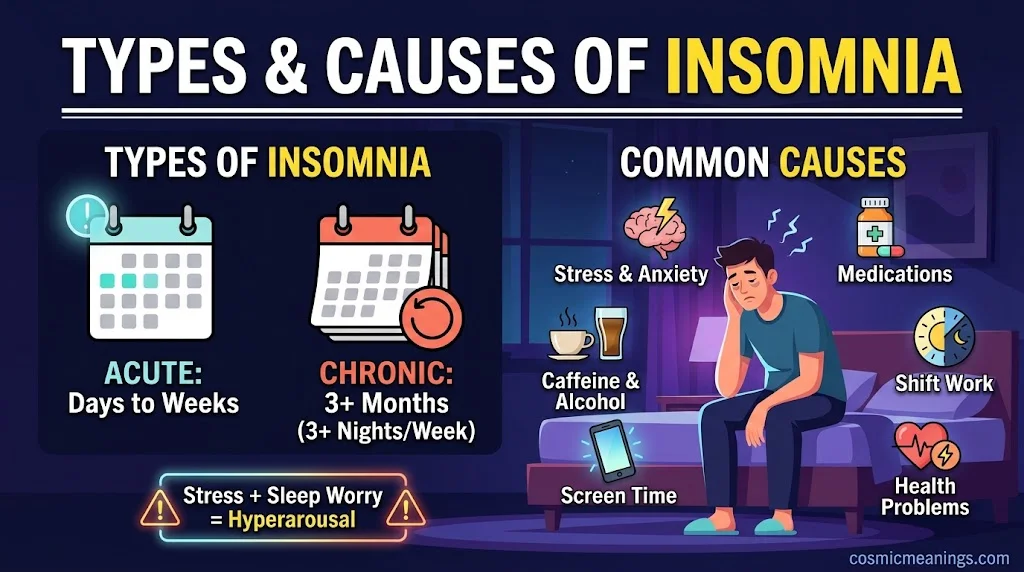
What are the types of insomnia? Doctors sort it mainly by length of time.
Feature
Acute insomnia
Chronic insomnia
Length
Days to a few weeks
3 months or longer
Common trigger
Stress, travel, bad news
Ongoing stress, habits, health issues
Outlook
Often fades on its own
Usually needs treatment
Doctors also use two other labels. Primary insomnia stands alone. Secondary insomnia comes from another problem, such as pain or depression.
What causes insomnia? Many things can. The most common ones are:
Stress, worry, and major life events
Anxiety and depression
Caffeine, nicotine, and alcohol
Shift work and jet lag, which upset your circadian rhythm
Late meals, naps, and screen time before bed
Some medications, including certain antidepressants and decongestants
Health issues like sleep apnea, restless legs syndrome, acid reflux (GERD), chronic pain, and an overactive thyroid
Some people face a higher risk. These include women, adults over 60, and shift workers. Hormone shifts during menopause and pregnancy can also disrupt sleep.
Stress often starts the problem. Then worry about sleep keeps it going. Experts call this hyperarousal. Your brain stays on alert, and sleep slips further away.
Insomnia Symptoms and Early Warning Signs
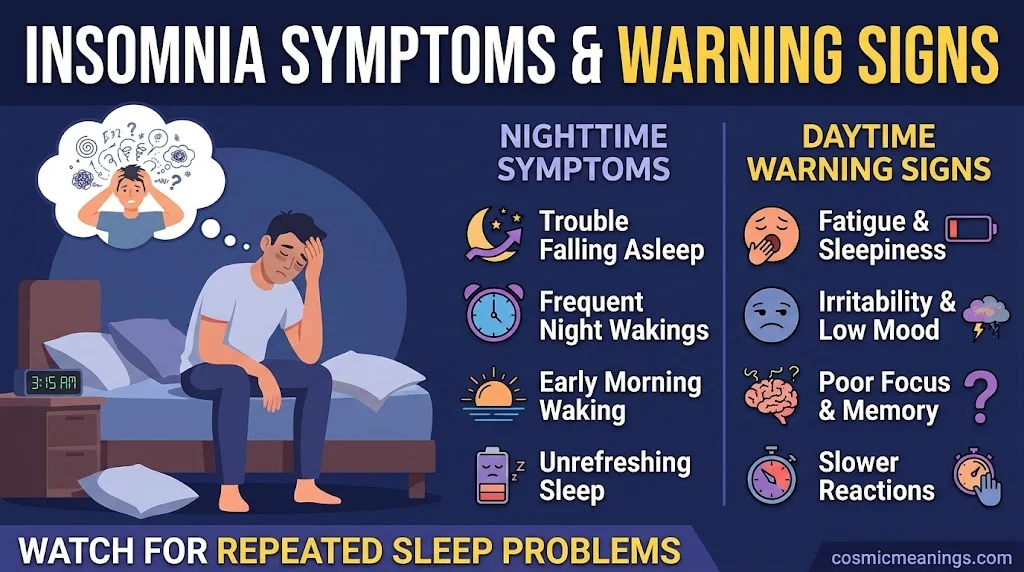
What are the symptoms of insomnia? They show up both at night and during the day.
At night, you may:
Take a long time to fall asleep
Wake up several times
Wake too early and can’t drift back
Wake up feeling unrefreshed
During the day, you may feel:
Tired or sleepy
Cranky, anxious, or low
Unable to focus or remember things
Clumsy, with slower reactions
These effects matter. People with insomnia are 2.5 to 4.5 times more likely to have an accident.
What are the early warning signs of insomnia? Catching them early makes it easier to stop a bad pattern. Watch for these:
You lie awake for a long time on several nights each week.
You watch the clock and dread bedtime.
You lean on coffee to get through the day.
You use alcohol or sleep aids to fall asleep.
Your mood gets shorter, or small things upset you.
You feel foggy, or your reactions feel slow behind the wheel.
How do I know if my insomnia is becoming chronic? Be alert if poor sleep lasts past three or four weeks. Another sign is when fear of not sleeping starts to take over your evenings.
Symptoms can also differ by age. Teens often have a later body clock, so they fall asleep late. Older adults tend to feel sleepy early and wake early.
When to See a Doctor for Insomnia
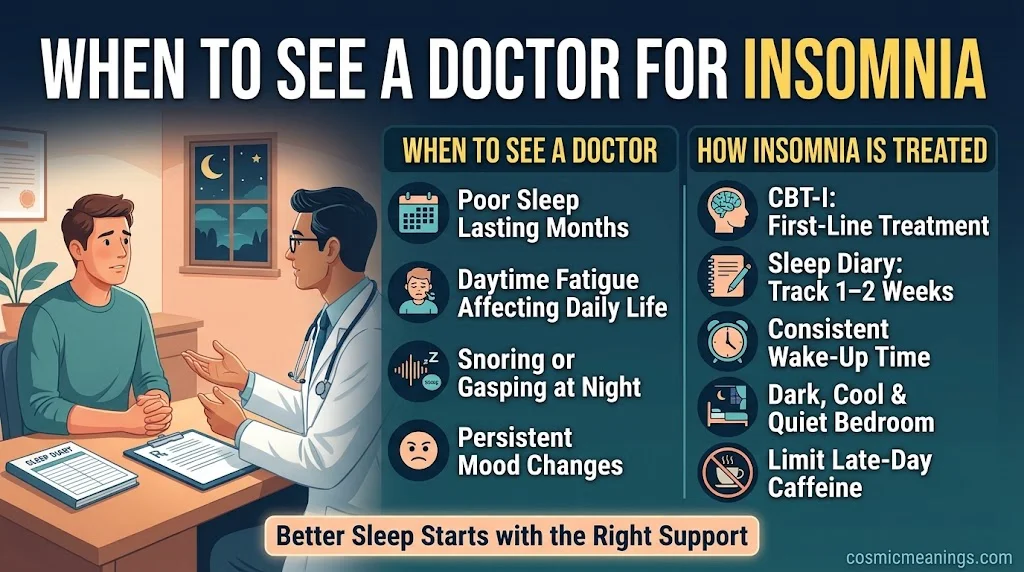
When should I see a doctor for insomnia? Book a visit if poor sleep lasts for months or if self-help isn’t working. Go sooner if it hurts your work, mood, or safety.
Some signs need quick attention. Loud snoring with gasping may point to sleep apnea. A strong urge to move your legs at night may signal restless legs syndrome. Ongoing low mood with poor sleep also calls for a check-up.
How is insomnia diagnosed? Your doctor asks about your health, habits, and medicines. You may need tests to rule out other conditions. A sleep specialist may also order a sleep study.
Before your visit, keep a sleep diary for one or two weeks. Write down bedtime, wake time, caffeine, and medicines.
What is the best treatment for insomnia?Cognitive behavioral therapy for insomnia (CBT-I) is the first-line treatment. It changes the habits and thoughts that keep you awake. It usually takes six to eight sessions. Doctors may add medicine for a short time.
You can start tonight with good sleep hygiene:
Wake up at the same time every day.
Keep your room dark, cool, and quiet.
Skip screens for about an hour before bed.
Avoid caffeine, nicotine, and alcohol late in the day.
Don’t eat a big meal close to bedtime.
This article is for education only. It isn’t medical advice.
FAQs
What are the main causes of insomnia?
Stress, anxiety, and depression top the list. Poor sleep habits, caffeine, alcohol, shift work, some medicines, and health problems like pain or sleep apnea also play a role.
How do I treat my insomnia?
Start with steady sleep habits. If they don’t help, ask about CBT-I, the first-line treatment. Doctors may prescribe medicine for short periods. Pharmacy sleep aids are meant for only one to two weeks. Evidence that melatonin helps is limited.
Is insomnia very serious?
An occasional bad night is rarely a worry. Long-term insomnia is more serious. It can raise the risk of depression, anxiety, high blood pressure, heart disease, and accidents.
Is insomnia a mental illness?
No. It’s classed as a sleep-wake disorder. It often appears alongside anxiety or depression, though. About 40% of people with insomnia also have a psychiatric condition.
Can stress cause insomnia?
Yes. Stress is one of the most common triggers. Short bursts of stress cause short-term insomnia. Stress that lingers can lead to long-term insomnia.
Conclusion
Insomnia means more than a rough night. It’s a real sleep disorder with clear symptoms and early warning signs. Spotting them early gives you a head start. Simple habit changes help many people, and CBT-I helps even more. If poor sleep keeps dragging on, talk to your doctor and get the rest you deserve.
Timmy Vicky is a passionate spiritual writer, researcher, and the creative mind behind CosmicMeanings.com. With a deep fascination for the universe, symbolism, and the hidden messages of life, Timmy dedicates his work to helping people uncover the deeper meaning behind everyday experiences.