Your clock stops. Not just once, it happens again, at a time that feels too exact to be random.
Most people blame the battery. But a growing number of people believe a spiritual meaning of clock stopping that a fresh battery can’t fix. This guide breaks down what a stopped clock may really be telling you, and what science says too.
Table of Contents
What Does It Mean When a Clock Stops Working?
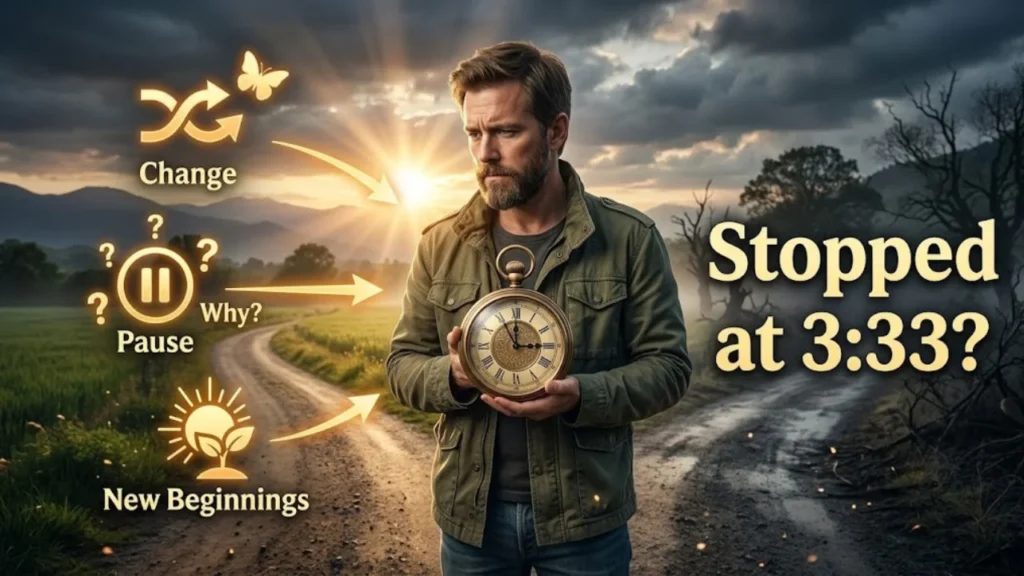
A clock is built to move. When it stops, that break in motion tends to grab your attention faster than almost any other household sign.
Spiritually, a stopped clock is often read as a pause button placed on your life. It’s less about the object and more about the moment you noticed it.
According to Britannica, a clock is a mechanical or electrical device built around regular movement and a counting mechanism, meaning it’s designed for consistency. When that consistency breaks, people naturally look for a reason.
The spiritual meaning of clock stopping usually points to one of three things: a message, a warning, or an invitation to slow down. Context decides which one applies.
A clock stopped during a stressful week reads differently than one stopped the same minute a phone call came in about a loved one.
Must Visit: Right Nipple Itching Superstition: 11 Spiritual Meanings You Should Know
11 Spiritual Meanings of a Clock Stopping
Each meaning below reflects a different emotional or spiritual state. Read the one that matches your situation right now.
Transformation A stopped clock often shows up right before a major life shift. Old habits, jobs, or relationships may be ending. This is your cue for personal transformation — not a threat, but an opening.
Reflection Time freezes so you can think clearly. This meaning invites self-reflection without judgment. Ask yourself what you’ve been avoiding.
Pause Constant busyness has a cost. A stopped clock can be a nudge toward rest, especially if you’ve been running on empty for weeks.
Awareness Some people report noticing more, sounds, feelings, small details, right after a clock stops. This heightened spiritual awareness tends to fade fast, so use it while it lasts.
Change and Transition Clocks don’t stop during stable periods as often as they do during life transitions. Moving, changing jobs, or ending a relationship are common backdrops.
A Direct Message Some interpret a stopped clock as a sign from the universe, not vague, but specific to a decision you’re weighing.
Energetic Shift A subtler meaning: your personal energy is realigning. You might feel it as restlessness or unexplained calm.
Mindfulness The clock stopping forces stillness. That stillness is the actual lesson, being present instead of rushing to the next task.
A Warning About a Decision If the clock stopped right before or after you made a choice, some traditions treat this as a caution sign. It doesn’t mean stop entirely, it means double-check.
A Loved One’s Presence This is the most emotionally loaded meaning. Many people connect a stopped clock to a deceased loved one checking in, especially at night.
A Relationship or Twin Flame Signal Less discussed but increasingly searched: some connect a stopped clock to a twin flame or significant relationship reaching a turning point, separation, reunion, or a deeper bond forming.
Clock Stopped at a Specific Time — What It Really Means
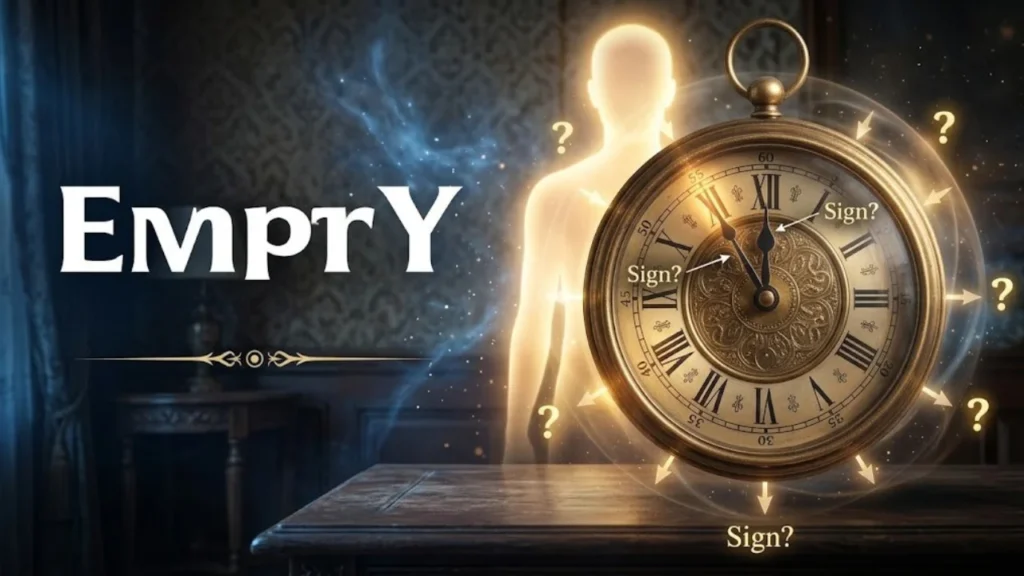
A random stop feels different from a clock frozen at 11:11 or 3:33. Repeating numbers carry their own symbolism in numerology and are often called angel numbers.
If the exact time matches a birthday, an anniversary, or the moment someone passed, the spiritual meaning of clock stopping becomes personal rather than universal. The number isn’t sending a generic message, it’s pointing at something you already carry.
Digital clocks freezing tend to feel more mechanical, since a power flicker explains it easily. Analog clocks stopping mid-motion, hands frozen, not blank, tend to feel more symbolic, because the failure is visible and specific.
A useful check: was the time meaningful before you saw the clock, or did you go searching for a reason afterward? Genuine matches usually don’t require searching.
Clock Stopping and Death: Superstition, Culture and Grief
The belief that clocks stop when someone dies goes back further than most people realize.
During the Victorian era, mourners commonly stopped household clocks at the moment of death, a practice historians link to marking the exact time of passing and, in folk belief, easing the spirit’s departure.
This custom wasn’t limited to one culture. Similar ideas appear in feng shui practice, where clock placement and movement are tied to the flow of energy, and in various Filipino and Jewish mourning customs where household objects are handled differently after a death.
Can spirits stop clocks? There’s no scientific proof of this, but the belief persists because grief changes how people notice time.
A 2023 study in Nature Communications found that emotional states influence how memories get organized into distinct episodes, which may explain why a stopped clock during grief feels more significant than one stopped on an ordinary Tuesday.
If a stopped clock brings comfort during loss, that’s a valid way to process grief. If it brings fear or distress instead, treating it as a mechanical issue, and moving on, is equally valid.
Practical Explanation and What to Do Next
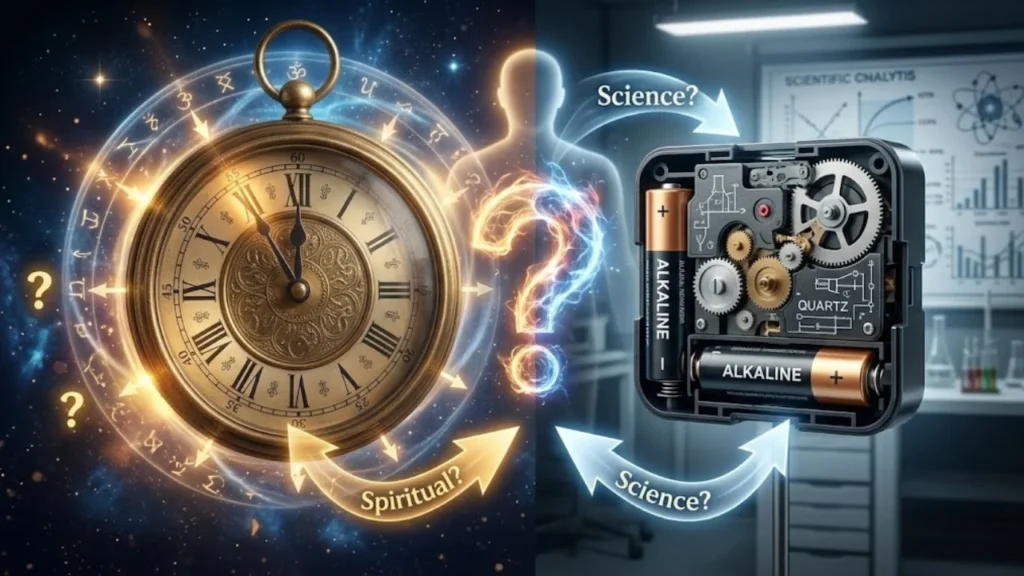
Before assigning deep meaning, rule out the obvious. A dead battery, a quartz movement issue, dust, humidity, or a recent power outage explain most stopped clocks.
There’s also a real perception effect worth knowing: researchers call it chronostasis, or the “stopped clock illusion.”
Scientific Reports describes this as a brief distortion in time perception tied to rapid eye movement toward a clock, the first second after your gaze shifts can feel longer than it actually is. This is about perception, not an object actually stopping.
To separate a sign from a simple fault, walk through this:
- Check if the battery is dead or the clock needs winding
- Note whether every clock in the room stopped, or just one
- Ask if the exact time connects to a real memory or event
- Notice your emotional reaction, calm, fear, or comfort
If the moment brings peace, you can leave the clock stopped as a small memorial. If it feels heavy, replacing the battery and letting it run again is the healthier choice. Neither option is wrong.
FAQ’s
What does a stopped clock symbolize?
A stopped clock usually symbolizes a pause, a transition, or a message worth paying attention to. The exact meaning depends on the timing and your current life situation.
What is that spiritual meaning of clock stopping ?
The best-known superstition says clocks stop at the moment of death, a tradition rooted in Victorian mourning customs. It was meant to honor the deceased and mark the precise time they passed.
Can spirits stop clocks?
There’s no scientific evidence that spirits stop clocks. Many people still believe it happens as a comforting sign from a deceased loved one, though it can’t be proven.
What does it mean when my clock stops working?
Most often it’s mechanical, a dead battery or power issue. Spiritually, it can point to a need for rest, reflection, or awareness of a coming change.
What is the saying about a stopped clock?
The common phrase is: “Even a broken clock is right twice a day.” It means something unreliable can still be accurate by chance.
Why does my clock stop at the same time?
This can happen from a recurring mechanical issue, like a weak battery or loose part. If there’s no mechanical cause, some see the repeated time as a personal sign worth reflecting on.
Conclusion
A stopped clock isn’t always a mystery, and it isn’t always meaningless either. Check the mechanics first. Then look at the timing, the memory it brings up, and how it makes you feel. That combination, not the clock alone, is where the real meaning sits.

Timmy Vicky is a passionate spiritual writer, researcher, and the creative mind behind CosmicMeanings.com. With a deep fascination for the universe, symbolism, and the hidden messages of life, Timmy dedicates his work to helping people uncover the deeper meaning behind everyday experiences.