Someone comments “that’s just for the clout” under a post. Is it praise or a dig? The clout meaning can flip with one small phrase.
This guide gives you the clear answer. You’ll see how clout works on TikTok, Instagram and YouTube, where the word came from, and how to tell earned clout from clout chasing.
Table of Contents
What Does Clout Mean on Social Media?
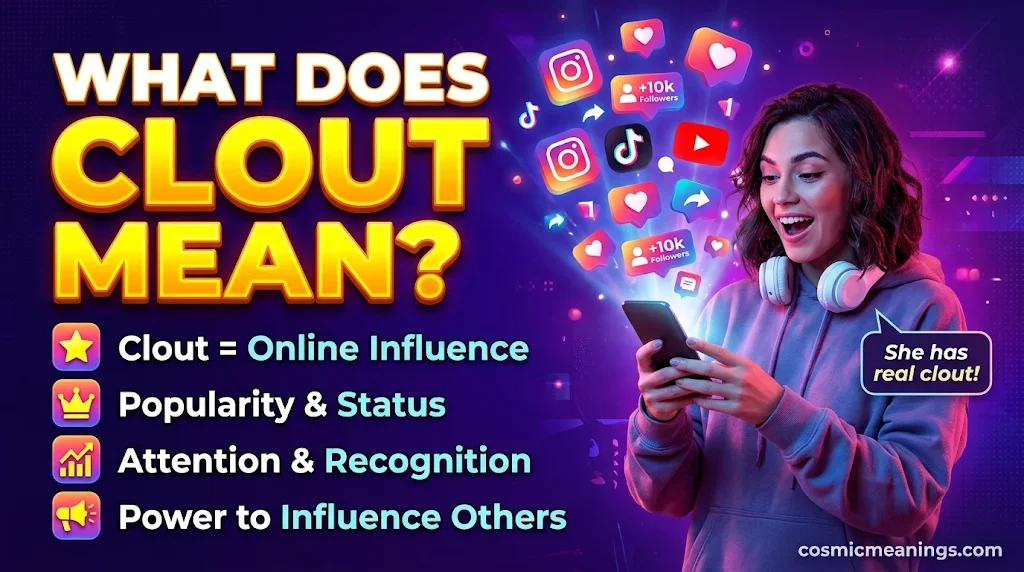
Clout on social media means influence, attention and status earned online. A person with clout can make people watch, share, buy or care. The dictionary’s slang entry adds fame, popularity and sometimes notoriety to that list.
Offline, clout has long meant political influence or business leverage. Online, it leans on visibility and engagement. Same word, new scoreboard.
Tone is the tricky part. The words around “clout” tell you how to read it.
| What you hear | Usual tone | What it signals |
|---|---|---|
| “She has real clout in the food scene.” | Admiring | Respected influence |
| “That collab gave both artists more clout.” | Neutral | A rise in status |
| “He posted it for the clout.” | Critical | Attention was the motive |
| “Zero clout, zero say.” | Dismissive | No pull at all |
| “She has industry clout.” | Respectful | Recognized authority in a field |
While social media clout often comes from standing out, gaining recognition, and expressing individuality, understanding how people experience and interact with the world can offer another perspective on individuality. Exploring the meaning of autism and its defining traits helps readers better understand neurodiversity, communication styles, and the different ways people think and experience everyday life.
Where the Word Clout Came From
Clout is far older than social media. It traces back to Old English clūt, a patch of cloth or leather, and its first known use dates to before the 12th century. It later came to mean a hard blow, a sense still alive in baseball and British English.
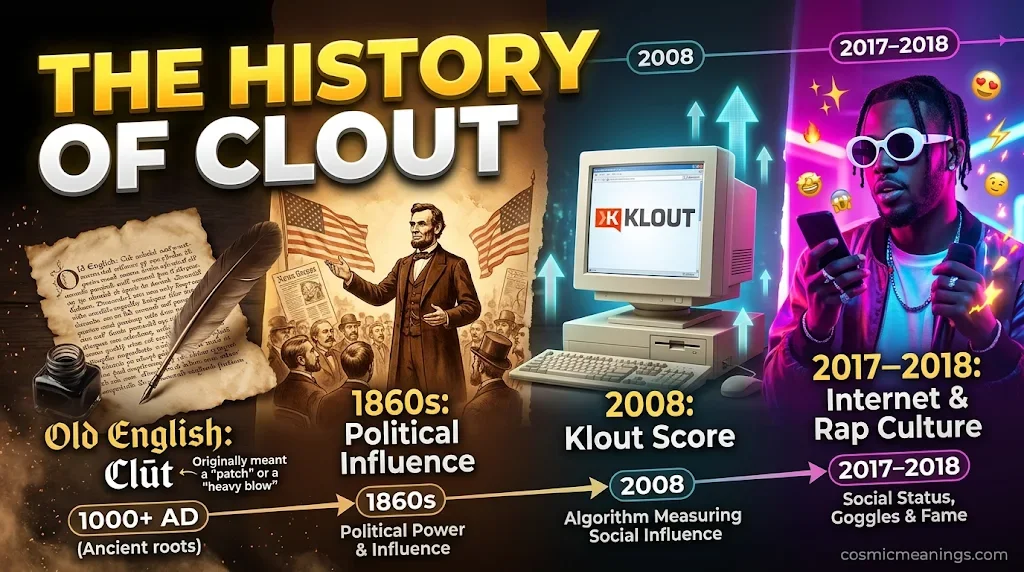
By the 1860s, Americans were using it for political influence. The idea likely grew from the force of a punch. Chicago political writing helped spread that sense through the 20th century, as the Encyclopedia of Chicago notes.
Then came the internet. In 2008, an app called Klout launched and gave people a Klout score for their online influence, according to this slang history. Turning influence into a number made the word everyday talk.
Rap culture added fuel. In June 2017, Denzel Curry wore round white sunglasses in a YouTube video and called them clout goggles. The phrase became a meme. Offset’s 2018 song “Clout,” featuring Cardi B, put the word in another hit.
No single person or app invented it. Gen Z didn’t coin it either.
The word has a few side meanings too:
- A clout nail is a short nail with a wide, flat head, used to fix sheet metal or roofing felt.
- In archery, a clout is a white cloth target on a stake.
How Social Media Clout Works
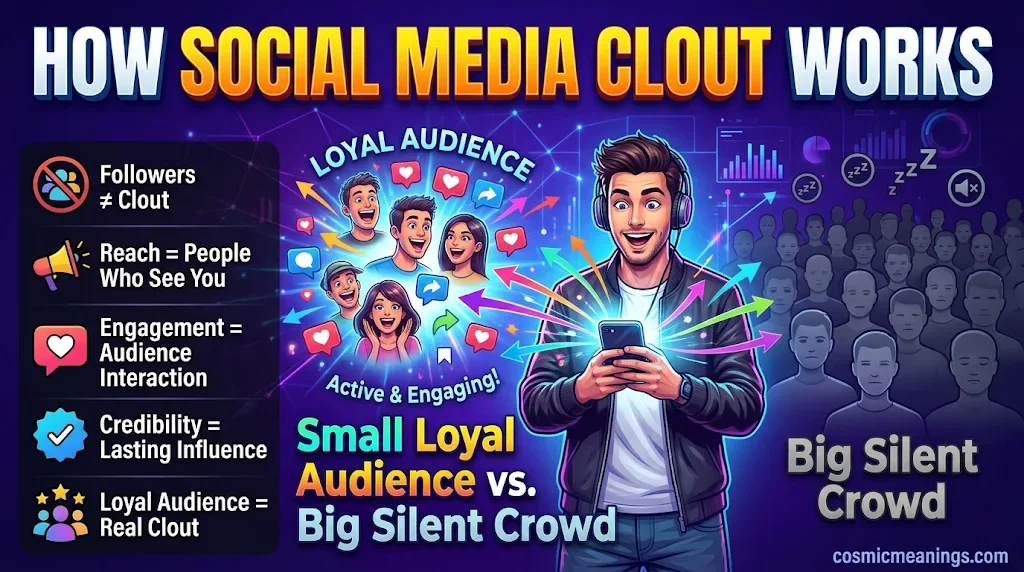
Clout isn’t the same as follower count. Reach counts how many people see a post. Clout counts how many people act on it.
The pull of online creators is real. About 21% of U.S. adults say they regularly get news from news influencers, and the share is 38% among adults ages 18 to 29, versus 8% for those 65 and older, according to Pew Research Center. That kind of sway is what people mean by clout.
This table shows how clout differs from nearby words.
| Term | Meaning | How it differs from clout |
|---|---|---|
| Fame | Being widely known | You can be famous without anyone following your lead |
| Reach | How many people see you | Big reach can still have low pull |
| Credibility | Trust and expertise | It fuels lasting clout |
| Influence | Power to affect choices | Close cousin, but less slangy |
| Money | Wealth | Buys visibility, not respect |
A few signs show real clout on a platform:
- Comments that add to the topic, not just emojis
- Shares and saves from people outside your circle
- Replies from repeat viewers
- Brand deals, collabs and shoutouts that come to you
A small, loyal niche audience can beat a huge, silent crowd. That’s why clout works like social currency. It opens doors.
Clout Chasing Meaning and Related Slang
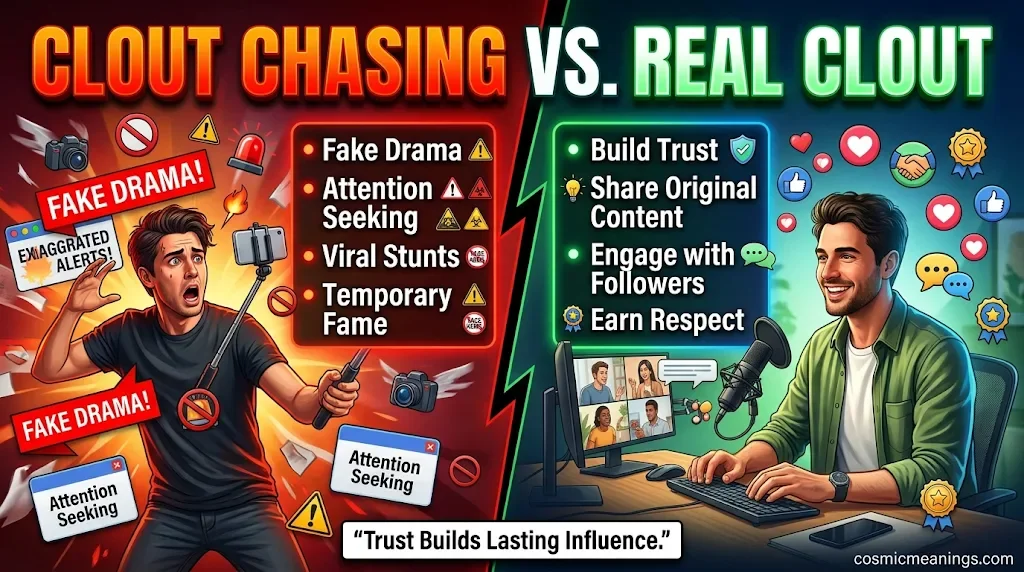
Clout chasing means seeking attention or status mainly for visibility, not for a real goal. A clout chaser might stage a stunt, borrow drama, tag famous names or jump on every controversy.
You’ll often hear these related terms:
- For the clout: done to boost image or views
- Clout goggles: a joke about trying too hard to look cool
- Zero clout: no influence at all
- Clout culture: obsession with online validation
Not every post that chases a trend counts as clout chasing. Promoting your own work is normal. People usually use the label when one or more of these show up:
- Attention seems to matter more than the truth
- The post adds nothing new to the topic
- A sensitive moment gets used for views
- The stunt looks staged
How to Build Real Clout
Lasting clout grows from trust. These habits help:
- Share useful or original work in one clear niche.
- Post on a steady schedule, even when views are low.
- Credit other people by name.
- Answer people who comment.
- Fix mistakes in public and disclose paid partnerships.
Now the awkward part: someone calls you a clout chaser. Keep the reply calm and short.
- Accusation: “I get why it looks that way. I posted it because I care about the topic.”
- Joke: “Maybe. Judge it by the facts.”
- Compliment: “Thanks! The comments made my week.”
The word also shows up outside social media. In politics and business, having clout means having leverage. A group with political clout gets its calls returned. A company with clout negotiates better deals.
FAQs
What does “clout” meaning in slang?
In slang, clout means influence, popularity or status, especially online. People use it for fame, respect or pull. The tone depends on the words around it.
What is clout in social media?
On social media, clout is the power to draw attention and shape what people watch, share and discuss. Engagement and a loyal audience matter more than raw follower numbers.
What does having clout mean?
Having clout means people listen to you and follow your lead. You can earn it through skill, trust or a strong audience. It can also come from money, politics or fame.
What is clout chasing?
Clout chasing is doing things mainly to gain attention, followers or status. Staged stunts, borrowed drama and tagging famous people are common examples.
Is clout chasing negative?
Usually, yes. The label is a criticism and suggests attention matters more than honesty or value. Still, it’s a judgment call, since promoting your work isn’t clout chasing on its own.
Conclusion
Clout is influence with a social twist. The clout meaning covers fame, power and respect, and tone decides if it’s praise or a jab. Online, real clout comes from engagement and trust, not from follower counts alone. Clout chasing earns side-eye because it puts attention ahead of value. Build credibility first, and the rest tends to follow.

Timmy Vicky is a passionate spiritual writer, researcher, and the creative mind behind CosmicMeanings.com. With a deep fascination for the universe, symbolism, and the hidden messages of life, Timmy dedicates his work to helping people uncover the deeper meaning behind everyday experiences.