Autistic describes a person who has autism, or something linked to autism spectrum disorder (ASD). It is a neurodevelopmental difference. It shapes how a person communicates, learns, and senses the world.
About 1 in 31 children in the U.S. has ASD. This guide explains the autistic meaning, the main signs and traits, and how the spectrum works.
Table of Contents
What Does Autistic Mean?
Autistic works as an adjective and a noun. As an adjective, it means of, relating to, or marked by autism. As a noun, it means a person with autism. The word has been in use since 1942.
Autism is a difference in how the brain develops. The NHS notes that people are born with it. It is not an illness, and it is not caused by vaccines.
Many people prefer identity-first language. They say “autistic person” instead of “person with autism.” For them, autism is part of who they are.
Some old labels are gone. Asperger’s, PDD-NOS, and childhood disintegrative disorder now fall under one diagnosis: ASD.
Understanding personal identity and relationships often involves learning the meaning of words that describe different aspects of people’s lives. Similarly, knowing the correct terminology for relationship milestones can prevent common language mistakes, especially when understanding the distinction between a fiancé and fiancée.
Autistic Signs and Traits in Children and Adults
Autistic traits fall into two groups. The first is social communication. The second is restricted and repetitive behaviors.
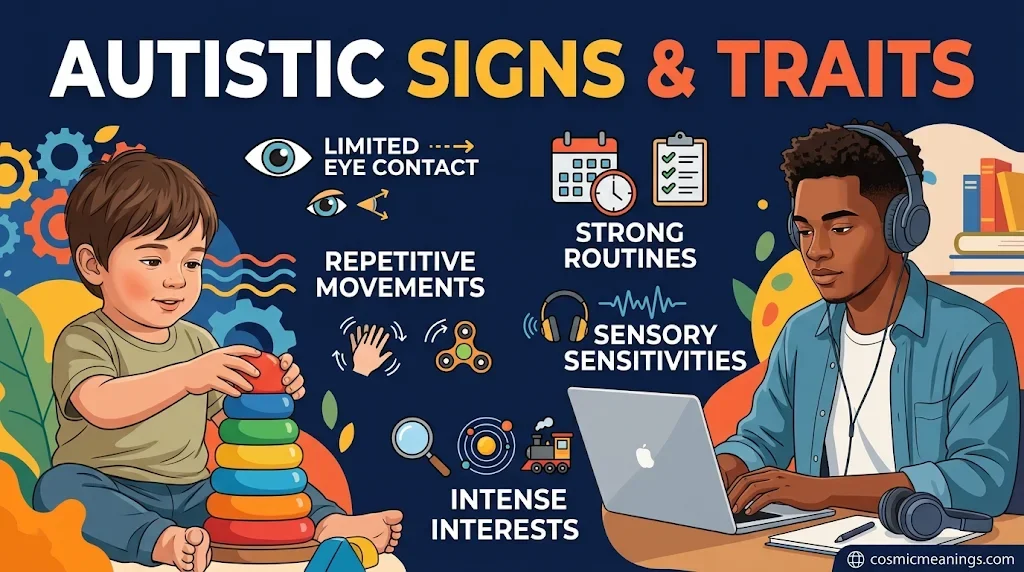
What are 5 symptoms of autism? These are the most common ones:
- Limited eye contact
- Trouble with back-and-forth conversation
- Repetitive movements or speech, such as echolalia and stimming
- A strong need for routines
- Sensory sensitivities to sounds, lights, textures, or tastes
The CDC lists early red flags:
- No response to name by 9 months
- Few or no gestures by 12 months
- No pointing to share interest by 18 months
Teens and adults may show different signs. They may miss sarcasm, struggle with personal space, or find friendships hard. Some have intense interests that go very deep.
Many autistic people also live with other conditions. These include ADHD, anxiety, epilepsy, and digestive issues, according to the NHS and CDC.
One note: many kids show some of these behaviors. The difference is that, with autism, they last and affect daily life.
Hidden Autistic Traits: Masking and Sensory Differences
Masking, also called camouflaging, means hiding autistic traits to fit in. A person may copy facial expressions or force eye contact. It takes a lot of energy.
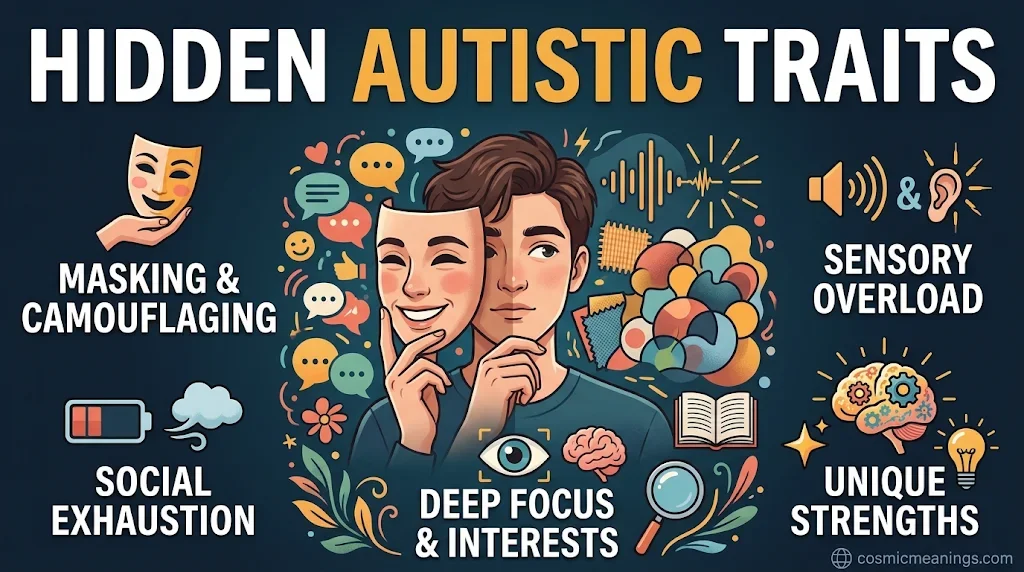
Girls and women often mask more. Research shows the male-to-female ratio is closer to 3 to 1 than the older 4 to 1. Girls are also more likely to be diagnosed late or missed.
Sensory differences are common too. A tag on a shirt can feel painful. A busy store can feel overwhelming.
There are strengths as well. Many autistic people have sharp focus, an eye for patterns, and deep knowledge in the topics they love.
The Autism Spectrum Explained: Levels, Diagnosis, and Support
Autism is a spectrum. No two autistic people are the same. Some need little support. Others need daily help.
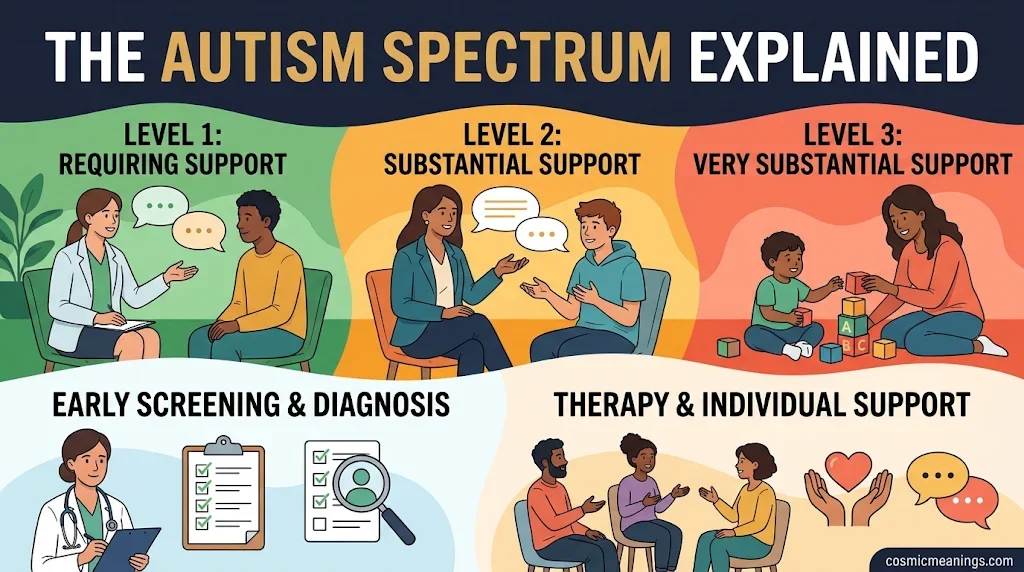
Doctors use three support levels. Level 1 means needing support. Level 2 means needing substantial support. Level 3 means needing very substantial support. Terms like “high-functioning” are now seen as outdated.
How is autism diagnosed? There is no blood test. Providers use the DSM-5-TR. A child must struggle in all three social areas and show at least two repetitive behavior patterns. Tools like the M-CHAT-R/F and the ADOS help.
The American Academy of Pediatrics recommends autism screening at 18 and 24 months.
Here are the next steps in the U.S.:
- Under age 3: ask about early intervention.
- Age 3 and up: request a school evaluation for an IEP.
- Adults: ask a doctor or psychologist about an evaluation.
Common supports include speech-language therapy, behavioral therapy, and social skills training. Starting before age 3 gives the best long-term benefit, Cleveland Clinic reports.
FAQs
What does autistic person mean?
An autistic meaning for a person is someone whose brain develops and processes the world differently. It affects communication, social interaction, behavior, and sensory experience. It is lifelong.
How do I tell if I’m autistic?
Look for patterns: social struggles, strong routines, sensory sensitivity, and intense interests. Online quizzes cannot diagnose autism. Only a qualified professional can. Start with your doctor.
What are 5 symptoms of autism?
Limited eye contact, trouble with conversation, repetitive movements or speech, a strong need for routine, and sensory sensitivities.
Can an autistic person live a normal life?
Yes. Many autistic people work, study, build relationships, and live on their own. Support needs differ. With the right help, many do well.
Can autistic people say sorry?
Yes. Autistic people feel regret and can apologize. Some show it in different ways. Reading social cues may be harder, but that does not mean a lack of care.
Conclusion
Autistic means having autism, a lifelong difference in how the brain develops. Signs include social communication gaps, repetitive behaviors, and sensory differences. Because it is a spectrum, every autistic person is unique. Early screening and early support make a real difference. If you notice signs in yourself or your child, talk to a doctor. This article is for information only and is not medical advice.

Timmy Vicky is a passionate spiritual writer, researcher, and the creative mind behind CosmicMeanings.com. With a deep fascination for the universe, symbolism, and the hidden messages of life, Timmy dedicates his work to helping people uncover the deeper meaning behind everyday experiences.