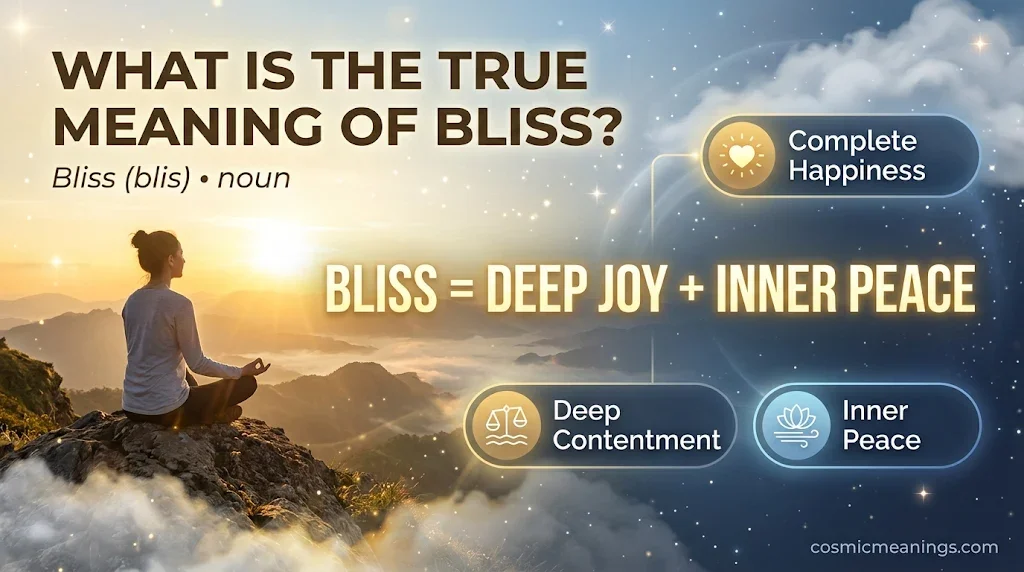
Bliss is a state of complete happiness and deep contentment. The true bliss meaning goes further than a good mood, though. It points to a calm, full feeling that sits beneath the ups and downs of daily life.
This guide explains the meaning of bliss, how it differs from happiness, and where the word comes from. You will also find synonyms, real examples, and research-backed ways to feel more of it.
Table of Contents
What Is the True Bliss Meaning?
The true bliss meaning is a state of perfect joy, peace, and contentment. As a noun, bliss means complete happiness. An older sense of the word means paradise or heaven.
Say it like this: blis, with the same sound as the end of “kiss.” The word has several forms:
- Blissful (adjective)
- Blissfully (adverb)
- Blissfulness (noun)
- Blissed-out (informal)
The word is old. It comes from Middle English blisse and Old English bliss, and it is linked to blithe, which means cheerful. It was first recorded before the 12th century.
In the beginning, people often used it for heavenly joy. Today, Americans use it for earthly moments too, such as a quiet beach day or a slow Sunday morning.
True bliss is often connected to inner peace, personal fulfillment, and a sense of contentment that goes beyond temporary happiness. In today’s social media-driven world, however, people also seek recognition and influence, making it useful to understand the meaning of clout on social media and how online popularity shapes modern interactions.
Bliss vs. Happiness: What’s the Real Difference?
Happiness usually rises and falls with events. A raise, a win, or a good meal can spark it. Bliss feels steadier, quieter, and deeper.
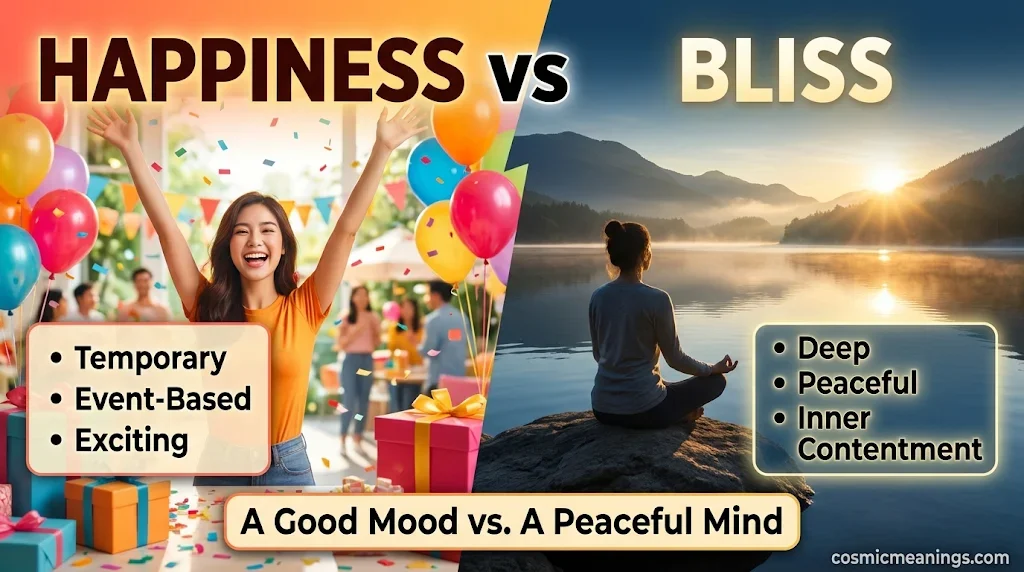
Here is a simple side-by-side look:
| Happiness | Bliss | |
|---|---|---|
| Trigger | Events, wins, treats | Inner calm, full presence |
| Mood | Pleasant, upbeat | Complete, peaceful |
| Mind | Busy, excited | Quiet, still |
| Example | Getting good news | Sitting at peace after a long hike |
Psychology has related ideas. Flow is the term psychologist Mihaly Csikszentmihalyi used for deep absorption in an activity. Eudaimonia is Aristotle’s word for a life of flourishing. Contentment is the settled feeling of needing nothing more.
Bliss overlaps with all three. Still, it is its own emotional state.
Bliss Meaning in Spiritual and Everyday Life
In yoga and Hindu thought, ānanda is the Sanskrit word for bliss. It is seen as the true nature of the self. Paramhansa Yogananda described bliss as a deep calm and a sense of oneness with all things.
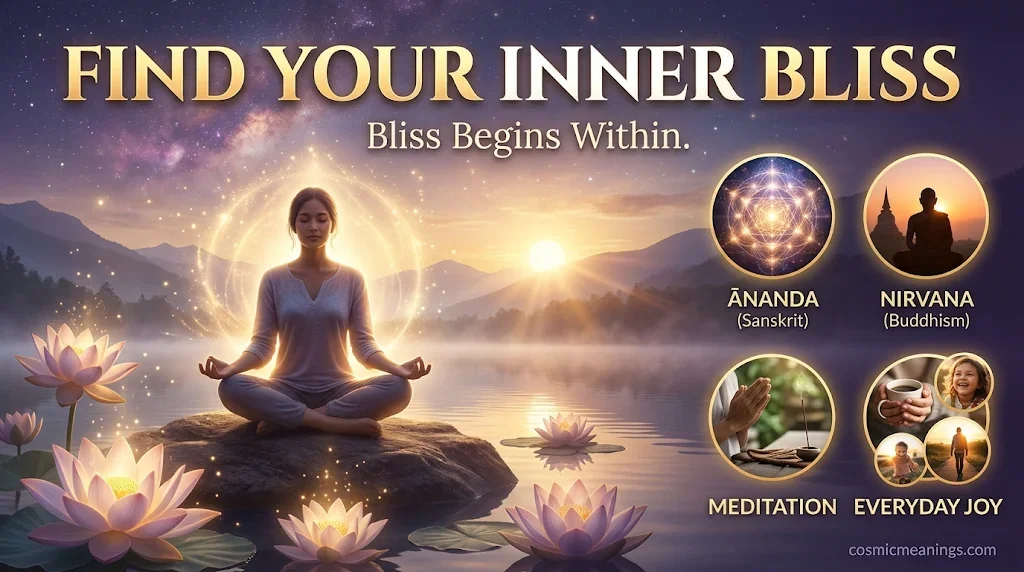
Buddhism points to a similar idea with nirvana. In meditation circles, people say bliss appears when the ego goes quiet. They call this state pure awareness.
The core idea is simple. Bliss is an inner state, not a prize from the outside world.
Everyday life offers small glimpses of it:
- Sunrise on a silent street
- The first sip of coffee on a day off
- A child’s laugh across the room
- The calm after a long run
These moments come and go. That is normal.
Bliss Synonyms, Phrases, and Usage
The closest synonyms for bliss are ecstasy, rapture, euphoria, elation, delight, joy, serenity, contentment, nirvana, and paradise.
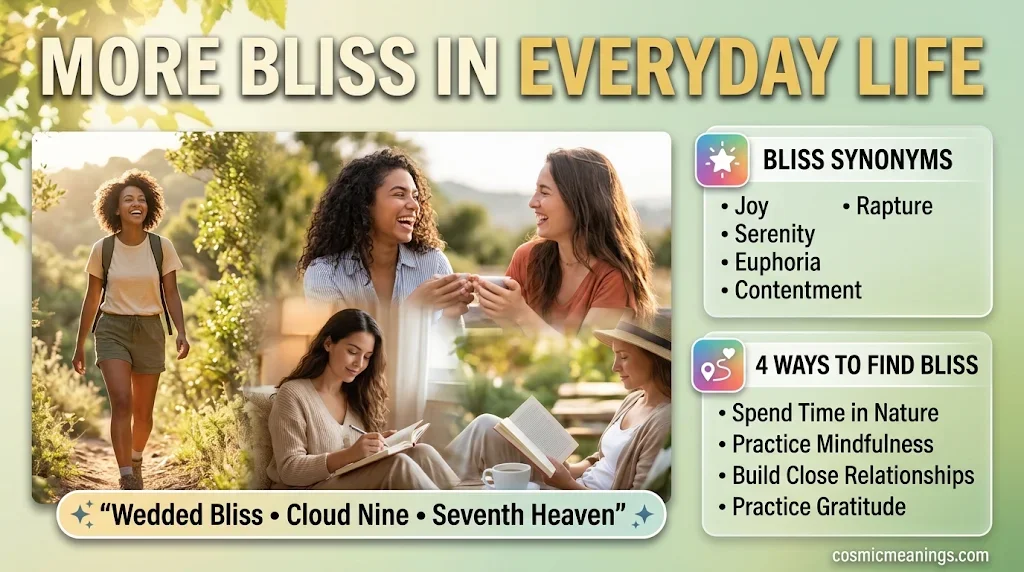
Ecstasy and euphoria suggest high energy. Serenity and contentment suggest calm. Bliss can carry both.
Common phrases include:
- Wedded bliss and marital bliss: the joy of a happy marriage
- Eternal bliss: lasting joy, often tied to heaven
- Cloud nine, seventh heaven, and walking on air: informal ways to say “overjoyed”
- Ignorance is bliss: not knowing a hard truth can spare you worry
The last phrase comes from an 18th-century poem by Thomas Gray, written in 1742. And here is a fun fact: Red Bliss is also a variety of potato.
Try these example sentences:
- The first snowfall turned the quiet street into pure bliss.
- She read on the porch with a mug of tea and felt total bliss.
- After the final exam, the whole dorm sank into blissful sleep.
- He was blissfully unaware that the surprise party was ready.
One tip: save the word for deep contentment. Not every happy moment is bliss.
How to Experience More Bliss in Daily Life
You cannot force bliss. But some habits make room for it. Research points to four.
Spend time in nature. A study of 19,806 adults in England found that people who spent at least 120 minutes a week in nature were more likely to report good health and high well-being. Their odds were 59% higher for good health and 23% higher for well-being. It did not matter whether the time came in one long visit or several short ones. Read the study in Scientific Reports.
Practice mindfulness. The National Institutes of Health says mindfulness-based practices may help with anxiety and depression. They may also improve sleep. Most people face few risks, though some have negative experiences. See the NIH overview of meditation and mindfulness.
Protect close relationships. The Harvard Study of Adult Development followed 724 men for more than 75 years. It found that the quality of close relationships matters more than how many friends you have. Read a summary of the Harvard findings.
Say thanks, often. A 2024 study in JAMA Psychiatry followed 49,275 older women. Those with higher gratitude scores had a 9% lower risk of death from any cause. This shows a link, not proof of cause. Read the Harvard Health report and the 9% figure explained.
Keep expectations real. Bliss visits. It does not stay all day. If low mood lasts, talk with a doctor or licensed therapist.
FAQs
What is the true meaning of bliss?
Bliss is a state of complete happiness, deep peace, and contentment. It goes beyond a passing good mood. It also carries an older meaning: paradise or heaven.
What are the synonyms for bliss?
The main synonyms for bliss are ecstasy, rapture, euphoria, elation, delight, joy, serenity, contentment, and nirvana.
Is blissful a feeling?
Blissful is an adjective that describes a feeling. The feeling itself is bliss. So you feel bliss, and that feeling is blissful.
What is a blissful person?
A blissful person is someone who often feels deep contentment and calm. No one feels this way all the time. Most people feel it in moments.
Can I say I am blissful?
Yes. “I am blissful” is correct English. Most people say “I feel blissful” or “I’m in bliss.” Add “blissfully happy” for a softer tone.
Conclusion
Bliss is more than happiness. It is a calm, complete feeling that rests on an inner state, not on outside events. The word has a long history, from Old English roots to the way we use it today. Spiritual traditions treat it as the core of the self, and research links nature, mindfulness, close bonds, and gratitude to better well-being. Make a little room for it each day, and it will show up more often.

Timmy Vicky is a passionate spiritual writer, researcher, and the creative mind behind CosmicMeanings.com. With a deep fascination for the universe, symbolism, and the hidden messages of life, Timmy dedicates his work to helping people uncover the deeper meaning behind everyday experiences.