Fiancé meaning is simple. A fiancé is a man who is engaged to be married. The proposal is done, and the wedding is still ahead.
Many people mix up fiancé vs. fiancée, skip the accent mark, or wonder when to use the word at all. This guide covers the fiancé definition, spelling, pronunciation, and everyday usage in plain words.
Table of Contents
Fiancé Meaning and Definition
What does fiancé mean? Fiancé is a noun. It means a man who is engaged to be married. The plural is fiancés.
The word marks one clear moment. After a proposal gets a “yes,” a partner becomes a fiancé. He keeps that title until the wedding day.
You may also hear betrothed, husband-to-be, groom-to-be, intended, or prospective spouse. They carry the same idea. Some sound formal. Some sound old-fashioned.
Understanding the meaning of fiancé and fiancée helps clarify the language of relationships, commitment, and future plans. Similarly, exploring the concept of perpetuity in finance reveals how something can continue indefinitely, particularly when discussing long-term payments, investments, and financial agreements.
Fiancé vs. Husband vs. Boyfriend
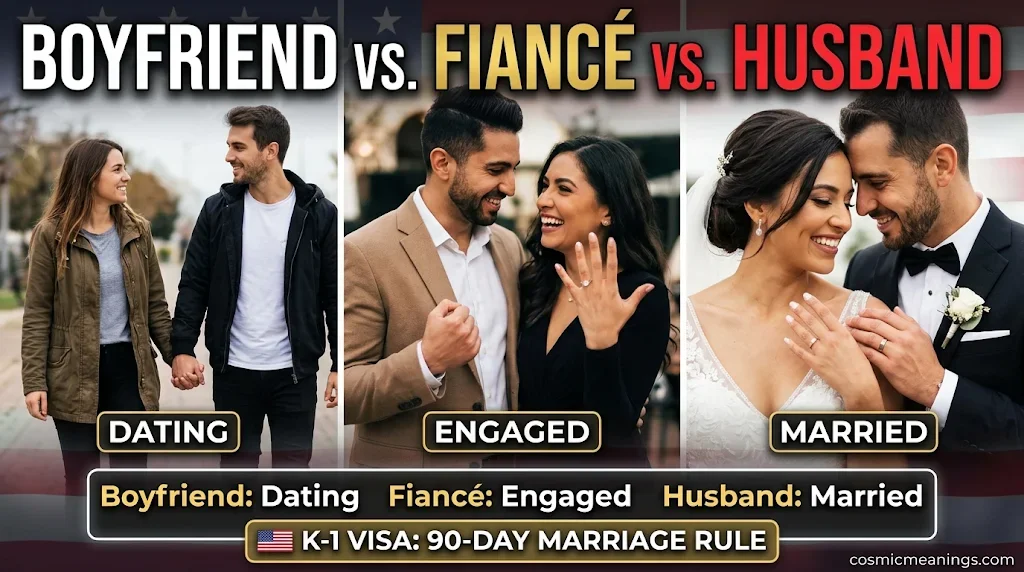
These three words describe three stages of a relationship.
| Term | Stage | Legally married? |
|---|---|---|
| Boyfriend | Dating | No |
| Fiancé | Engaged, with a promise to marry | No |
| Husband | Married | Yes |
A fiancé is not a husband. The marriage has not happened yet. He is also more than a boyfriend, because the couple has made a plan to wed.
Fiancé in the USA
Americans use fiancé in daily talk, wedding invitations, and social posts. The word also appears in US immigration law.
The K-1 fiancé(e) visa lets the foreign partner of a US citizen enter the country to marry. According to USCIS, the couple must marry within 90 days of entry. The visa is valid for up to six months and allows a single entry. After the wedding, the new spouse may apply for a Green Card using Form I-485. The 90-day status cannot be extended.
Timing matters in other ways too. The Census Bureau reports that the median age at first marriage rose to about 30 for men and 28 for women between 2008 and 2016. So many Americans spend years as a fiancé or fiancée before the wedding. The Knot’s 2025 Real Weddings Study puts the average engagement for US couples at 15 months.
How to Pronounce and Spell Fiancé
How do you pronounce fiancé? Say it as fee-ahn-SAY. Some speakers stress the middle part instead: fee-AHN-say. Both are common. Fiancée sounds exactly the same.
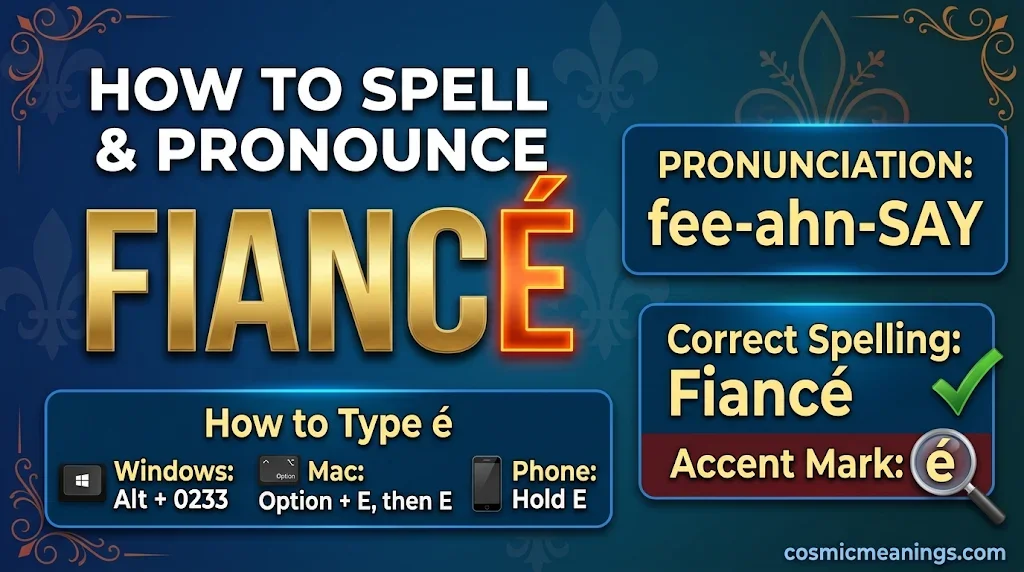
How do you spell fiancé? The standard spelling is fiancé, with an acute accent over the last “e.” That mark comes from French. The plain form fiance is also accepted, and you will see it in texts, emails, and online forms.
How do you type é?
- Windows: Hold Alt and type 0233 on the number pad.
- Mac: Press Option + E, then press E.
- iPhone and Android: Press and hold “e,” then pick é.
Watch out for these common slips:
- Writing fiancée for a man
- Writing fiancé for a woman
- Typing finance (money) by accident
Fiancé vs. Fiancée: What’s the Difference?
The only difference is gender. Fiancé refers to a man. Fiancée refers to a woman. French nouns often have a male and a female form, and English kept both.
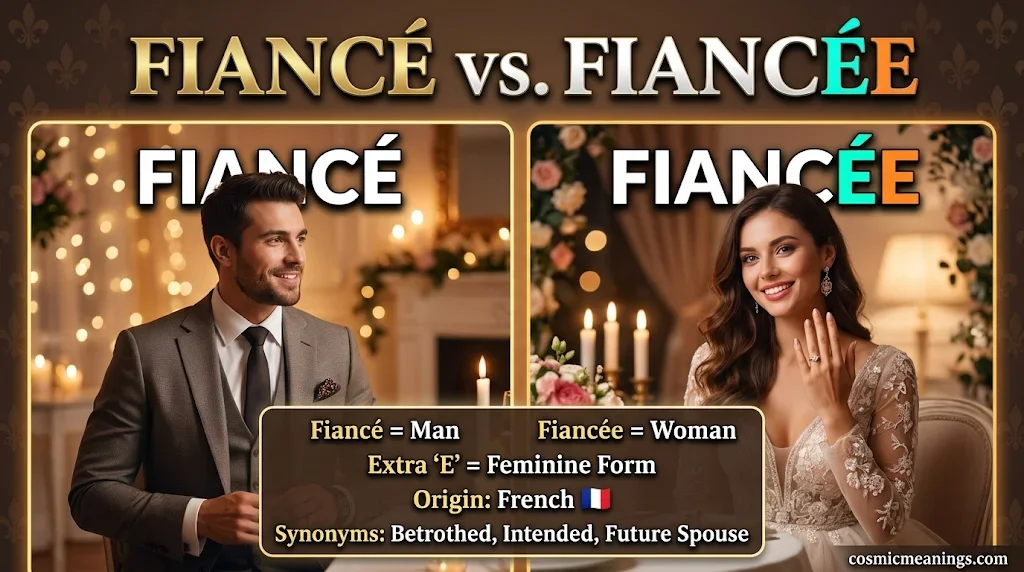
Here is a quick trick. The feminine word has the extra “e.” Think of the extra “e” as the “e” in “she.”
The word describes the person you are talking about, not the partner. A man engaged to a man is a fiancé. A woman engaged to a woman is a fiancée. If you want a neutral option, try partner, betrothed, or future spouse. Official forms often write fiancé(e) to cover both.
Fiancé Origin and Word History
English borrowed fiancé from French in the 1800s. It comes from the French verb fiancer, meaning “to betroth.” That traces back to Old French fiance, meaning “promise” or “trust.”
Go back further and you reach Vulgar Latin fīdāre and Latin fīdere, “to trust.” So a fiancé is, at heart, a promised one.
The word has relatives. Affiance and affianced share the same “trust” root, and affidavit (a written pledge) comes from a related Latin verb, affidare. Even faith sits in the same word family.
Fiancé Synonyms and Example Sentences
Each synonym has its own feel:
- Betrothed: formal, old-fashioned
- Intended: poetic, rare in modern speech
- Husband-to-be / groom-to-be: clear and friendly
- Prospective spouse: formal, often used in paperwork
- Partner: neutral and modern
Now see fiancé in real sentences:
- “Let me introduce my fiancé, Daniel.”
- “Her fiancé planned the whole trip.”
- “They each brought their fiancés to the reunion.”
- “My fiancé and I booked the venue in June.”
- “A K-1 visa lets a foreign fiancé enter the US to marry.”
FAQs
Is fiancé a female term?
No. Fiancé is the male form. The female form is fiancée. They sound the same but are spelled differently.
Is a fiancé a husband?
No. A fiancé is engaged to be married but is not yet legally married. He becomes a husband after the wedding.
Do I call my boyfriend fiancé or fiancée?
Use fiancé. Your boyfriend is a man, so the male spelling fits. Your own gender does not change it.
Is a fiancé still a girlfriend?
No. A fiancé is a man, so the word does not apply to a girlfriend. A woman who is engaged is a fiancée. She has moved from dating to engaged, even if some couples still say “partner.”
Do I call my boyfriend my fiancé?
Only after an engagement. Until he proposes, or you accept a proposal, he is your boyfriend. After the “yes,” fiancé is the right word.
Conclusion
A fiancé is a man engaged to be married, and a fiancée is a woman in the same spot. The two words sound alike, so the spelling is the only clue. Keep the accent in formal writing, and use the plain fiance when typing fast. Once the wedding happens, the title changes to husband or wife. Until then, you now know exactly which word to use.

Timmy Vicky is a passionate spiritual writer, researcher, and the creative mind behind CosmicMeanings.com. With a deep fascination for the universe, symbolism, and the hidden messages of life, Timmy dedicates his work to helping people uncover the deeper meaning behind everyday experiences.