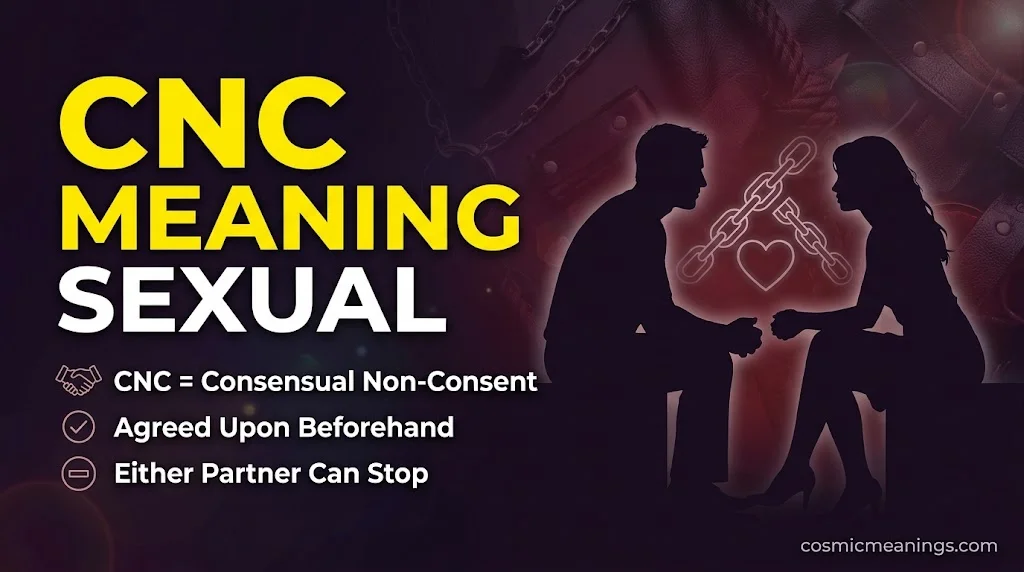
The CNC meaning sexual readers search for is simple. CNC stands for consensual non-consent. It is a roleplay where sex looks forced, but every adult involved has agreed to it in advance.
This guide explains what CNC sex is, how common the fantasy is, and how it differs from assault. You will also learn how to practice it safely and where the legal lines sit in the USA.
Table of Contents
What Does CNC Mean Sexually?
CNC meaning in sex comes down to a negotiated scene. Partners agree on the story, the limits, and the stop signals before anything starts. The “non-consent” is acted out. The consent is real.
The idea comes from the BDSM and kink world. You may also hear it called rape play, reluctance play, or a forced sex fantasy. These labels cover different levels of intensity.
Some scenes are mild. One partner plays hard to get and is slowly won over. Others use restraint, struggle, and rough power exchange. Some CNC play isn’t sexual at all, like a staged interrogation or being “made” to do a chore.
Roles matter here. The Dominant (top) plays the one in control. The submissive (bottom) plays the one who resists or gives in. Both are acting. Neither gives up the right to stop.
What is the difference between CNC and free use? Free use is a standing agreement that one partner can start sex without asking each time. CNC is about acting out force or reluctance inside a scene. They can overlap, but they are different fantasies.
Understanding sensitive topics like CNC requires clear communication and careful attention to language, especially when discussing consent, boundaries, and personal expression. Choosing the right words can make these conversations more meaningful, which is why exploring the meaning of verbiage, along with its synonyms and examples, can help you communicate ideas more precisely.
How Common Are CNC Fantasies?
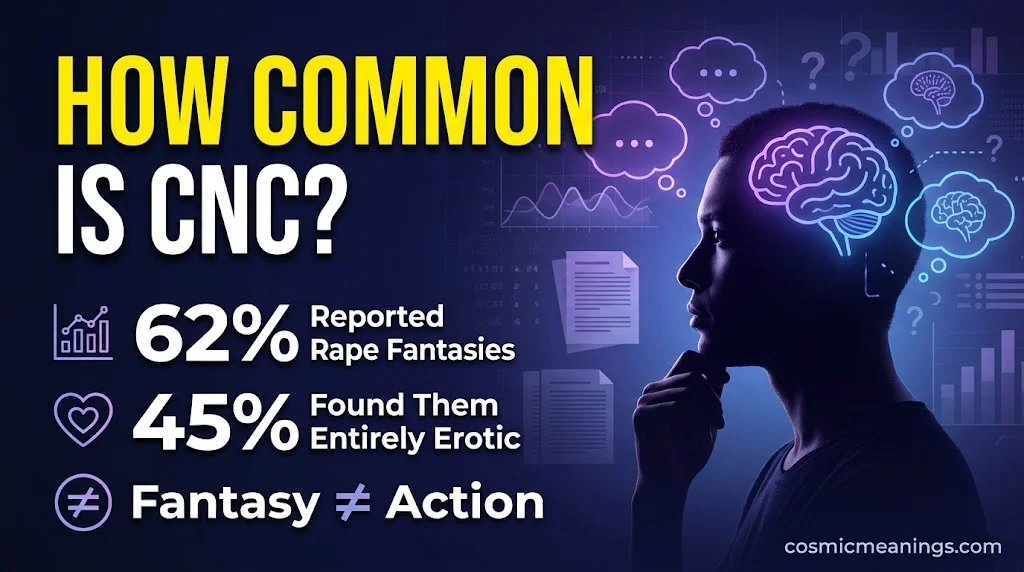
More common than most people think. In a University of North Texas study of 355 female undergraduates, 62% reported a rape or ravishment fantasy. About 45% described their fantasies as entirely erotic.
Acting on it is rarer. A campus-representative US survey found about 10% of students had ever taken part in CNC. That study also linked it with alcohol use and recent partner violence, so researchers say more work is needed.
Why do people like it? Reasons vary. Some enjoy surrender and handing over control to a trusted partner. Some like feeling intensely desired. Others enjoy the taboo, or the chance to take charge in a safe setting. Researcher Dr. Justin Lehmiller has also noted that people with vivid imaginations and sensation-seeking traits report these fantasies more often.
Is a CNC kink normal? Yes, as a fantasy it is common. The DSM-5 only treats an unusual sexual interest as a disorder when it causes real distress or harms people who never agreed. A fantasy you enjoy, or a scene you plan with a willing partner, does not meet that bar.
Survivors of sexual violence respond in different ways. Some use CNC roleplay to feel in control. For others it can bring back trauma or cause panic. It is not a form of therapy. A kink-aware therapist can help sort out what feels safe.
Research is still thin. “CNC” is a newer label, and many studies sit under older terms like rape play. Expect the numbers to grow as the field catches up.
CNC vs. Sexual Assault: What Is the Difference?
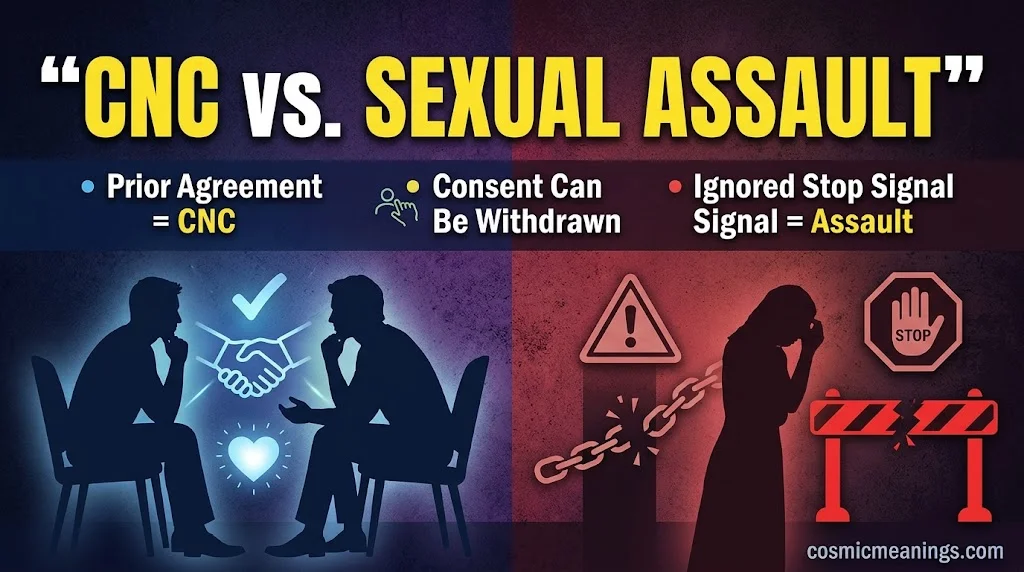
One thing separates them: real, prior, ongoing consent. In CNC, every adult agreed beforehand and can withdraw consent at any moment. In assault, that choice is gone.
Here are signs that something is not CNC:
No talk happened before the scene.
A partner ignored a safe word or a clear “stop.”
Someone felt pressured to agree to everything.
One partner used “CNC” as an excuse to control the other.
Social media and free adult clips can blur this. They rarely show the planning that real kink communities insist on. One New Jersey sexual violence agency reported a rise in a warped version of CNC among teens and adults, with partners pressured into never saying no. Outside a negotiated scene, “no” always means no.
Silence is not consent either. Under stress, a person may freeze, go quiet, or comply on autopilot. A caring partner pauses when that happens.
Consent violations are a real problem in kink spaces. Data from the National Coalition for Sexual Freedom, cited in a 2025 peer-reviewed paper, put them at 22% to 28% of BDSM interactions. That is why strong negotiation matters.
Some feminist critics argue that eroticizing rape, even as fiction, feeds a culture that shrugs off the real thing. Supporters answer that in negotiated play, the person keeps control, while assault takes it away. Both views are part of the public debate.
How to Practice Consensual Non-Consent Safely
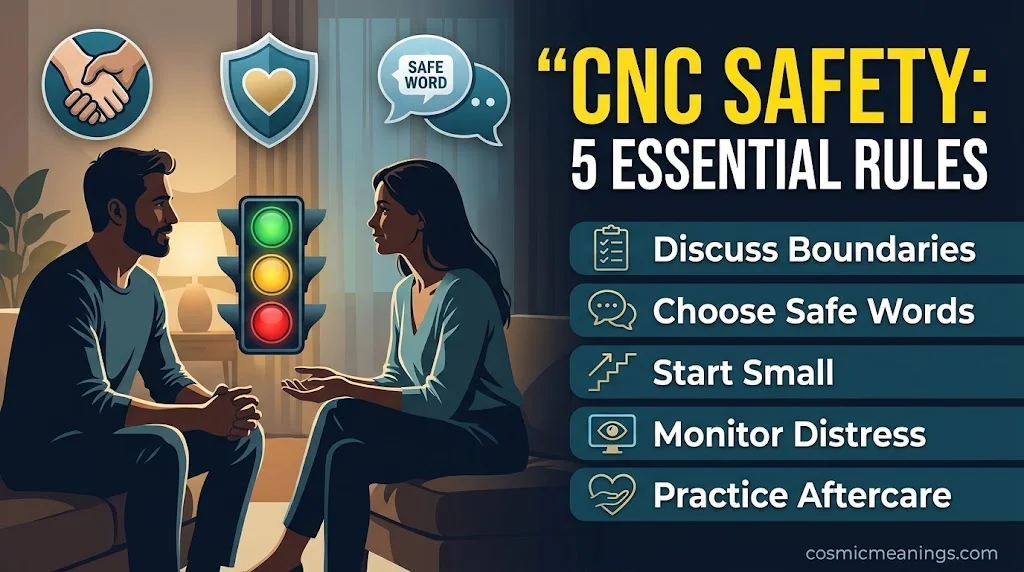
Safe CNC starts with talk, not action. Pick a calm, non-sexual moment. Cover what you want, what is off-limits, and what could be a trigger.
Next, set up your stop signals. If “no” and “stop” are part of the script, you need another way to end the scene for real. Common tools include:
An out-of-character safe word, like “pineapple.”
The traffic light system: green means go, yellow means slow down, red means stop.
A nonverbal signal, like three taps or a dropped object, in case the mouth is covered.
Start small. A five-minute scene is plenty for a first try. Try one or two elements, not the whole wish list. Lighter versions, like playful reluctance, come first.
Some couples write down their boundaries and safe words. A BDSM contract like this is a planning tool only. It is not legally binding.
Pay attention during the scene. A deal made earlier does not replace watching your partner. Slow down if they go quiet, stiff, or unresponsive. Skilled partners check in without breaking the mood.
What is aftercare? It is the care you give each other after the scene. That might mean water, a blanket, a long hug, or space. The person who played the “victim” may want reassurance that it was pretend. The person who played the “aggressor” may need to hear they did nothing wrong.
Check in the next day too. Feelings can show up late. A low mood after play is called sub drop or top drop, and it is common.
To raise the topic, start with the feeling, not the full plot. You might say, “I’ve been curious about CNC. Can I explain what draws me to it?” Then listen. If your partner says no, accept it.
Two scene ideas, kept mild: a reluctance scene where one partner plays shy before giving in, or a captor and captive roleplay with a clear script and stop signal.
CNC Laws and Risks in the USA
Laws on consent differ from state to state. A prior agreement is often not a legal defense if someone is seriously hurt. A BDSM contract will not protect anyone in court.
Advance consent has limits too. In R. v. J.A., the Supreme Court of Canada ruled that consent given before a person loses consciousness does not cover acts done while they are unconscious. In the US case State v. Van (Nebraska, 2004), a conviction stood even though the victim had asked for extreme total power exchange at first. He later withdrew his consent, and the court found it was ignored.
CNC is often treated as edge play, meaning it carries higher risk than most kink. Common risk factors include:
A new or untested partner.
Drinking or drug use during play.
Past trauma that could be triggered.
An inattentive Dominant who misses distress signals.
Consider seeing a sex therapist or kink-aware couples therapist if a fantasy causes you distress or strains your relationship. If a partner ignored your stop signal, that is assault, and you can reach a sexual assault hotline or the police.
FAQs
What is CNC meaning sexual in romance?
In romance novels, dark romance, and fan fiction, “CNC” is usually a content warning. It tells readers a scene looks non-consensual or has a forced storyline. In fiction, the author controls the plot. In real life, consensual non-consent needs real agreement from everyone.
What does CNC stand for?
CNC stands for consensual non-consent. It describes a sexual roleplay where adults agree in advance to act out a scene that looks forced. Anyone can stop at any time.
What is an example of a CNC scenario?
A common one is a reluctance scene. Two partners plan a short story where one plays shy or resistant and the other plays the pursuer. They agree on limits and pick a safe word and a nonverbal stop signal first. The scene stops the moment either person gives the signal.
What is CNC sleeping?
CNC sleeping usually means sleep play, also called somnophilia. One partner pretends to sleep, or actually sleeps, while the other initiates. Real sleep is the problem. A sleeping person cannot say stop, report pain, or change their mind. Advance consent may also be invalid during sleep in many places, and the law varies by state.
What is a CNC bed?
“CNC bed” is not a standard term in kink. Most often it points to a CNC machine bed, the flat work surface on a CNC router, which has nothing to do with sex. Some people also use it to mean a bed set up for restraint play. If you mean the second, the same rules apply: agree on limits, use stop signals, and never leave a restrained partner alone.
Conclusion
Consensual non-consent is a negotiated fantasy, and consent is what makes it CNC. The scene may look forced, but every adult has agreed and can stop it at any moment. Talk first, pick clear stop signals, and keep scenes short at the start. Know that state laws vary and that agreements made in advance have limits. If you ever feel unsafe or ignored, stop and reach out for help.
Timmy Vicky is a passionate spiritual writer, researcher, and the creative mind behind CosmicMeanings.com. With a deep fascination for the universe, symbolism, and the hidden messages of life, Timmy dedicates his work to helping people uncover the deeper meaning behind everyday experiences.