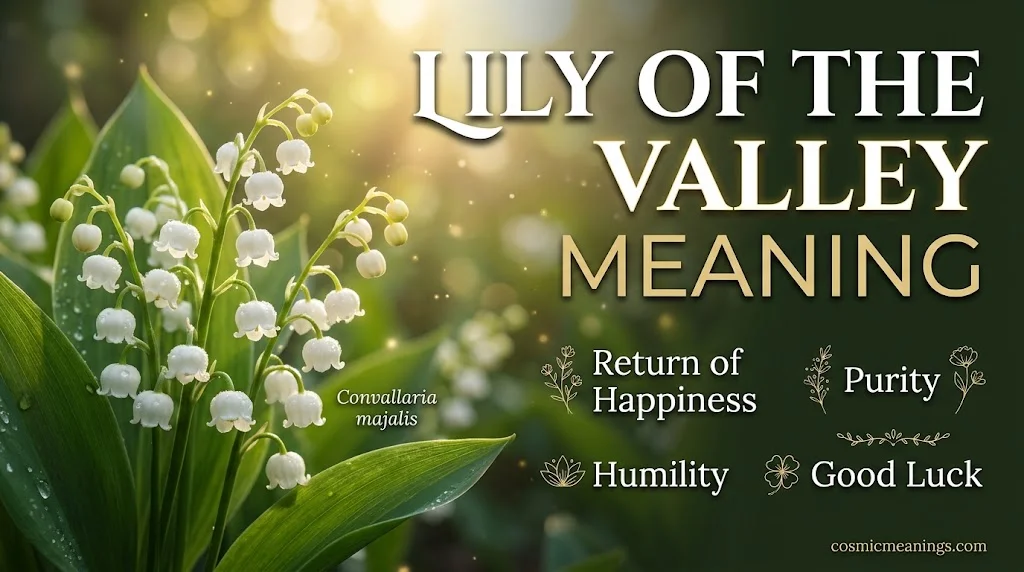
The lily of the valley meaning comes down to one phrase: the return of happiness. This tiny white flower also stands for humility, purity, and luck. Yet every part of it is poisonous.
That mix of sweet and dangerous is why people still talk about it. This guide covers its symbolism, Bible links, old legends, royal history, and spiritual meaning. It also shows how to give it, grow it, and keep pets safe.
Table of Contents
Lily of the Valley Meaning and Symbolism
Lily of the valley symbolism has five main layers:
- Return of happiness: It blooms as spring settles in, so it reads as joy coming back after a hard season.
- Humility: The bell-shaped blooms nod downward and hide under broad leaves.
- Purity and innocence: The clean white color points to a pure heart.
- Luck: French tradition treats a sprig as a good-luck charm.
- Tenderness and sweetness: The soft, sweet fragrance adds a gentle tone.
The Victorian language of flowers, called floriography, gave these meanings their staying power. In that code, a bouquet could send a message without a single word.
The plant is Convallaria majalis. The species name, majalis, means “of May.” It belongs to the asparagus family (Asparagaceae), so it is not a true lily. It stays low, about 10 inches tall, and spreads by rhizomes.
You may also see it called May bells, valley lily, muguet, or Our Lady’s Tears.
While the lily of the valley often symbolizes purity, innocence, and renewal, flowers and their meanings can also connect to more complex themes of intimacy, trust, and personal boundaries. Understanding consensual non-consent (CNC) helps explain how trust and communication shape this specific dynamic in adult relationships.
Lily of the Valley Meaning in the Bible and Mythology
The Bible line people point to is Song of Solomon 2:1: “I am the rose of Sharon, and the lily of the valleys.” That is the closest the Bible comes to this flower.
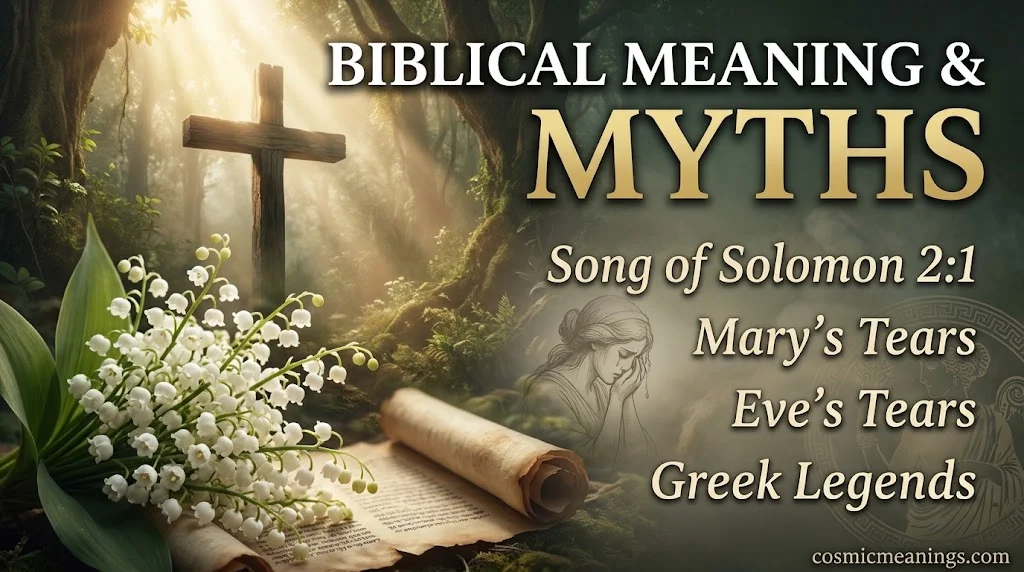
Translators add a caution. The Hebrew word for “rose” is uncertain. They also say the “lily” may be a red wildflower from wetter parts of Israel. So the verse may not name Convallaria majalis at all.
The Our Lady’s Tears name comes from Christian folklore. One legend says the flowers grew where Mary wept at the cross. Another says they grew from Eve’s tears after she left Eden. Both come from tradition, not scripture.
Older tales add more. One Greek story ties the flower to the tears of Hera. Another says Apollo planted it along woodland paths to shield the feet of the nine Muses. A nightingale legend says it only blooms when the bird returns in May.
Lily of the Valley History and Cultural Traditions
France gave the flower its biggest stage. On May 1, the French celebrate La Fête du Muguet. The custom is traced to 1561, when King Charles IX received a sprig as a lucky charm. He then gave it to the ladies of his court each spring.
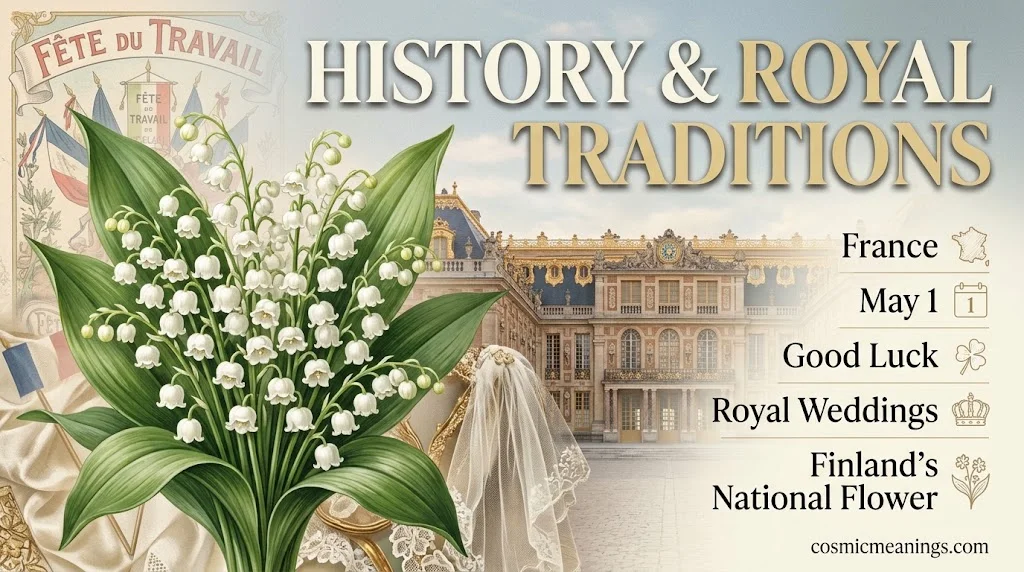
A knight named Louis de Girard de Maisonforte is said to be the giver. Today, on May 1 only, people in France can sell small bunches on the street without paying tax, if they follow set rules.
The same source notes that about 85% of France’s crop grows near Nantes. It also says the flower became linked with Labor Day in more recent times.
Royal brides kept the flower in the spotlight:
- Grace Kelly carried a small posy of it at her 1956 wedding.
- Princess Diana’s bouquet also included it.
- Kate Middleton carried a shield-shaped bouquet by florist Shane Connolly on April 29, 2011. Royal Central notes that the flower stands for “a return to happiness.”
- Meghan Markle and Kate both carried small, sweetly scented lily of the valley bouquets.
Beyond weddings, it is Finland’s national flower. It also shaped modern muguet perfumes, such as Dior’s Diorissimo. Perfumers usually recreate the scent, since the flower gives little oil of its own.
Spiritual and Hidden Lily of the Valley Meaning
In spiritual circles, the flower often stands for renewal after loss. The Victorian code leaned the same way. It offered comfort and a quiet promise that joy can return.
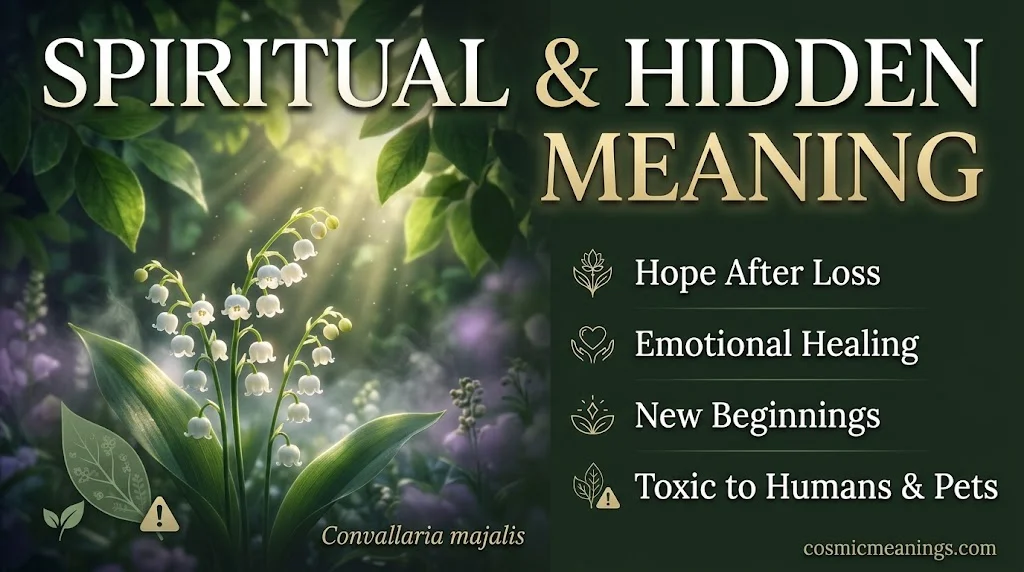
The Christian symbolism of Our Lady’s Tears points to sorrow turned to hope. Its nodding head also reads as humility and gentle strength.
Dream dictionaries often read it as emotional healing or a soft new beginning. Some add a warning to be careful with things that look sweet but carry risk. Treat these as common readings, not fixed rules.
Color symbolism is simple. White is the usual form and points to purity. A pink variety, Convallaria majalis var. rosea, exists but is rare.
The most hidden layer is the poison. All parts hold cardiac glycosides. Veterinary toxicology notes say these compounds disrupt the heart’s electrical signals and can cause arrhythmias. The strongest is convallatoxin.
Drying does not remove the danger. A plant guide puts the toxin level in dried plants at about 0.2 to 0.5%. It also says vase water can turn poisonous.
Lily of the Valley Meaning in Weddings, Gifts, and Gardens
The flower fits weddings, second marriages, new mothers, sympathy, and Mother’s Day. It is also the May birth flower, shared with hawthorn.
Good pairings include peonies, garden roses, sweet peas, ranunculus, lilac, and freesia. Its short stems suit bridal bouquets, boutonnieres, and bud vases.
Cut stems last about four to seven days. Re-cut them, use clean cool water, and keep them away from ripening fruit. Wash your hands after handling them.
In the garden, it loves shade and moist, rich soil. Gardening guidance lists USDA zones 3 to 9. Plant the pips in fall or early spring. Blooms last about four weeks.
It also spreads fast. Extension notes warn that dense rhizomes can choke out other plants. Edge the bed to keep it in check.
Keep it away from children and pets. Pet Poison Helpline lists vomiting, diarrhea, a slow heart rate, severe arrhythmias, and possible seizures in dogs and cats. If a pet chews it, call a vet or the ASPCA Animal Poison Control Center at 888-426-4435.
FAQs
What does the lily of valley symbolize?
The lily of the valley symbolizes the return of happiness. It also stands for humility, purity, luck, and tenderness. The meaning comes from its early spring bloom, its white bells, and French May Day tradition.
What does “Lily of the Valley” mean in the Bible?
The phrase appears in Song of Solomon 2:1, where a speaker calls herself “a lily of the valleys.” Scholars say it points to humble beauty. They also note the plant may not be Convallaria majalis. The Our Lady’s Tears link comes from Christian folklore, not the Bible.
Which flower means “I dare you to love me”?
No standard Victorian flower dictionary lists this meaning. It spreads online and in fan fiction, often tied to the tiger lily. Traditional lists give the tiger lily a different meaning: wealth and pride. Treat the “dare” meaning as modern folklore.
What is the spiritual meaning of a lily flower?
Lilies usually stand for purity, renewal, and rebirth. White lilies are tied to innocence and majesty. Christians link the Easter lily to resurrection. The lily of the valley adds humility and hope after sorrow.
Does lily mean I love you?
Not directly. In floriography, red roses and red chrysanthemums say “I love you.” Lily of the valley says return of happiness. Its link to love is softer: it fits weddings, devotion, and a fresh start.
Conclusion
The meaning of lily of the valley is simple at heart: joy returns, and humble things carry weight. Its roots run through the Bible, French May Day, and royal weddings. Its spiritual meaning speaks of hope after loss. Enjoy it with care, because the flower that signals happiness is also toxic.

Timmy Vicky is a passionate spiritual writer, researcher, and the creative mind behind CosmicMeanings.com. With a deep fascination for the universe, symbolism, and the hidden messages of life, Timmy dedicates his work to helping people uncover the deeper meaning behind everyday experiences.