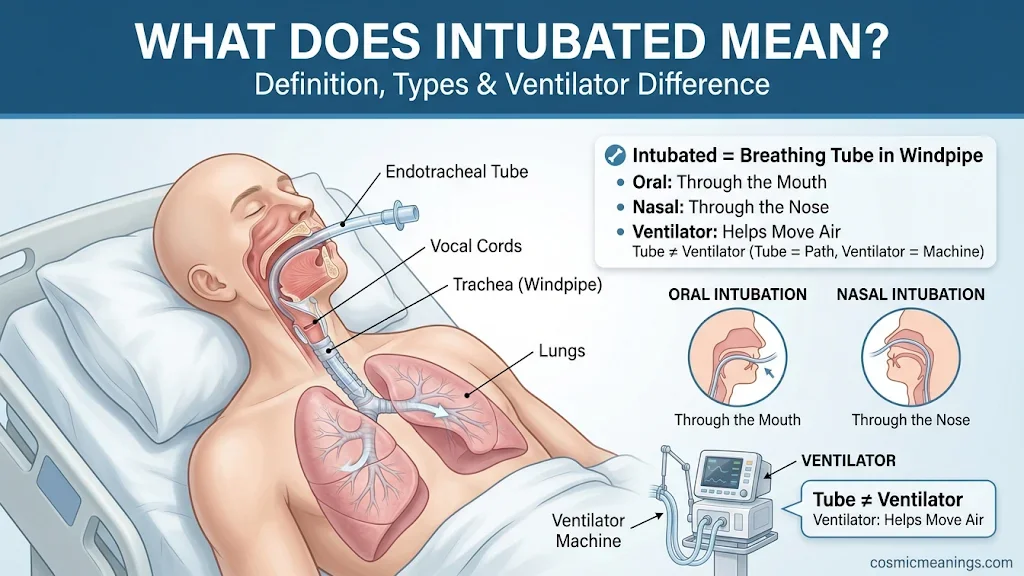
The intubated meaning is simple. A doctor places a soft breathing tube through the mouth or nose and into the windpipe (trachea). The tube keeps the airway open so air can reach the lungs.
Hearing this word about yourself or a loved one can be scary. This guide explains what being intubated involves, why it happens, and what the risks are, in plain words.
Table of Contents
What Does Intubated Mean? Definition, Types & Ventilator Difference
What does being intubated meaning? It means a patient has an endotracheal (ET) tube in the airway. Doctors use it to help a person breathe. As a verb, “intubate” means to perform this procedure on someone.
There are two main types:
Endotracheal intubation: The tube goes through the mouth. It is the usual choice in emergencies.
Nasotracheal intubation: The tube goes through the nose. Doctors may use it for some head, mouth, or neck surgeries.
Is being intubated the same as being on a ventilator? No. The tube opens the airway. A ventilator is the machine that pushes air in. The tube is often hooked to a ventilator, so the two go together. Still, they are not exactly the same thing.
Intubated also does not mean the same as sedated or in a coma. Many patients get sedation medicine so they stay calm and pain-free. That is a separate treatment from the tube itself.
While intubated, a person cannot talk or swallow. The tube passes through the vocal cords. The care team gives fluids and food by IV or by a thin feeding tube. Nurses also find other ways to communicate, such as nods, writing, or picture boards.
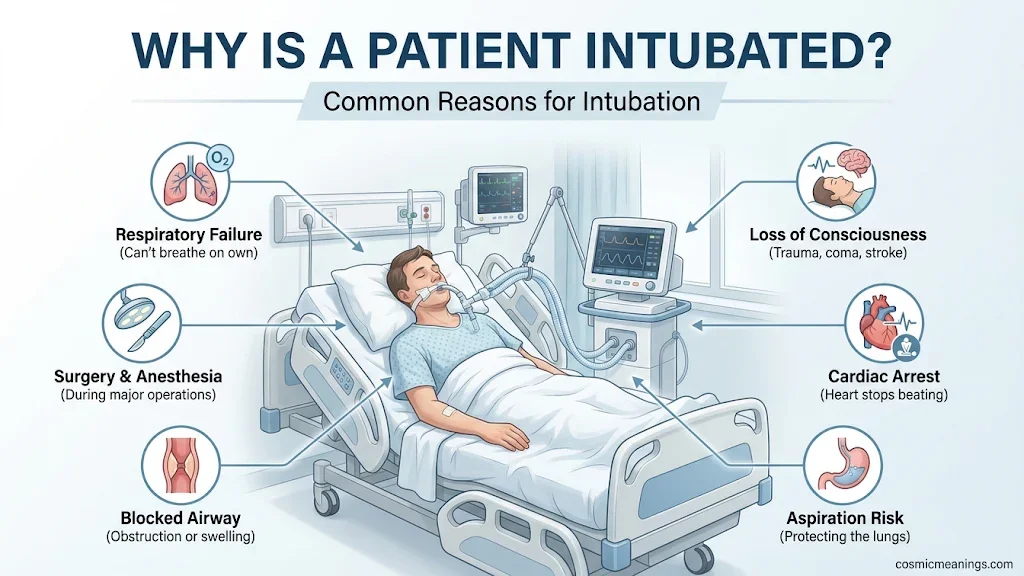
Why do doctors intubate a patient? The goal is to protect the airway and make sure the body gets oxygen. Common reasons include:
Respiratory failure, when the lungs cannot work well alone
General anesthesia during surgery, because the medicine slows breathing
Airway blockage or injury to the chest, neck, or abdomen
Loss of consciousness
Cardiac arrest or a pause in breathing (apnea)
Risk of aspiration, which means breathing in vomit, blood, or fluids
Here is a helpful way to think about it. Some intubations are planned, such as surgery. These often last only a few hours. Others are emergencies in critically ill patients. The reason matters more than the word itself.
Intubation is very common. In the U.S., providers do it about 15 million times a year in operating rooms. They also do it roughly 650,000 times outside the OR, including 346,000 times in emergency departments.
Trained experts do this work. They include anesthesiologists, critical care doctors, and emergency physicians. Emergency medical technicians (EMTs) can also intubate in the field.
How Intubation Works: What Happens When a Patient Is Intubated
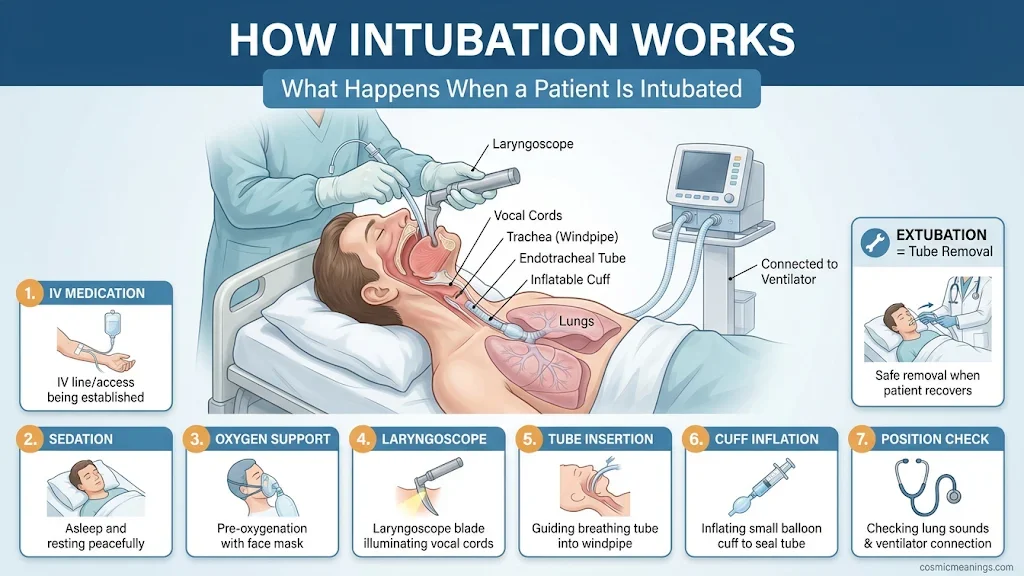
How is a patient intubated? The steps are quick and well practiced:
The team places an IV line.
Medicine puts the patient to sleep and blocks pain.
An oxygen mask gives the body extra oxygen.
The doctor uses a laryngoscope, a lighted tool, to see the vocal cords.
The tube slides into the trachea.
A small balloon (cuff) inflates to hold the tube in place.
The team secures the tube and checks it, often with an X-ray or by listening to breath sounds.
How long does intubation take? In an emergency, it can take less than a minute.
What will a family see at the bedside? Expect a few things:
A ventilator with screens and alarms
Medicine lines for comfort and sleep
A feeding tube in the nose or mouth
Soft cloth restraints that stop a patient from pulling out the tube by accident
Leg sleeves (sequential compression devices) that help prevent blood clots
Hospitals also work to prevent ventilator-associated pneumonia (VAP), a lung infection. Staff raise the head of the bed, clean the mouth often, and check each day whether the patient can breathe with less help.
How can families help? Wash your hands before entering the room. Avoid touching the ventilator or its settings. Ask the doctors when sedation may be lowered and when the tube may come out.
When the patient is ready, the team removes the tube. This step is called extubation. They suction the airway, deflate the cuff, and ask the patient to cough or breathe out as the tube slides free.
Intubated Risks, Recovery & Outlook
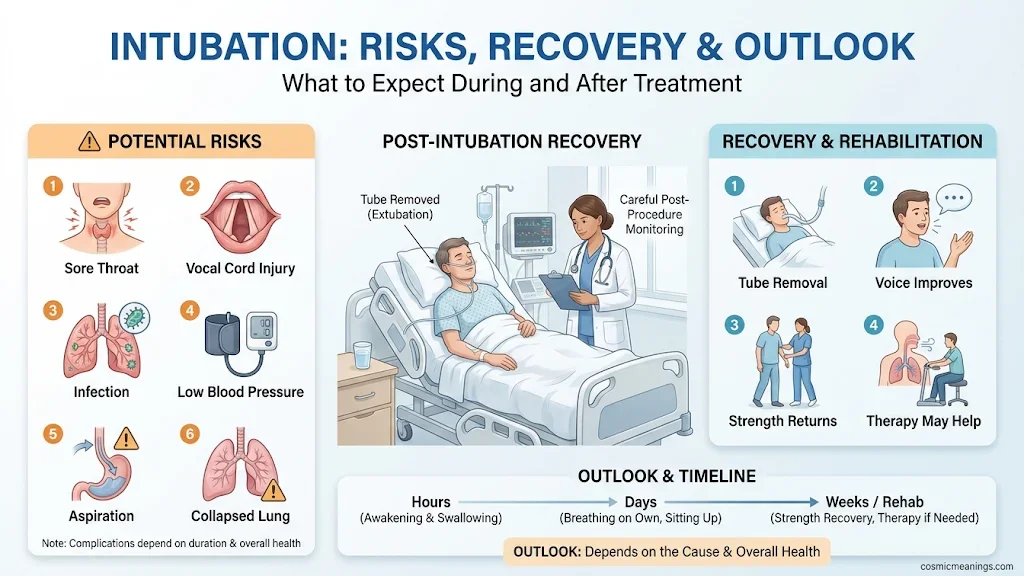
Is intubation safe? It is generally safe, and it often saves lives. Still, it has risks. Possible problems include:
Injury to the mouth, teeth, vocal cords, or airway
Aspiration into the lungs
Tube placed in the esophagus or in only one lung
Infection, such as sinus infection or VAP
Low blood pressure, low oxygen, or an irregular heartbeat
A collapsed lung
A large study in critically ill patients found 45.2% had at least one major complication within 30 minutes of intubation. The most common was unstable blood pressure. This shows how sick these patients often are. Doctors plan for these risks and treat them fast.
What is the survival rate for intubated patients? It depends on the cause, age, and overall health. One study found that a little less than 7 in 10 people survived after intubation in an emergency department.
How long does recovery take? Most people recover in hours or days. A sore throat and a hoarse voice are common. These usually fade within about a week. Longer stays can bring weakness, trouble swallowing, or foggy thinking. Physical therapy and respiratory therapy can help.
When should you call a doctor? Get help right away for:
Chest pain
Trouble breathing
Trouble speaking or swallowing
A severe sore throat
Swelling in the face
Sometimes a tube must stay in for more than a few days. Then doctors may suggest a tracheostomy, a small opening in the neck for the breathing tube.
You also have a right to choose. A do not intubate (DNI) order tells the team you do not want a breathing tube. Talk with your doctor about this before an emergency happens.
FAQs
What does it mean if a patient is intubated?
It means a breathing tube sits in the patient’s airway to help them breathe. The tube is often attached to a ventilator that moves air in and out of the lungs.
Is it serious if someone is intubated?
It depends on why. Planned intubation for surgery is routine. Emergency intubation points to a serious illness, but it does not mean the outcome is poor. The best question to ask the care team is, “Why was my loved one intubated?”
How long can a person stay intubated?
It can last from a few hours during surgery to days or even weeks during severe illness. Doctors review the need every day. If the tube is needed for a long time, they may switch to a tracheostomy.
Does intubated mean life support?
Intubation alone is not life support. It makes mechanical ventilation possible. In an emergency, the tube and ventilator work together as life support.
Can an intubated patient recover?
Yes. Many people are intubated for a short time and recover fully. Recovery depends on the cause, the person’s health, and how long the tube stays in. Therapy can rebuild strength after a long stay.
Conclusion
To sum up, the intubated meaning is a breathing tube in the windpipe that keeps the airway open. Doctors use it for surgery, emergencies, and respiratory failure. It carries real risks, but it is common and often lifesaving. Most people recover from the tube itself within days. If a loved one is intubated, ask the team why it was done and what the plan is to remove the tube.
This article is for education only. It does not replace advice from your doctor or care team.
Timmy Vicky is a passionate spiritual writer, researcher, and the creative mind behind CosmicMeanings.com. With a deep fascination for the universe, symbolism, and the hidden messages of life, Timmy dedicates his work to helping people uncover the deeper meaning behind everyday experiences.