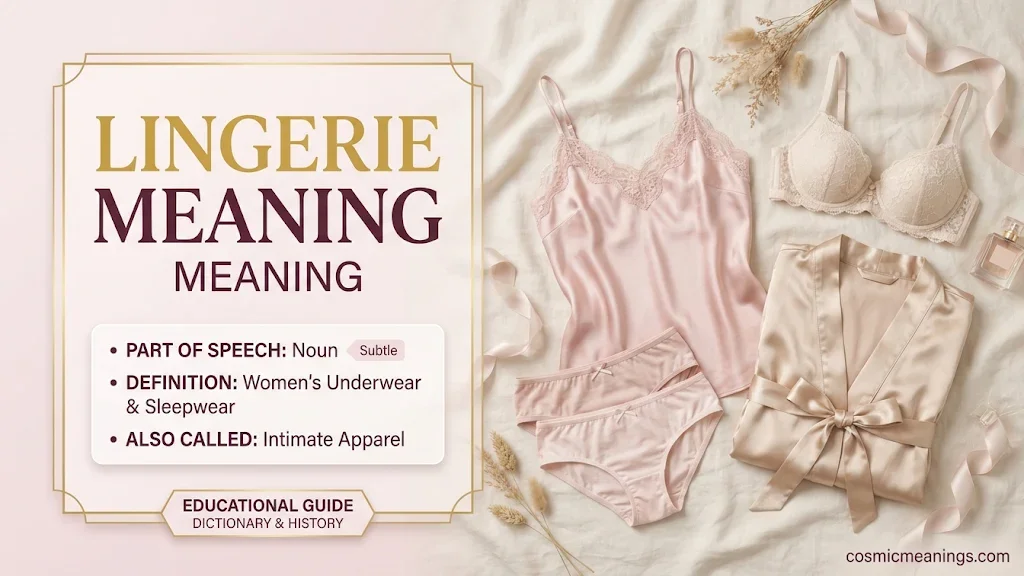
The lingerie meaning is simple. It is a noun for women’s underwear, sleepwear, and other intimate apparel. The word comes from French, and most Americans say it “lahn-zhuh-RAY.”
This guide covers the lingerie definition, the word origin, and the correct pronunciation. It also shows how lingerie differs from plain underwear and answers the questions people ask most.
Table of Contents
What Is the Lingerie Meaning and Definition?
What does lingerie mean? Dictionaries define it as underwear, sleepwear, and other items of intimate apparel worn by women. It is a noun, and it is uncountable. So you say “lingerie is on sale,” not “a lingerie.”
It also works as an adjective. In that role it means lacy or frilly, as in “a lingerie dress” or “a lingerie shop.”
In daily speech, the meaning of lingerie has two layers. The broad layer covers any women’s undergarment. The narrow layer points to silk, satin, and lace pieces made to look good, not just to do a job. Vocabulary notes that the word carries a slightly racy tone for that reason.
Most lingerie is made for women. Some brands now make it for men too.
The category is big business in the US. One industry report valued the US lingerie market at $24.1 billion in 2025.
While lingerie is often associated with fashion, intimacy, and personal expression, everyday conversations also use casual slang to express emotions, reactions, or surprise. One popular example is “bruh,” a versatile slang term used in texting, memes, and social media to convey disbelief, amusement, frustration, or a casual response.
Lingerie Origin: Where the Word Comes From
The lingerie word origin runs through three languages. It starts with the Latin word līneus, which means “flaxen.” That became the Middle French word linge, meaning “linen.” French then added the ending -erie to make lingerie, or “things made of linen”.

English picked the word up between 1825 and 1835. At first it named linen goods in general. That older sense is now archaic.
Over time the meaning narrowed. Linen was the classic fabric for underclothes, so the word slid from “linen items” to “women’s undergarments and nightwear.”
French still has its own uncommon term for the same idea. It is dessous, which literally means “underneath”.
The garments changed as well. The first modern bra was patented in 1914. Since then, foundation garments have moved from stiff structure toward softer, wire-free comfort.
How to Pronounce Lingerie (and Spell It Right)
How do you pronounce lingerie? In the US, the standard form is lahn-zhuh-RAY, with the stress on the last syllable.
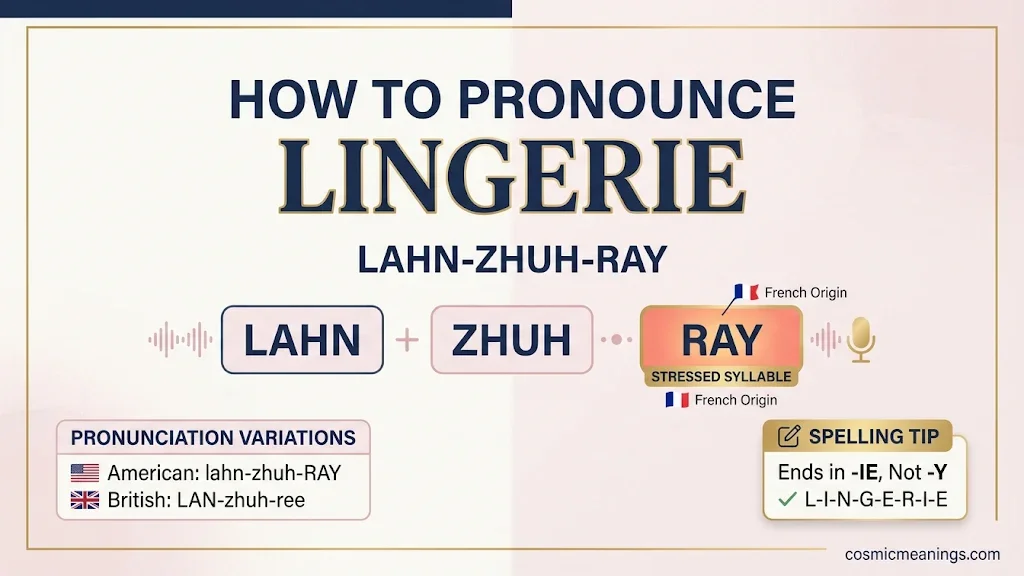
Dictionaries list other forms too. A dictionary shows “lan-zhuh-ree” and versions with a “j” sound instead of “zh.” So “lahn-juh-RAY” is also recognized. The “zh” sound is closer to the French original.
The British pronunciation is different. It is usually “LAN-zhuh-ree,” with the stress at the start.
For spelling, think of the ending -erie, which French later gave English as -ery. The word follows the same pattern as “bakery.” Just remember that the word ends in “ie,” not “y.”
A quick tip: say the word out loud in three beats. “Lahn. Zhuh. Ray.” Then write the letters in the same order.
Lingerie vs. Underwear: What’s the Difference?
Both words describe clothing worn under outer layers. The difference lies in purpose and style.
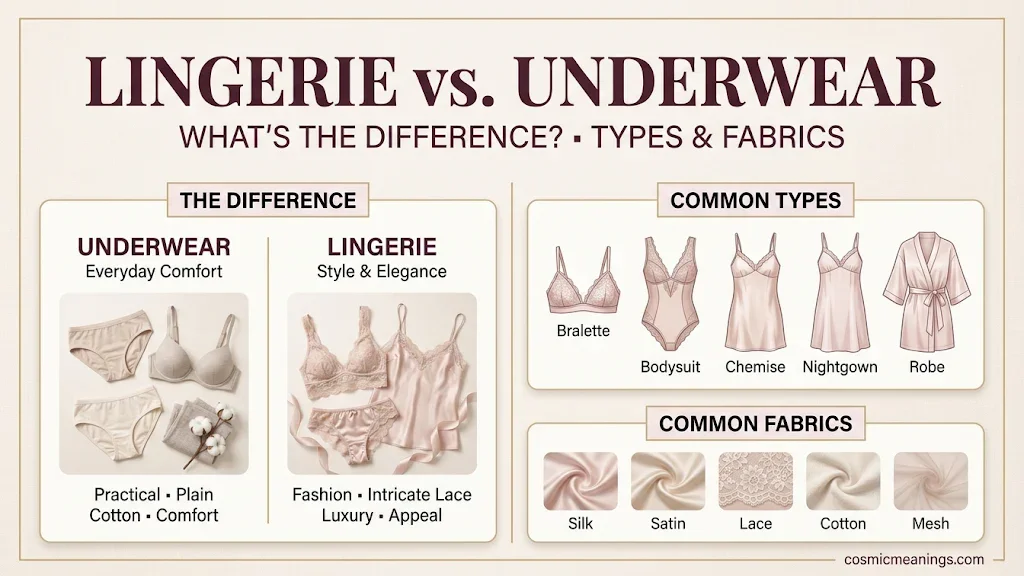
Underwear is the general term. It covers every undergarment for every gender. The focus is comfort and daily wear.
Lingerie leans toward looks and mood. It often uses lace, silk, satin, or mesh, and it is worn for style, for sleep, or for special occasions.
Related synonyms help show the range:
- Intimate apparel: the formal umbrella term for lingerie.
- Undies: a casual, playful word for underwear.
- Panties: women’s underwear only.
- Negligee and nightgown: types of lingerie made for sleep.
Sales data shows comfort still leads. In the US, briefs held the largest share of the lingerie market in 2025 at 57.9%. The same report points to a shift toward comfort-focused, size-inclusive designs.
Common Types of Lingerie and Fabrics
Lingerie covers more than bras and panties. Here are the main groups:
- Bras: bralette, balconette, push-up, T-shirt, wireless, strapless.
- Bottoms: thong, boyshorts, cheekies, briefs, G-string.
- One-pieces: bodysuit, teddy, chemise, babydoll.
- Sleepwear: negligee, nightgown, robe.
- Structured pieces: corset, bustier, garter belt, stockings, shapewear.
What do American women actually wear? A 2023 YouGov survey of U.S. adults found that 73% of women have worn a wireless bra and 47% have tried a push-up bra. Only 44% say they wear a wireless bra regularly.
Fabric shapes how lingerie looks and feels:
- Silk and satin: smooth and glossy, with a luxe drape.
- Lace: airy and decorative, but delicate.
- Cotton and modal: soft and breathable for everyday wear.
- Microfiber: thin and seamless, good under fitted clothes.
- Mesh: sheer and light, often used for panels.
For care, check the label first. When in doubt, hand wash gently in cool water and air dry. Heat wears out the elastic and thins fine lace.
FAQs
What is the meaning of undies?
Undies is an informal word for underwear, especially women’s underwear. It is short for “underwear” with a playful ending. A dictionary dates the word to about 1895–1900.
How do you pronounce lingerie?
In American English, say lahn-zhuh-RAY. Stress the last syllable. In British English, it is often “LAN-zhuh-ree.”
What are female undergarments called?
The everyday names are underwear, panties, bras, camisoles, slips, and shapewear. The wider terms are lingerie, intimate apparel, and underclothes. Sleep-focused pieces include nightgowns and negligees.
What bras do men find most attractive?
There is no single answer, and no strong scientific study settles it. One online poll by AskMen and HuffPost reached more than 2,700 men. According to a report on the results, push-up bras and thongs came out on top. Lace bralettes and cheeky panties placed close behind.
Keep in mind that this was an opt-in poll, not a controlled study. Comfort and fit matter most for the person wearing the bra.
What breast size do men find most attractive?
Research shows mixed results. In a 2013 study, about a third of men rated medium breasts most attractive. About a quarter chose large.
A study of 267 men in four cultures found medium size rated highest in Brazil, the Czech Republic, and Namibia. Large rated highest in Cameroon. The men agreed on one thing across cultures: they preferred firm breasts.
Context also plays a role. A 2013 PLOS ONE study found that hungry men and men in lower-income settings rated larger breasts as more attractive. So no one size wins.
Conclusion
The lingerie meaning comes down to this: women’s underwear, sleepwear, and intimate apparel. The word traces back to French linge and Latin līneus, both tied to linen. In the US, say it “lahn-zhuh-RAY.” Lingerie stands apart from plain underwear through its fabrics, its style, and the mood it sets. Knowing the meaning, the origin, and the sound helps you use the word with confidence.

Timmy Vicky is a passionate spiritual writer, researcher, and the creative mind behind CosmicMeanings.com. With a deep fascination for the universe, symbolism, and the hidden messages of life, Timmy dedicates his work to helping people uncover the deeper meaning behind everyday experiences.