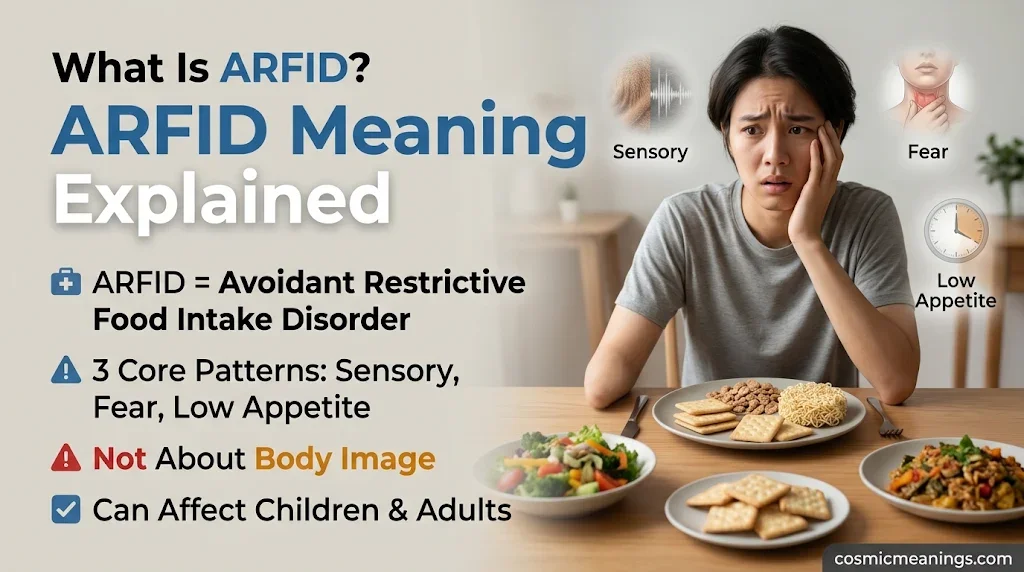
ARFID stands for avoidant restrictive food intake disorder. It is a real eating disorder in which a person eats too little, or too narrow a range of food, to stay healthy. Unlike anorexia, ARFID is not about body image or weight. So yes, it is more than picky eating.
If a child or adult survives on a few “safe foods” and mealtimes feel like a battle, this guide is for you. Here is what the ARFID meaning is, how to spot it, and where to get help.
Table of Contents
What Is ARFID? Meaning, Definition, and Diagnosis
What does ARFID mean? It is short for avoidant restrictive food intake disorder. Say it “AR-fid.”
People with ARFID limit the amount or type of food they eat. They don’t do it to lose weight or change their body. Their reasons are different.
Most cases fall into three patterns:
- Sensory sensitivity: taste, smell, texture, or color feels unbearable.
- Fear of consequences: worry about choking, vomiting, or pain after eating.
- Low interest in food: little appetite, or feeling full fast.
Many people have more than one pattern.
The DSM-5-TR is the manual US clinicians use. Under it, a diagnosis needs ongoing eating problems that lead to at least one of these:
- Major weight loss, or poor growth in a child
- A real nutrient deficiency
- Reliance on supplements or tube feeding
- Serious trouble with daily life
It also must not be explained by lack of food, a cultural practice such as religious fasting, or another eating disorder. In the US, it is coded F50.82.
How common is ARFID? Research suggests 0.5% to 5% of people have it. Studies are still limited, so the true number may be higher. It often starts in childhood, most commonly between ages 11 and 13, but it can begin at any age.
Can adults have ARFID? Yes. Adults are often missed because their weight may look normal. A steady weight can still hide nutritional deficiency. Monte Nido notes that illness, a choking scare, or a stressful life change can set it off later in life.
ARFID is often misunderstood as simple picky eating, but understanding it requires looking beyond everyday food preferences and exploring how people communicate about personal experiences. In casual conversations and text messages, abbreviations like “WBU” (What About You?) help keep discussions flowing by inviting others to share their thoughts and experiences.
ARFID Symptoms and Warning Signs
What are the symptoms of ARFID? The most common sign is a very short list of foods a person will eat. One clinical review says it is usually fewer than ten. Typical safe foods are plain, predictable items like crackers, plain noodles, cereal, or chicken nuggets.
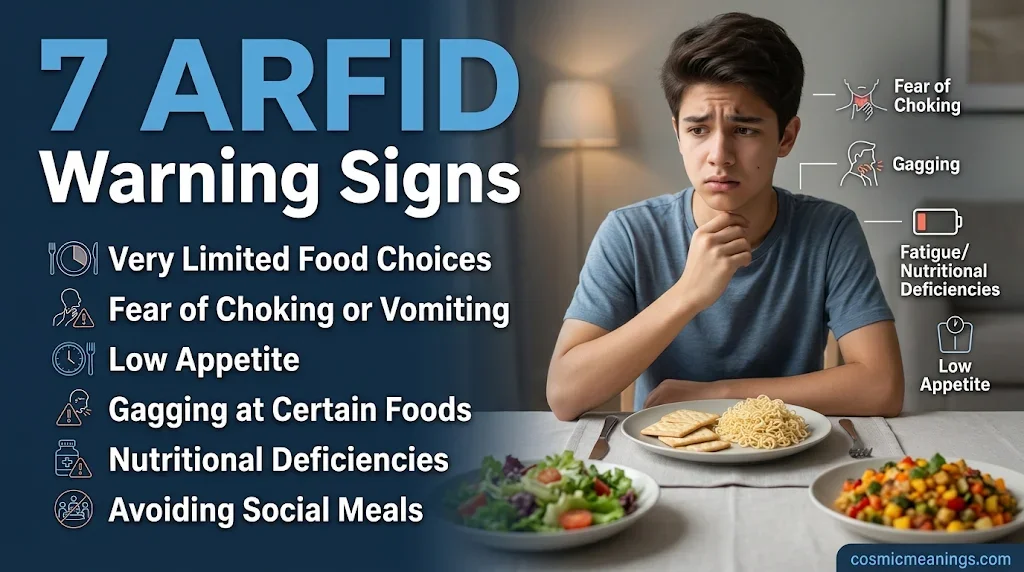
Other ARFID symptoms include:
- Gagging or retching at certain foods
- Skipping meals because hunger never shows up
- Panic about choking or vomiting
- Avoiding meals outside the home
- Needing supplements to get enough nutrition
Low nutrition can show up in the body too. Look for dizziness, fainting, constant tiredness, feeling cold, stomach pain, or missed periods.
What does ARFID look like in adults? It often looks like quiet planning. An adult may skip work lunches, avoid dates at restaurants, or pack snacks for every trip. From the outside, they seem fine. On the inside, food stress takes up a lot of space.
When is it urgent? See a doctor soon if there is fainting, a slow heart rate, rapid weight loss, or inability to eat or drink enough.
ARFID vs. Picky Eating: What’s the Difference?
Is ARFID the same as picky eating? No. Picky eating is common and usually harmless. ARFID causes health, growth, or social problems.
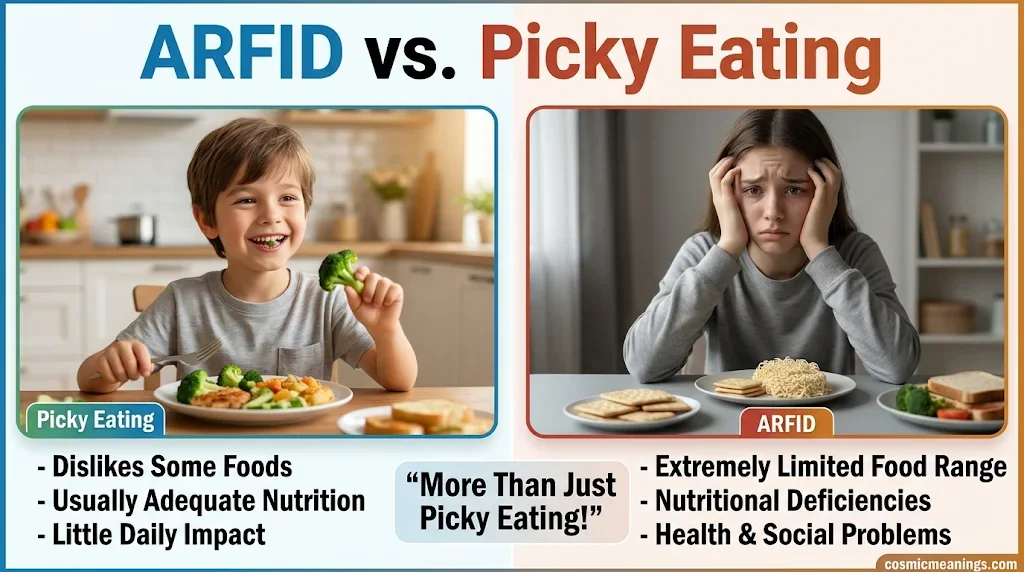
Experts see picky eating as a spectrum. ARFID sits at the severe end.
| Factor | Picky eating | ARFID |
|---|---|---|
| Food range | Dislikes some foods | Very narrow, can shrink further |
| Growth and weight | Usually normal | Weight loss or slowed growth possible |
| Nutrition | Mostly adequate | Deficiencies or supplement need |
| Reaction | Mild dislike | Strong fear, gagging, or distress |
| Daily life | Little effect | Disrupts school, work, and social life |
| Over time | Often outgrown | Usually continues without treatment |
How is ARFID different from anorexia? Both involve eating less. The reason differs. With anorexia, restriction comes from fear of weight gain or body image distress. With ARFID, it comes from sensory discomfort, fear of harm, or low appetite.
“Just a phase” advice can do damage. It delays care and adds shame. Taking symptoms seriously early leads to better results.
What Causes ARFID? Risk Factors Explained
What are the main causes of ARFID? Doctors don’t know one exact cause. Several things seem to work together:
- Sensory sensitivity. Some people are “super tasters” who feel flavors and textures more strongly.
- A scary event. Choking, vomiting, or force-feeding can plant a deep fear of eating.
- Appetite differences. Some people rarely feel hungry or feel full quickly.
- Medical issues. Examples include reflux, allergies, and eosinophilic esophagitis.
- Co-occurring conditions. Anxiety, OCD, ADHD, and autism show up often.
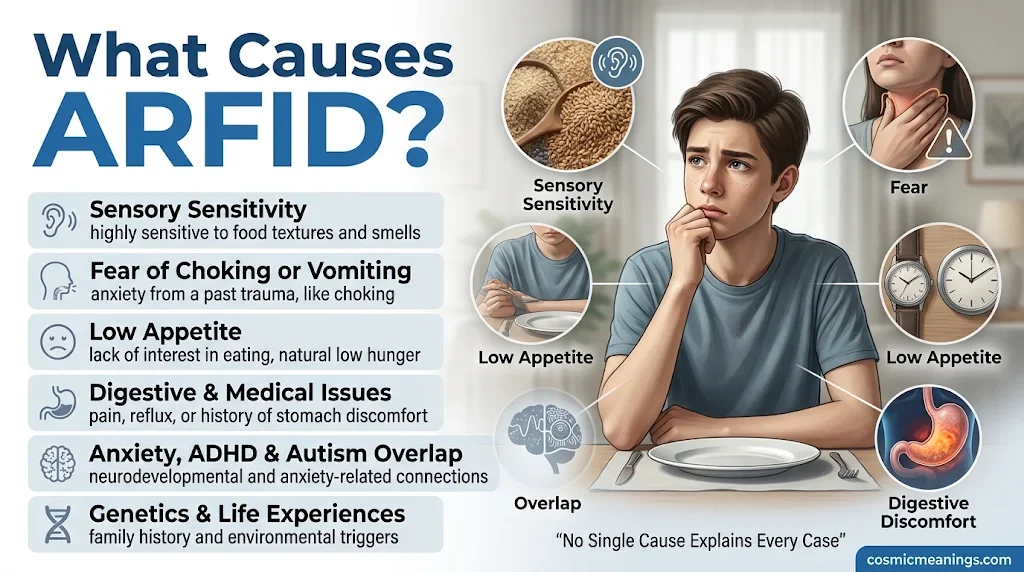
Genes, temperament, and life events can all play a part.
Is ARFID a form of autism? No. They are separate conditions. They overlap because both can involve sensory sensitivities and a need for routine. Not every person with ARFID is autistic. Not every autistic person has ARFID.
Parents do not cause it. Willpower does not fix it.
ARFID Treatment and When to Seek Help
Can ARFID be treated? Yes. Most people improve with a team approach. That team may include a doctor, a therapist, and a registered dietitian who knows eating disorders. A speech-language pathologist can join if swallowing is a concern.
Common treatments include:
- CBT-AR: a short therapy that targets fears and habits around food. Clinicians don’t recommend it for children under 12.
- Family-based treatment: parents and caregivers help rebuild healthy eating.
- SPACE-ARFID: coaches parents to respond calmly to anxiety around food.
- Exposure therapy and food chaining: tiny, gentle steps toward new foods, such as moving from one brand of fries to a similar food.
- Nutrition support: supplements or tube feeding when needed.
In the US, care ranges from outpatient visits to day programs, residential care, and hospital treatment. The right level depends on medical risk.
How can parents help at home? Keep meals regular and calm. Eat a variety of foods yourself. Invite, but never force, new foods. Skip blame.
Doctors check physical safety first. If your child, a loved one, or you show the signs above, book a visit with a primary care provider or an eating disorder specialist. Checking insurance coverage early can save stress later.
FAQs
What are ARFID symptoms?
The main signs are a very short list of accepted foods, strong fear or disgust at other foods, low appetite, weight loss or slow growth, and avoiding social meals.
What are the main causes of ARFID?
Sensory sensitivity, fear after choking or vomiting, low appetite, and conditions like anxiety, ADHD, or autism. Usually several factors combine.
What are the five types of ARFID?
Clinical sources describe three core patterns: sensory sensitivity, fear of aversive consequences, and low interest in eating. Many people mix two or all three. These are patterns, not strict boxes, and the guides I reviewed don’t define five formal types.
Is ARFID the same as picky eating?
No. Picky eating rarely harms growth or health. ARFID does, and it tends to last without treatment.
Is ARFID a form of autism?
No. They are different conditions, though sensory sensitivities can appear in both.
Conclusion
The ARFID meaning is simple: an eating disorder driven by fear, sensory discomfort, or low appetite, not by body image. It goes well beyond picky eating, and it can affect health, growth, and daily life at any age. The good news is that it responds to care from a skilled team. If this sounds familiar, reach out to a doctor or eating disorder specialist soon. Early help makes recovery easier.

Timmy Vicky is a passionate spiritual writer, researcher, and the creative mind behind CosmicMeanings.com. With a deep fascination for the universe, symbolism, and the hidden messages of life, Timmy dedicates his work to helping people uncover the deeper meaning behind everyday experiences.