Some people stay in your mind long after they leave your life. You feel a pull you can’t explain, and you wonder why it won’t fade.
That pull has a name. The soul ties meaning points to a deep emotional or spiritual bond that feels stronger than the relationship itself. This guide explains what it is, the signs of a soul tie, and how to let go when a bond hurts.
Table of Contents
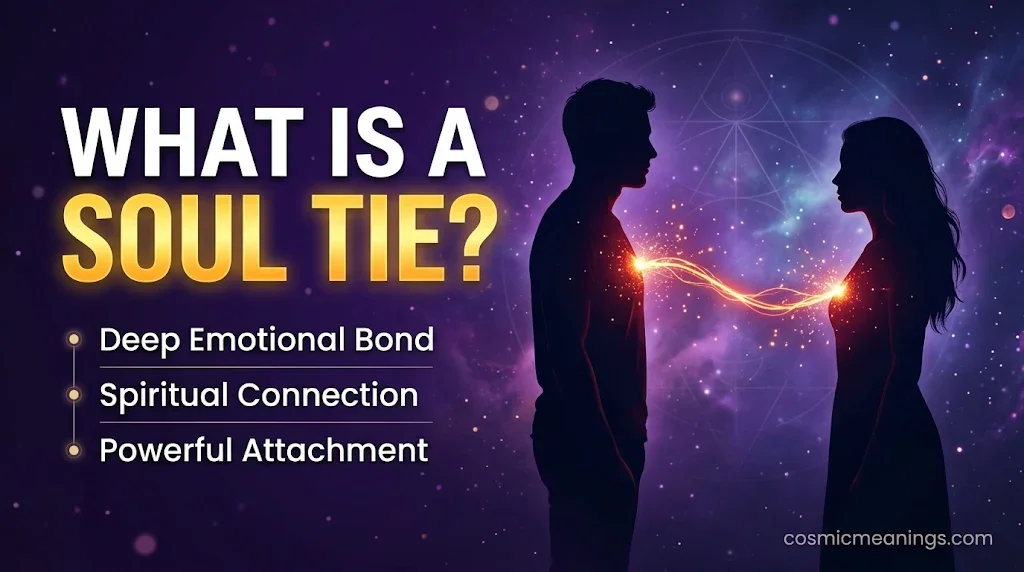
What Is a Soul Tie? The True Meaning
A soul tie is a deep emotional or spiritual bond between two people. It can feel magnetic and hard to break. It is a popular belief, not a medical diagnosis.
The true soul ties meaning changes with each tradition. In New Age thought, a soul tie is an energetic cord that links two people, sometimes across lifetimes. In some Christian teaching, it is a bond formed through close or sexual intimacy.
Here is a fact many people miss. The phrase “soul tie” does not appear in the Bible. Teachers point to verses such as Genesis 2:24 (“one flesh”), 1 Samuel 18:1 (the bond of David and Jonathan), and 1 Corinthians 6:16. Christians disagree on how to read them.
How do soul ties form? Most grow from a few common sources:
- Emotional bonding and deep trust
- Physical intimacy
- Shared experiences, good or bad
- Covenant commitments, such as vows
- Shared spiritual beliefs
Soul ties are not the same as other spiritual ideas. A soulmate is a person who fits you well. A twin flame is said to be two halves of one soul. A karmic relationship carries lessons to learn. A soul tie is about grip. It describes a bond that holds on, for better or worse.
Science has not proven the spiritual side. Psychology Today notes that twin flame, karmic, and soulmate ideas sit outside the scientific realm. The feelings are real, though. Psychology explains many of them through attachment, which we cover below.
Understanding a soul tie can reveal how deeply emotional connections shape our relationships, but not every powerful bond brings out the best in us. Sometimes, intense attachment can involve ruthless behavior, making it important to understand what being ruthless really means and how it influences the way people treat others.
Types of Soul Ties
A soul tie does not need romance. Friends, family, and mentors can form one too.
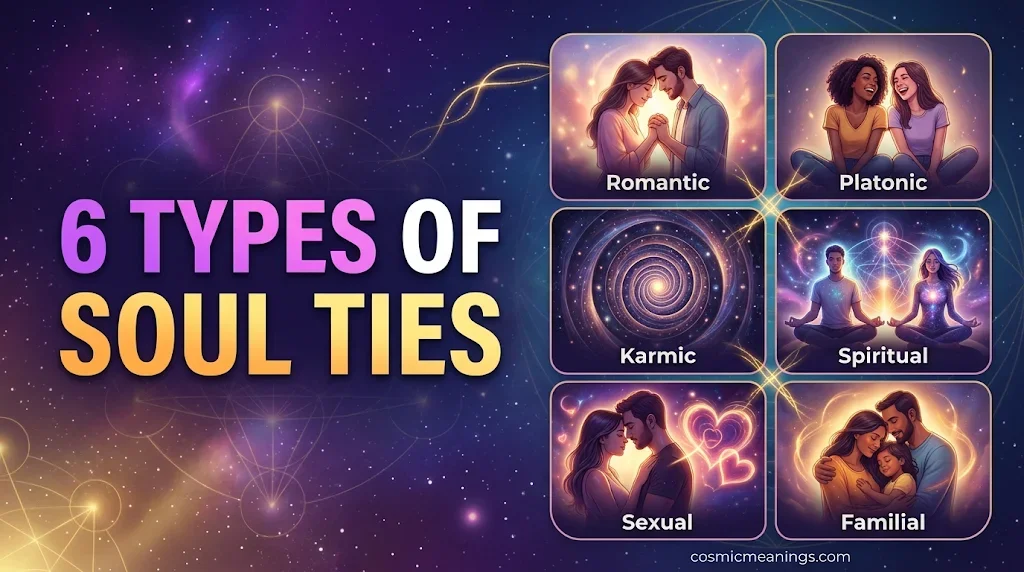
What are the types of soul ties? These are the ones people name most:
- Romantic soul ties: intense, magnetic, and often hard to leave.
- Platonic soul ties: a friend who feels like home.
- Karmic soul ties: a bond full of repeating patterns and lessons.
- Spiritual soul ties: a link built on shared beliefs or an awakening.
- Sexual soul ties: a bond some faith groups believe forms through intimacy.
- Familial soul ties: the deep bond with a parent, child, or sibling.
- Toxic soul ties: a draining bond to someone who harms you.
The first four are the ones most often called the “four types.” The rest are related categories. Each can be healthy or harmful, depending on how it affects your life.
Signs You Have a Soul Tie
These five soul tie signs show up most often.
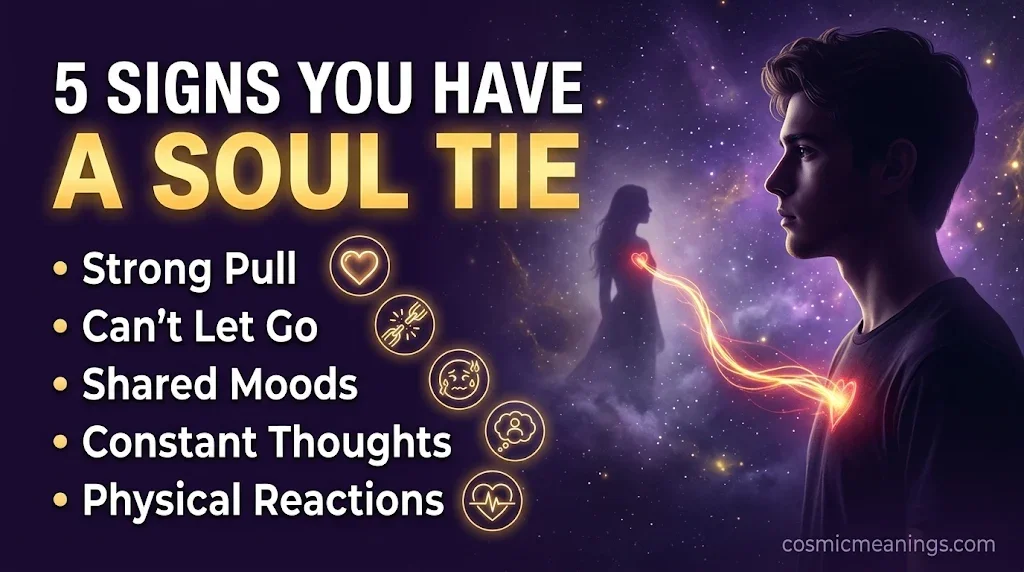
An intense emotional pull. You feel a deep link that is hard to explain. The person may feel familiar from the first meeting. The feeling can seem larger than the time you spent together.
Trouble letting go. Months pass, yet the bond stays strong. You may know the relationship is over. You still feel stuck.
Moods that track theirs. You feel drained after contact. Or their mood seems to change yours, even from far away. Some people also report shared dreams or a sense of knowing when the other person will call.
Constant thoughts about them. The person fills your mind, even in quiet moments. Experts call this rumination. It means looping over the same person or event. It can hurt sleep, focus, and work.
Body reactions and strong reminders. Your heart races, or you feel tingling or tension near them. A song, a street, or an object can pull you right back.
One caution matters here. These signs overlap with ordinary attachment, anxiety, and limerence. Limerence is an obsessive crush first described by psychologist Dorothy Tennov. So treat the signs as a prompt to reflect, not as a diagnosis.
Healthy vs. Toxic Soul Ties
Are soul ties healthy? They can be. Four checks help you tell the difference:
- Autonomy: a healthy tie leaves room for your own life.
- Energy: a healthy tie lifts you. A toxic one drains you.
- Boundaries: a healthy tie respects your “no.”
- Growth: a healthy tie supports who you are becoming.

Healthy ties can protect you. One study on wartime friendship found that close bonds between soldiers were linked to lower PTSD symptoms later.
Toxic ties work differently. Psychology gives three clear reasons they are hard to leave:
- Attachment theory, from psychologist John Bowlby, shows early bonds shape adult bonds. An anxious attachment style can make letting go feel painful.
- Intermittent reinforcement means a partner who is warm, then cold, then warm again. Unpredictable rewards keep you hooked.
- Trauma bonding is an attachment formed through a cycle of harm and relief. Cleveland Clinic explains this cycle in detail.
Watch for codependency, loss of identity, and emotional exhaustion. Also notice if you compare every new person to the old one.
Safety comes first. If a bond involves abuse, control, or fear, it is not a spiritual problem. The National Domestic Violence Hotline offers free, confidential help at 1-800-799-7233.
How to Break a Soul Tie
How do you break a soul tie? There is no quick fix. These steps help most people:
- Name the tie. Admit it affects your present.
- Forgive. Forgiveness does not mean reconnecting. A 2023 study links forgiveness to lower anger and better psychological health.
- Set boundaries. Limit contact. Mute, unfollow, or choose no contact when it is safe.
- Clear the energy. Try meditation, visualization, or cord cutting. Many believers also pray within their own faith.
- Rebuild your support. Spend time with friends who knew you before the bond.
- Work with a therapist. This helps most when the pattern keeps repeating.
- Release with gratitude. Thank the lesson, then let the person go.
Healing is gradual. A bond fades on its own schedule. A slow fade does not mean the tie is stronger than you.
FAQs
What are the signs of soul ties?
The main signs are an intense emotional pull, trouble letting go, moods that track the other person, constant thoughts, and strong body reactions. Strong reminders and a sense of knowing when they will reach out are also common. These signs can also come from ordinary attachment.
Are soul ties good or bad?
They can be either. A healthy soul tie supports your growth and leaves you free. A toxic one drains your energy and keeps you stuck in old patterns. The effect on your daily life is what counts.
What are the four types of soul ties?
The four types most often named are romantic, platonic, karmic, and spiritual. Some sources add sexual, familial, and toxic soul ties as related categories.
How long does a soul tie last?
There is no fixed time. Some fade in months, and others last for years. The length depends on how deep the bond was, how much contact continues, and how much healing work you do.
What are 10 signs that someone has a soul tie with you?
These signs may suggest a soul tie. They are not proof.
- They feel familiar to you, as if you have always known them.
- They sense your moods without being told.
- They keep coming back to you after a break.
- They find it hard to move on.
- Eye contact feels intense for both of you.
- They think of you at odd times and reach out right then.
- Their mood shifts when yours does.
- They show up in your dreams, or you show up in theirs.
- They compare new people to you.
- You both feel a pull that is hard to explain.
Because these signs overlap with ordinary attachment, ask what the bond is doing for your life.
Conclusion
The true soul ties meaning is a deep bond that can lift you or drain you. The five signs are a strong pull, trouble letting go, shared moods, constant thoughts, and body reactions. Psychology explains many of these feelings through attachment, even when the spiritual side stays a matter of belief. If a bond hurts, boundaries, forgiveness, and support can loosen it. Safety always comes first, so seek real help if a bond involves fear or control.

Timmy Vicky is a passionate spiritual writer, researcher, and the creative mind behind CosmicMeanings.com. With a deep fascination for the universe, symbolism, and the hidden messages of life, Timmy dedicates his work to helping people uncover the deeper meaning behind everyday experiences.