A pet peeve is a small, personal annoyance that keeps coming back. Think loud chewing, someone cutting in line, or a “K” sent as a full reply. The pet peeves meaning is simple: it bugs you far more than it bugs most people.
This guide explains the pet peeve meaning, where the phrase came from, and 20 common pet peeves. You’ll also see how pet peeves show up in relationships and how to handle them without a fight.
Table of Contents
What Is a Pet Peeve? Meaning and Origin
What is a pet peeve? It is a specific habit, sound, or situation that a person finds especially irritating. A standard dictionary definition calls it a frequent subject of complaint.
Another dictionary entry calls it a particular and often continual annoyance, or a personal bugbear. The key word is personal. What drives you up the wall may not bother your neighbor at all.
The words explain the idea. “Pet” means something you keep close. “Peeve” means an annoyance. So a pet peeve is an irritation you almost nurture, one you can rarely resist mentioning.
The term is old. Dictionaries trace its first use to 1917. It also spread through a comic strip called The Little Pet Peeve, which ran in the Chicago Tribune from 1916 to 1920.
What is pet peeve in slang? The phrase is informal, so people use it in everyday talk. “My biggest pet peeve is slow walkers” is a typical line. In British English, you will often hear pet hate instead. Other close terms are pet aversion, annoyance, and irritant.
One more point: a pet peeve is about a behavior, not a whole person. “People who interrupt” is a pet peeve. “Dave from accounting” is a different problem.
Understanding personal preferences and the little habits that annoy us can reveal a lot about how people interact in everyday life. Similarly, exploring the different types of rosters and how they organize people, schedules, or responsibilities helps clarify how groups function in workplaces, schools, and other settings.
20 Most Common Pet Peeve Examples
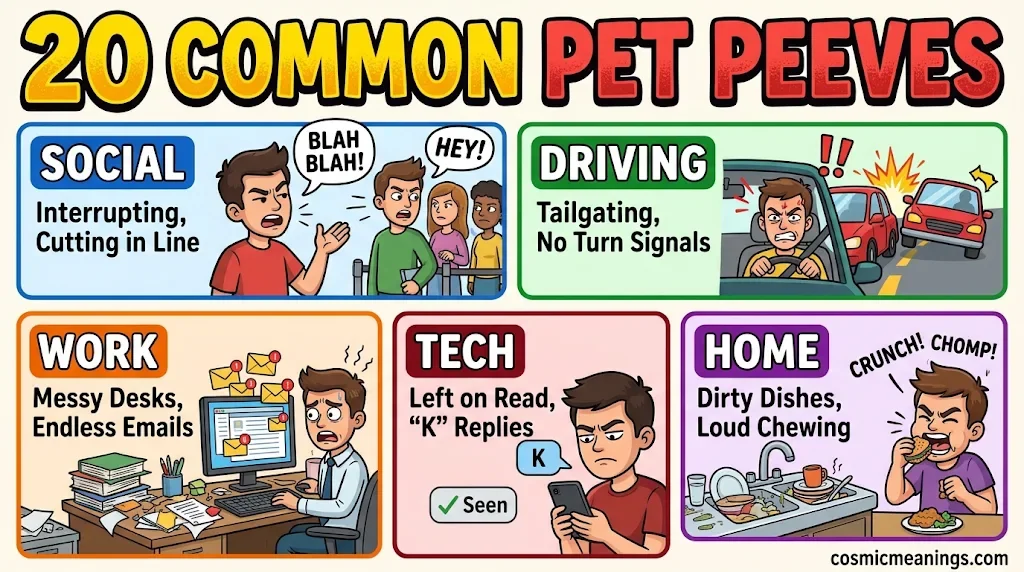
What is a pet peeve example? Here are 20 that come up again and again. They are grouped by setting, not ranked. No official study has crowned a single number-one annoyance.
Social habits:
- Interrupting someone mid-sentence
- Talking loudly on speakerphone in public
- Cutting in line
- Checking a phone while someone is talking to you
Driving and travel:
- Skipping turn signals
- Tailgating
- Blocking an intersection
- Stopping at the top of an escalator
Work and school:
- Reply-all email chains that never end
- Meetings that could have been a short message
- Taking credit for a teammate’s work
- Leaving the break room messy
Home and food:
- Dishes left in the sink
- Finishing the toilet paper and not replacing it
- Chewing with an open mouth
- Putting an empty carton back in the fridge
Tech and texting:
- Websites that autoplay sound
- One-word replies like “K”
- Being left on read
- Pop-ups that cover the page before you can read it
Some of these are harmless quirks. Others, like tailgating, can be real safety problems. A familiar label does not make the risk smaller.
Pet Peeve vs. Dealbreaker, Red Flag, and Misophonia
These terms get mixed up, but they are not the same. A pet peeve is a mild, personal irritation. A dealbreaker is a firm limit, such as a value you will not compromise on. A red flag is a warning sign of a deeper problem, like disrespect or dishonesty.

Pet peeves still matter. A 2014 study of 410 college students looked at pet peeves about a current or past romantic partner. More pet peeves went along with lower relationship satisfaction, lower well-being, and lower mindfulness.
The study was correlational. It cannot prove that pet peeves cause unhappiness. It also used one sample of students. Treat it as a useful clue, not a final answer.
Misophonia is a different thing. A 2022 expert consensus definition describes it as lowered tolerance for specific sounds, which can trigger strong emotional and physical reactions. It can disrupt work, school, and social life.
Disliking chewing sounds does not mean someone has misophonia. But real sensory distress should never be waved off as “just a pet peeve.” A related case is an access need, such as needing captions on a video. That deserves a practical fix, not a debate about manners.
Pet Peeves in Relationships and Dating
What is pet peeve in a relationship? It is a small habit in a partner that irritates you again and again. Examples include phone use during dinner, a messy shared space, or poor texting habits.

Small habits can grow. A single wet towel is nothing. The same towel every day can start to feel like disrespect. That is why the 2014 study above links pet peeves with lower satisfaction.
Common relationship pet peeves include:
- Being interrupted
- Hearing “nothing” when you ask what’s wrong
- Plans changed at the last minute
- Chores left undone
- Slow replies to messages
What are pet peeves in a girl? There is no research showing that pet peeves differ by gender. They differ by person. A woman may dislike late arrivals, a man may dislike them too, and a third person may not care at all.
A good rule helps here. If the habit is harmless, it is a preference. If it breaks trust or safety, it is a bigger issue and deserves a real conversation.
How to Handle and Answer “What Are Your Pet Peeves?”
Start by finding the real cause. Being interrupted may really mean “I feel ignored.” A messy kitchen may really mean “I do all the cleaning.”
Then ask for one specific change. “Could you use headphones for that video?” works better than “You are so annoying.” Describe the habit and name the fix.
Other simple moves:
- Change the setting. Move seats, close a door, or use earbuds.
- Pick your battles. Let harmless quirks go.
- Take serious issues seriously. Repeated disrespect is not a pet peeve.
You may also face the question in an interview or on a first date. What are your pet peeves? Name a small, specific behavior. Keep it light. Avoid anything that sounds like an attack on people.
Sample answers:
- Interview: “I like clear deadlines. Last-minute changes without notice are my pet peeve.”
- Date: “Phones at the dinner table. I’d rather talk.”
- Casual: “People who leave one sip of milk in the carton.”
FAQs
What is a pet peeve example?
A pet peeve example is any small habit that bugs you more than it bugs most people. Common ones are loud chewing, cutting in line, interrupting, and skipping turn signals.
What is pet peeves meaning in a relationship?
A pet peeve in a relationship is a minor habit in your partner that keeps irritating you. Examples are phone use during conversations, mess, or slow replies. Left unspoken, these can wear down satisfaction over time.
What is your pet peeve meaning?
“Your pet peeve” means the small, personal annoyance that bothers you most. It is specific to you, which is why two people can list very different answers.
What is pet peeve in slang?
In slang and casual speech, a pet peeve is something that really gets on your nerves. People say it like “My pet peeve is…” In British English, the common version is “pet hate.”
What are pet peeves in a girl?
Pet peeves vary from person to person, not by gender. Common ones people name include lateness, rude behavior, and poor communication. There is no research that ties specific pet peeves to being a girl.
Conclusion
A pet peeve is a small, personal irritation, and the pet peeves meaning comes down to that one word: personal. The 20 examples above show how wide the range is, from loud chewing to unread texts. Most pet peeves are easy to manage with one clear, polite request. When a habit crosses into disrespect, distress, or safety, treat it as more than a pet peeve.

Timmy Vicky is a passionate spiritual writer, researcher, and the creative mind behind CosmicMeanings.com. With a deep fascination for the universe, symbolism, and the hidden messages of life, Timmy dedicates his work to helping people uncover the deeper meaning behind everyday experiences.