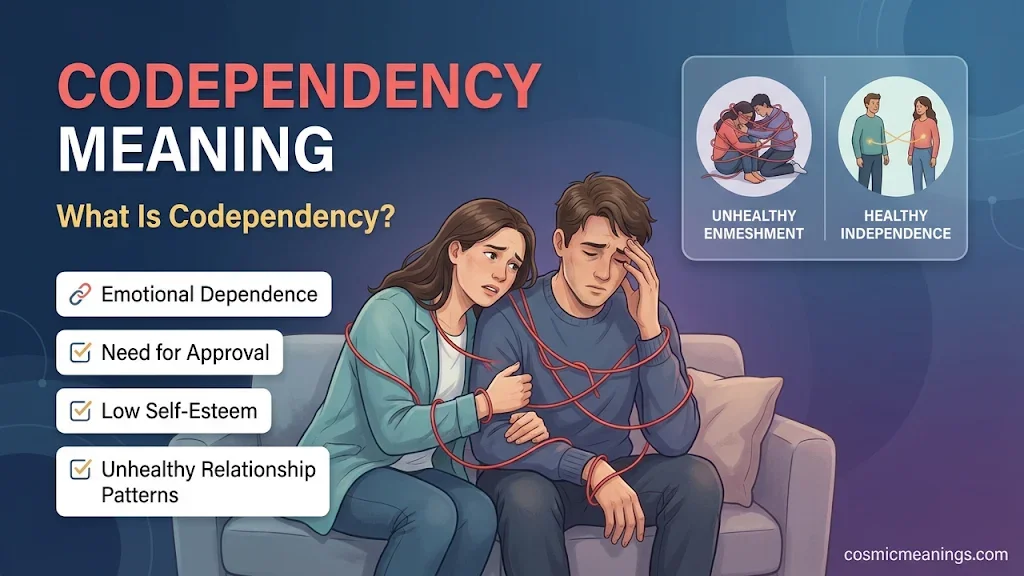
You say yes when you want to say no. You fix other people’s problems before your own. And when someone is upset, you feel it’s your job to calm things down. This pattern has a name, and understanding the codependency meaning is the first step to changing it.
In this guide, you’ll learn what codependency is, the signs to watch for, and what causes it. You’ll also get clear steps to heal from codependency and build healthier relationships.
Table of Contents
Codependency Meaning: What Is Codependency?
Codependency is an unhealthy emotional reliance on another person. The codependent person has low self-esteem and a strong need for approval. They often attach to someone who is controlling, manipulative, or struggling with addiction.
Researchers describe it in a similar way. A 2023 paper in the International Journal of Mental Health and Addiction calls it excessive emotional or psychological reliance on a partner, parent, child, or another person.
The word grew out of addiction recovery circles. Dictionary records trace its first use to 1977. At first, it described the spouses of people with alcohol or drug problems.
Today, it covers more ground. It can show up between partners, parents and children, friends, and coworkers.
One key fact: codependency is not an official diagnosis. It is not listed in the DSM and is not a personality disorder. Some experts also argue the term pathologizes caring behavior. So it is best seen as a relationship pattern, not a medical label.
While codependency often involves navigating unhealthy emotional patterns and relationship boundaries, online interactions also require awareness of digital security and privacy. Understanding CAPTCHA verification can help you recognize how websites distinguish real users from automated bots and protect sensitive online activities.
Signs of Codependency in a Relationship
The signs of codependency often look like kindness at first. Over time, they cost you your energy, identity, and peace.
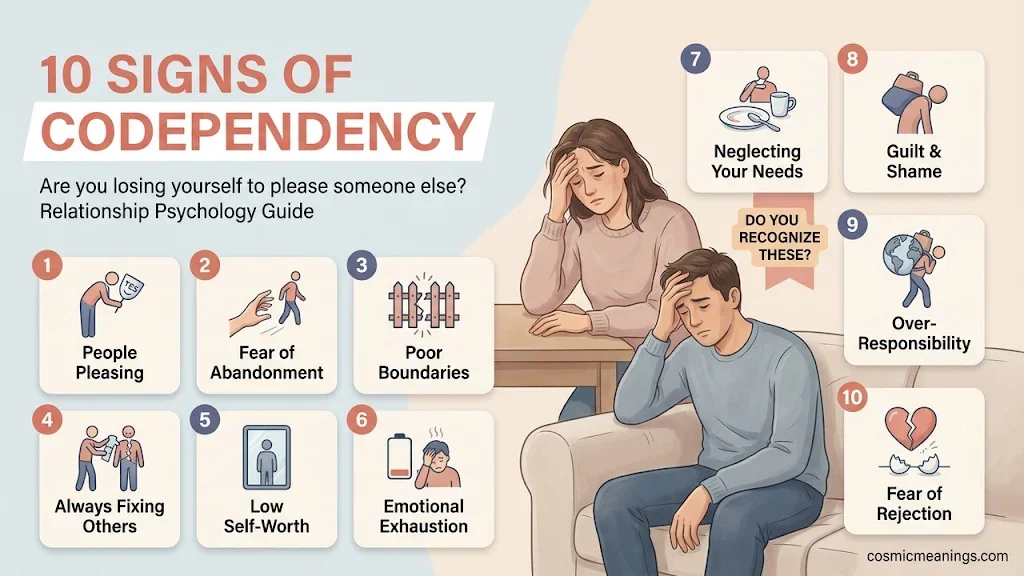
Common signs include:
- People pleasing to avoid conflict
- Caretaking at the expense of your own needs
- Poor boundaries and over-involvement in someone’s life
- Fear of abandonment or being alone
- Guilt when you stand up for yourself
- A strong need to be needed
- Trying to fix, rescue, or control others
- Low self-worth and loss of identity
- Suppressed emotions
- Emotional exhaustion and burnout
A university counseling center lists a few more. These include doubting your own decisions and feeling selfish when you do something for yourself. They also include neglecting other relationships.
What Codependency Looks Like in Real Life
The pattern changes with the setting. Here are a few examples:
- Romantic: You cancel plans to keep your partner happy, then feel resentful.
- Family: You cover for an adult child who keeps skipping responsibilities.
- Friendship: You are always the listener, but you never ask for help.
- Work: You take on a coworker’s tasks so they won’t be upset with you.
The common thread is over-giving and under-receiving. The “giver” feels needed. The “taker” grows more dependent. Both end up stuck.
Causes of Codependency
There is no single cause. Most roots trace back to early life.
A dysfunctional family is a top factor. In these homes, fear, anger, pain, or shame is ignored or denied. Children learn to bury their feelings and put others first.
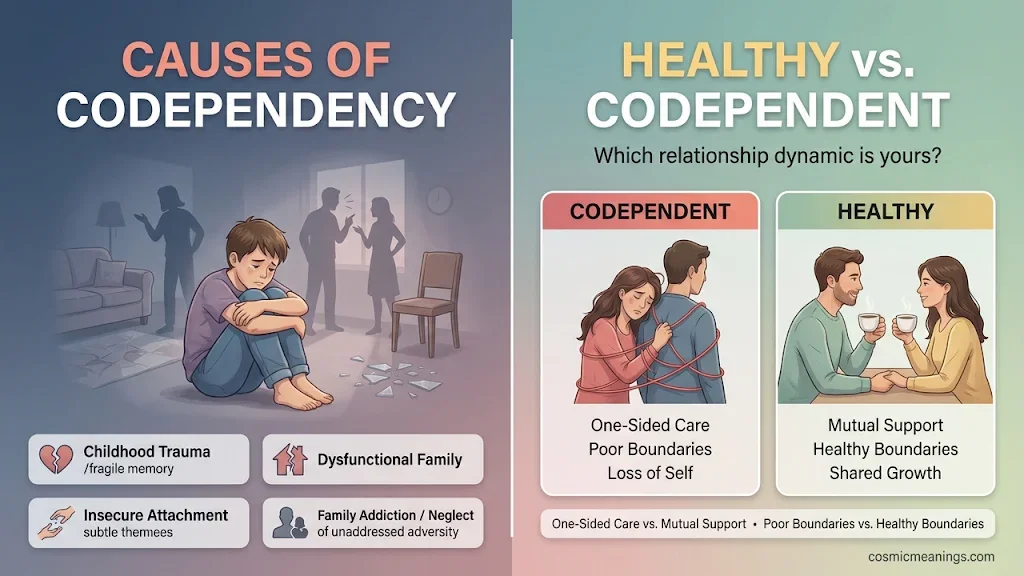
Other causes of codependency include:
- Addiction or mental illness in the family
- Neglect, emotional abuse, or childhood trauma
- Learned behavior copied from a parent or caregiver
- Shame and denial that wear down self-worth
Attachment style plays a part too. A 2023 doctoral study found that insecure styles, such as ambivalent or avoidant attachment, are linked to more codependent behavior in romantic relationships.
Still, you don’t need a hard childhood to fall into this pattern. Experts note that anyone can slip into an unhealthy relationship pattern.
Codependent vs. Healthy Relationships
Every close bond has some give and take. The difference is balance.
In a healthy relationship, both people give and receive. Each keeps a separate identity. This is called interdependence. It involves trust, healthy boundaries, and emotional regulation.
In a codependent relationship, one person becomes the constant caregiver. The other relies on that care. Both base their self-worth on how the other is doing.
Here is a quick comparison:
- Healthy: You can say no without guilt. Codependent: Saying no feels selfish.
- Healthy: You share feelings openly. Codependent: You hide them to keep the peace.
- Healthy: You support, and the other person solves their own problems. Codependent: You rescue and take over.
There is also a middle path called prodependence. Some experts describe it as helping a loved one when they truly need it, but not doing what they can do for themselves. You stay loving and keep your boundaries.
How to Heal From Codependency
You can heal from codependency. The pattern is learned, so it can be unlearned. Start small.
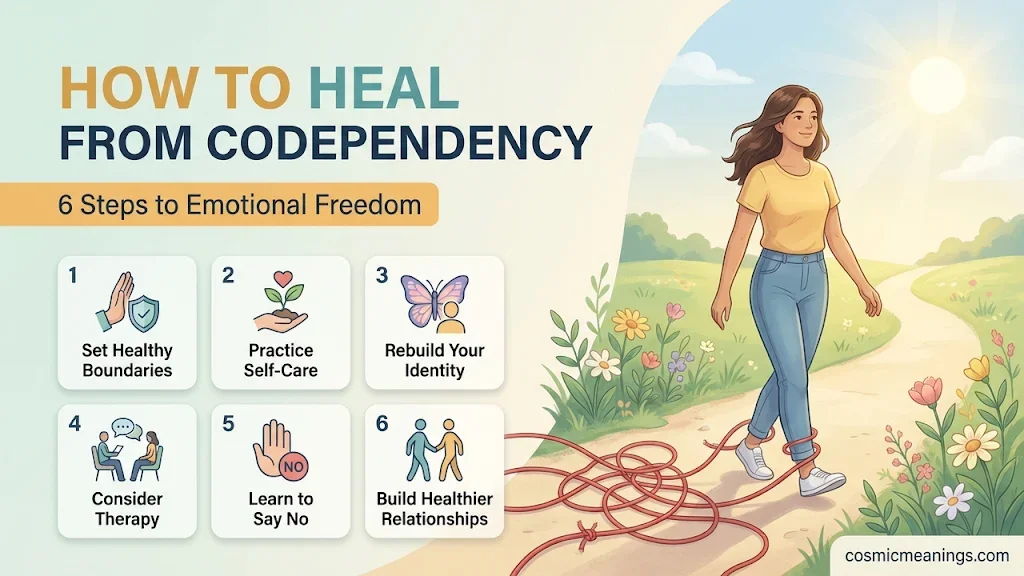
Steps for codependency recovery:
- Name the pattern. Admit that parts of the relationship may be codependent.
- Set clear boundaries. Decide what is okay and what is not. Then say it calmly.
- Pause before helping. Ask, “Is this my problem to solve?”
- Rebuild your identity. Return to hobbies, friends, and goals you dropped.
- Practice self-care. Sleep, move, eat well, and rest without guilt.
- Learn to ask for help. It is a skill, and it gets easier.
A simple boundary script can help: “I care about you, but I can’t do this for you. I can help you find someone who can.”
Therapy can speed things up. Options reviewed in the research include cognitive behavioral therapy (CBT), group therapy, and family therapy, such as Bowen family therapy. CBT helps you spot and change harsh thoughts about yourself. Group settings help you break through denial and share true feelings. Many people also join 12-step support groups built for codependency.
Books can support the work too. Popular titles include Codependent No More by Melody Beattie and Facing Codependence by Pia Mellody.
Expect setbacks. Old habits return under stress. That is normal. Progress is the goal, not perfection.
If you need help finding treatment, the SAMHSA National Helpline offers free, confidential referrals at 1-800-662-4357.
Safety note: If your partner hits, threatens, or controls you, that is abuse, not just codependency. Reach out to the National Domestic Violence Hotline at 1-800-799-7233.
FAQs
What is a codependent person?
A codependent person relies too much on others for approval, identity, and self-worth. They often put other people’s needs first. They find it hard to set boundaries. They may feel guilty or anxious when they focus on themselves.
What are the 5 core symptoms of codependency?
The five core symptoms of codependency are:
- Low self-esteem
- People pleasing
- Poor boundaries
- Need to control or fix others
- Fear of abandonment
Is codependency a form of love?
No. Love supports both people and lets each one grow. Codependency is driven by fear, guilt, and the need to be needed. It can look like love, but it leaves both people drained and stuck. The wish to care is healthy. The loss of self is not.
How do I know if I’m in a codependent relationship?
Ask yourself a few questions. Do you lose yourself in the relationship? Do you feel responsible for their feelings and choices? Do you fear being alone? Do you feel guilty when you put yourself first? Saying yes to several may point to a codependent relationship. A licensed therapist can help you confirm it.
What are 10 signs of codependency?
Ten common signs of codependency are:
- People pleasing
- Caretaking
- Poor boundaries
- Fear of abandonment
- Low self-worth
- Suppressed emotions
- Need for approval
- Controlling behavior
- Guilt when saying no
- Emotional exhaustion
Conclusion
The codependency meaning comes down to losing yourself while trying to hold someone else up. The pattern often starts in childhood, and it can show up in any close relationship. It is not an official diagnosis, but its effects on your mental health are real. The good news is that it can change. With boundaries, self-care, and therapy, you can build balanced relationships and reclaim your sense of self.

Timmy Vicky is a passionate spiritual writer, researcher, and the creative mind behind CosmicMeanings.com. With a deep fascination for the universe, symbolism, and the hidden messages of life, Timmy dedicates his work to helping people uncover the deeper meaning behind everyday experiences.