Seen DTS in a text or a Snap and not sure what it means? You’re not alone. The DTS meaning shifts with context, and the same letters can point to a casual reply or a serious medical emergency.
This guide gives you the quick answer first. Then it covers common text slang meanings, what delirium tremens is, and what to do if someone shows signs of it.
Table of Contents
What Does DTS Mean in Text and on Snapchat?
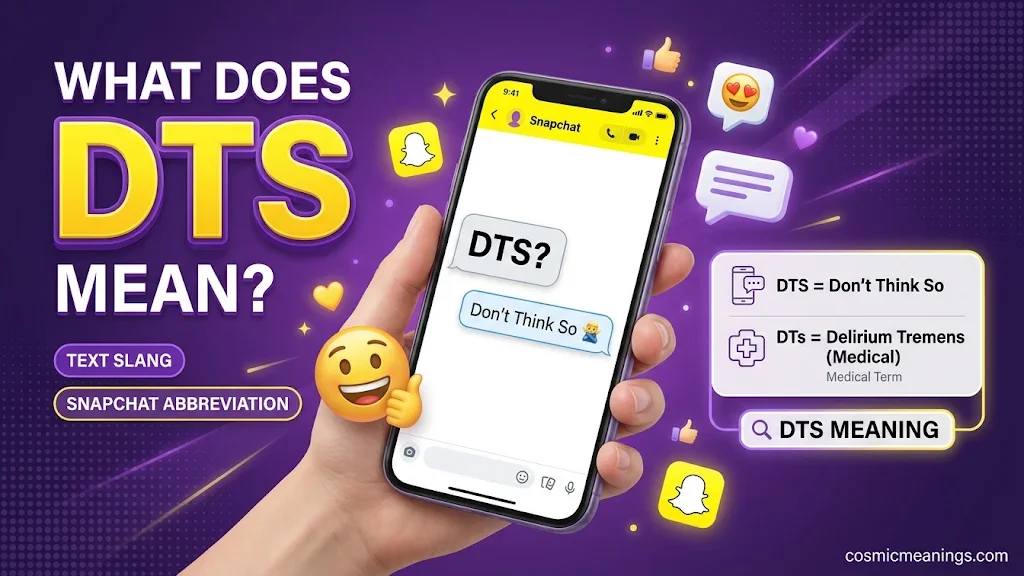
What does DTS mean on Snapchat? In most chats, DTS means “don’t think so.” It works as quick text slang on Snapchat, iMessage, and Instagram alike. Written as DTs, the letters usually mean delirium tremens, a severe form of alcohol withdrawal.
Some slang lists also report “down to smoke” and “down to snuggle.” These are rarer and depend on the group chat. Snapchat has no special meaning of its own for DTS. It simply borrows general texting abbreviations.
Standard and medical dictionaries, including a medical manual, list “the DTs” as short for delirium tremens. People even say it out loud, as in “he’s got the DTs.”
| Written as | Where you see it | Meaning | Tone |
|---|---|---|---|
| DTS | Text, Snapchat | Don’t think so | Casual |
| DTS | Some group chats | Down to smoke / down to snuggle | Casual, varies |
| DTs | Medicine, dictionaries | Delirium tremens | Serious |
While DTS is commonly used as slang on Snapchat and in text messages, not every online abbreviation has a social meaning. Some digital terms describe cybersecurity threats, such as a DDoS attack, which can overwhelm a website or server with excessive traffic and prevent legitimate users from accessing it.
DTS Slang Meaning: How to Read It in a Chat
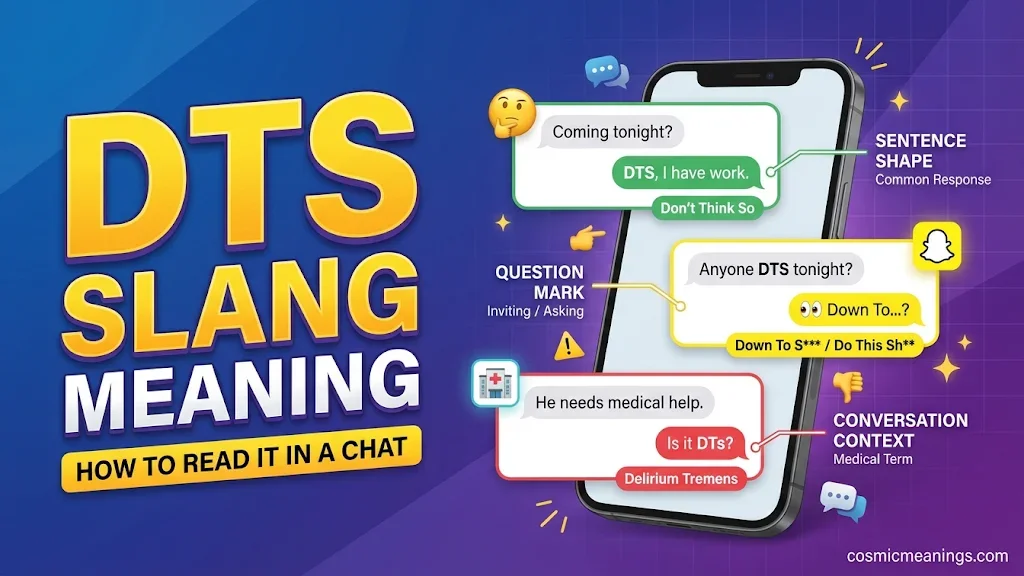
How do you tell which DTS meaning someone intends? Check the context. Three clues help most:
- The sentence shape. A statement like “DTS, I have work” answers a question. It reads as “don’t think so.”
- The question mark. “Anyone DTS tonight?” sounds like an invite. It likely means “down to” something.
- The topic. Talk about drinking, shaking, or hospitals points to delirium tremens.
If you’re unsure, ask. A short reply works: “DTS as in don’t think so?” No one minds a quick check.
Don’t mix it up with other chat acronyms. DTR means “define the relationship.” DNC means “do not care.” DTS and these three letters are easy to confuse.
What Is Delirium Tremens? Causes and Why People Get DTs
Delirium tremens (DTs) is the most severe form of alcohol withdrawal. It is also called alcohol withdrawal delirium (AWD). The name has two parts: “delirium” means sudden confusion, and “tremens” means trembling. Doctors first linked it to heavy drinking in 1813.
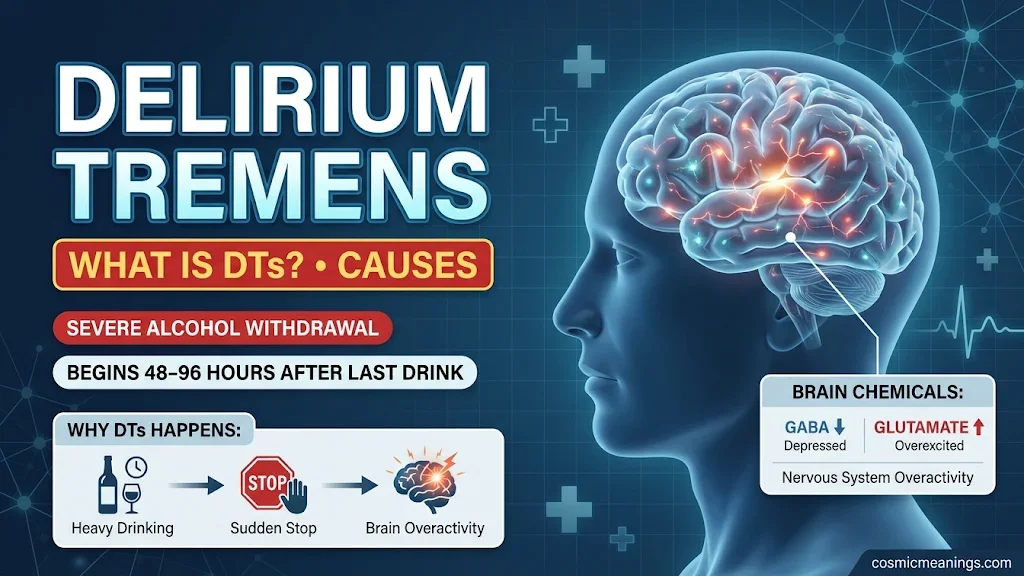
Why do people get DTs? Think of the brain’s gas pedal and brake. Alcohol is a depressant. It presses the brake on the central nervous system. With heavy, long-term use, the brain pushes harder on the gas to compensate.
Stop drinking suddenly, and the brake lifts while the gas stays down. The brain’s calming chemical, GABA, drops. The excitatory chemical, glutamate, surges. The result is a nervous system in overdrive.
How common is it? Not very. About 29% of U.S. adults will meet the criteria for alcohol use disorder at some point. Roughly 1% to 1.5% of them will have DTs. Among people who go through withdrawal, 3% to 5% develop it.
Certain risk factors raise the odds:
- Heavy drinking for years. More than 10 years is common.
- Past withdrawal seizures or earlier DTs
- Several earlier attempts to quit
- Another substance use disorder at the same time
- Older age
- Liver disease, heart disease, or poor nutrition
Heavy drinking is often defined as 15 or more drinks a week for men and eight or more for women. One night of drinking does not cause DTs. A hangover does not either.
When does it start? Symptoms often appear within 48 to 96 hours after the last drink. Some show up as late as 10 days.
DTs Symptoms, Treatment, and When to Get Help
What does delirium tremens look like? It can look like this:
- Shaking hands and tremors
- Drenching sweat and fever
- A racing heartbeat and high blood pressure
- Deep confusion and disorientation
- Hallucinations, such as seeing or hearing things that aren’t there
- Agitation, fear, or paranoia
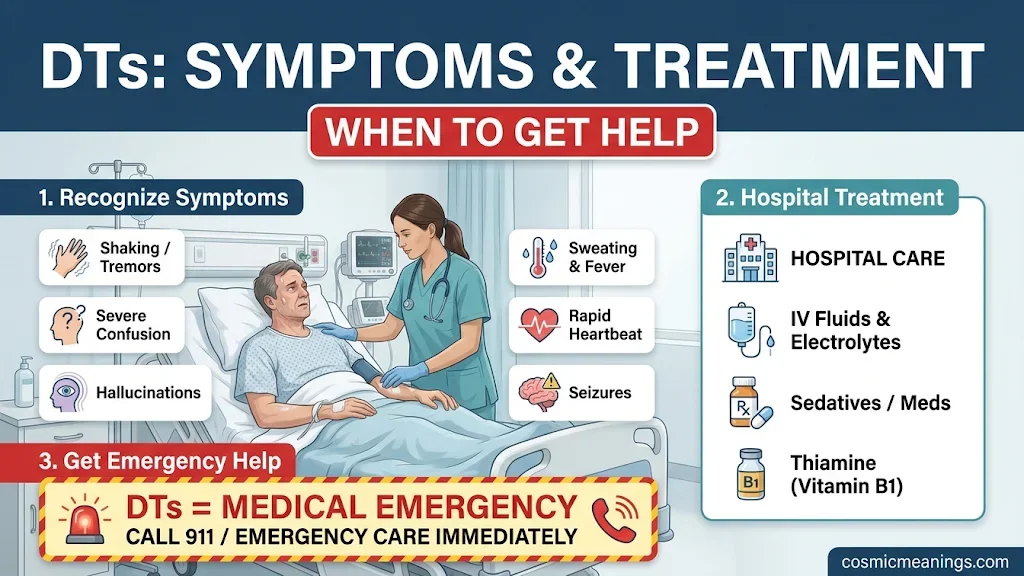
Hallucinations tend to begin within 12 hours to about 3 days after the last drink. Seizures often come earlier, in the first 12 to 48 hours.
How do doctors diagnose it? They use a physical exam, lab tests for electrolytes and organ function, and a scoring tool called CIWA-Ar. A score of about 15 or higher signals high risk.
How is it treated? Care starts in a hospital. Doctors give benzodiazepines to calm the nervous system. They also give IV fluids with vitamins, including thiamine (vitamin B1). Rarely, a patient needs general anesthesia. Severe cases may need ICU care.
Main symptoms often fade within 3 to 7 days. Without treatment, about 15% of people with DTs do not survive. With treatment, survival is about 95%.
Long-term heavy drinking can also cause Wernicke-Korsakoff syndrome. It comes from low vitamin B1 and brings memory loss, vision problems, and confusion.
What should you do if you suspect DTs? Call 911. It is a medical emergency.
If a friend texts “I’ve got the DTs,” treat it as serious:
- Call 911 or take them to the ER.
- Stay with them in a quiet, well-lit room.
- Don’t argue with what they see or hear.
- Tell responders when they last drank and how much.
Planning to quit heavy drinking? Talk to a doctor first. Don’t stop suddenly on your own. For treatment options, call the SAMHSA helpline at 1-800-662-4357 or use findtreatment.samhsa.gov.
FAQs
What does DTs mean in text?
In text, DTS usually means “don’t think so.” Some chats use it for “down to smoke” or “down to snuggle.” Context decides. Written as DTs in a health setting, it means delirium tremens.
What does it mean when someone says DTs?
Spoken aloud, “the DTs” refers to delirium tremens. It describes severe alcohol withdrawal with shaking, sweating, and confusion. If the person seems unwell, treat it as an emergency.
What does delirium tremens look like?
Look for tremors, heavy sweating, fever, a fast heartbeat, and confusion. Some people have hallucinations or seizures. Symptoms usually begin 48 to 96 hours after the last drink.
What does DTs stand for in mental health?
In mental health and medicine, DTs stands for delirium tremens. It is also called alcohol withdrawal delirium. It falls under alcohol use disorder and withdrawal care.
Why do people get DTs?
People get DTs when they stop heavy, long-term drinking suddenly. The brain loses alcohol’s calming effect and swings into overdrive. Past withdrawal seizures, older age, and other health problems raise the risk.
Conclusion
Short version: DTS in a chat usually means “don’t think so,” and the context tells you if it means something else. DTs in health means delirium tremens, a medical emergency that needs hospital care. Knowing both meanings keeps you from misreading a message. If someone shows signs of DTs, call 911 right away. This article is for information only and does not replace medical advice.

Timmy Vicky is a passionate spiritual writer, researcher, and the creative mind behind CosmicMeanings.com. With a deep fascination for the universe, symbolism, and the hidden messages of life, Timmy dedicates his work to helping people uncover the deeper meaning behind everyday experiences.