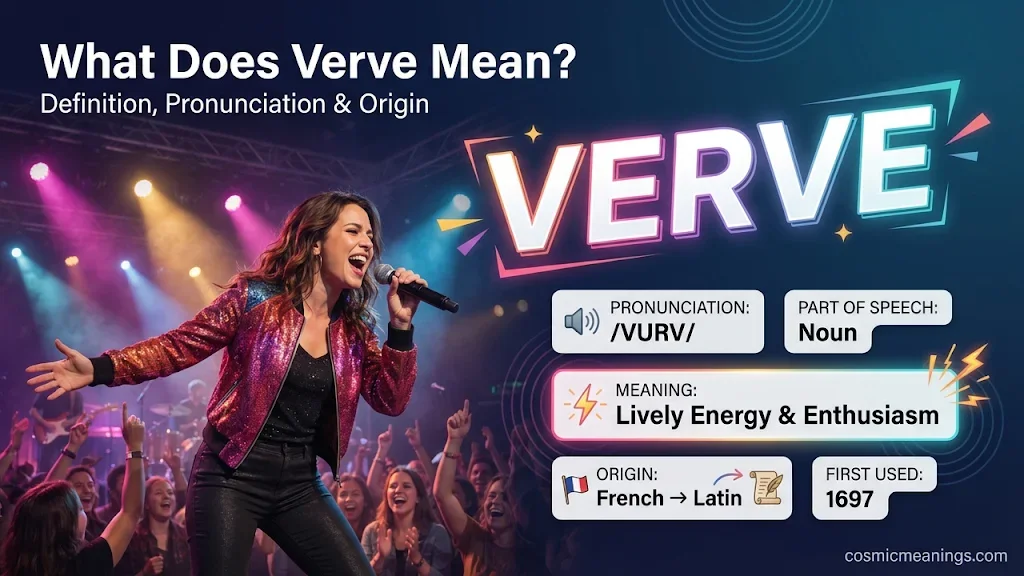
The verve meaning is simple: lively energy and enthusiasm, especially in art, music, speech, or writing. Picture a singer who owns the stage. That is verve.
This guide covers the verve definition, synonyms, origin, and verve in a sentence examples. Each section is short and easy to use.
Table of Contents
What Does Verve Mean? Definition, Pronunciation & Origin
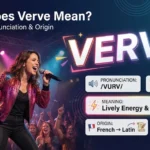
What does verve mean? Verve is a noun. It means energy, enthusiasm, and liveliness, especially in creative work.
In simple terms, a person with verve does things with spirit and style. They are not dull or flat.
A dictionary defines it as the spirit and enthusiasm found in artistic work or performance. It also lists an archaic meaning: special ability or talent.
How do you pronounce verve? In American English, say “vurv” (/vɜrv/). It has one syllable and rhymes with nerve and serve.
Is verve a noun? Yes. Oxford Learner’s Dictionaries marks it as an uncountable noun. You will rarely see the plural, “verves.”
Where does verve come from? English borrowed it from French. A dictionary traces it through Middle French and Old French to Vulgar Latin verva, and then to Latin verba, meaning “words.” Its first known use in English was in 1697, in the sense of talent.
Oxford adds that early on, the word described a special talent for writing. Over time, it grew into the lively-energy meaning we use today.
One quick note: Verve is also a brand name, and The Verve is a British rock band. This article covers the English word.
Language can express personality and enthusiasm, while emojis add another layer of meaning to digital conversations. Just as verve conveys energy and spirit, understanding the blue heart emoji meaning can help you interpret the emotions and intentions behind someone’s text.
Verve Synonyms and Antonyms: Similar Words Compared
What is a synonym for verve? Common synonyms include vitality, vigor, zest, gusto, élan, vivacity, vim, zeal, panache, and spirit. Oxford Learner’s Dictionaries lists gusto as a direct match.
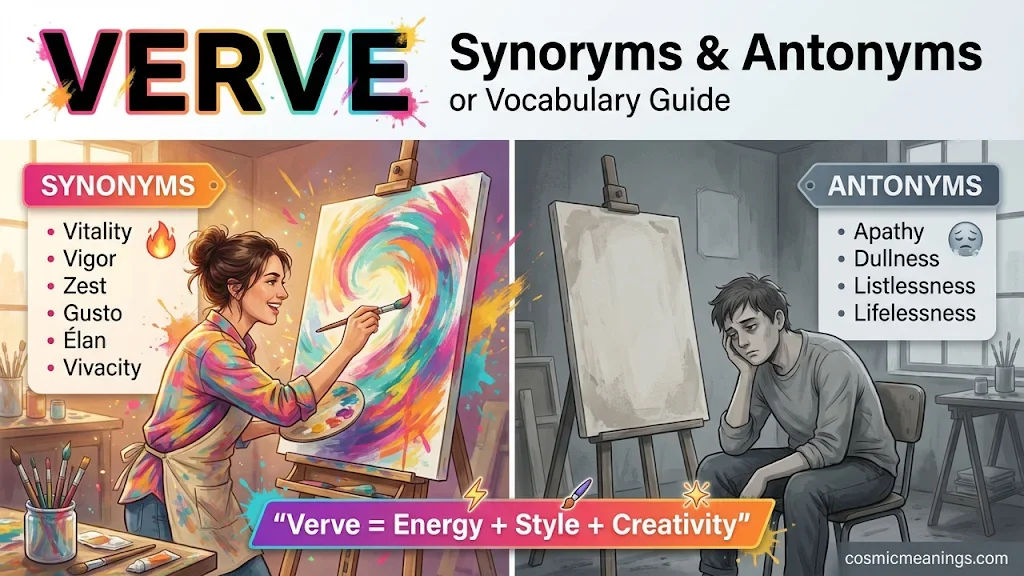
What is the opposite of verve? Good antonyms are apathy, dullness, listlessness, lifelessness, and sluggishness.
These words are close, but they are not twins. Here is how they differ.
| Word | Meaning | How it differs from verve | Example |
|---|---|---|---|
| Energy | Power to act | Broader. Not tied to style. | She has lots of energy. |
| Enthusiasm | Strong interest | Focuses on eagerness. | He showed real enthusiasm. |
| Vigor | Physical or mental strength | Stresses force. | The team trained with vigor. |
| Zest | Joyful eagerness | Often about enjoying life. | She cooks with zest. |
| Gusto | Hearty enjoyment | More casual. Often food or fun. | They sang with gusto. |
| Élan | Style and flair | More about confidence and polish. | He moved with élan. |
| Vivacity | Bright liveliness | Often describes a person. | Her vivacity lit up the room. |
Which one should you pick? Use verve for expressive, creative energy. Use gusto for casual fun. Use vigor for strength.
Verve in a Sentence: Examples for Every Context
Seeing verve examples makes the word easy to learn. Here are original ones, grouped by use.
Performance and music
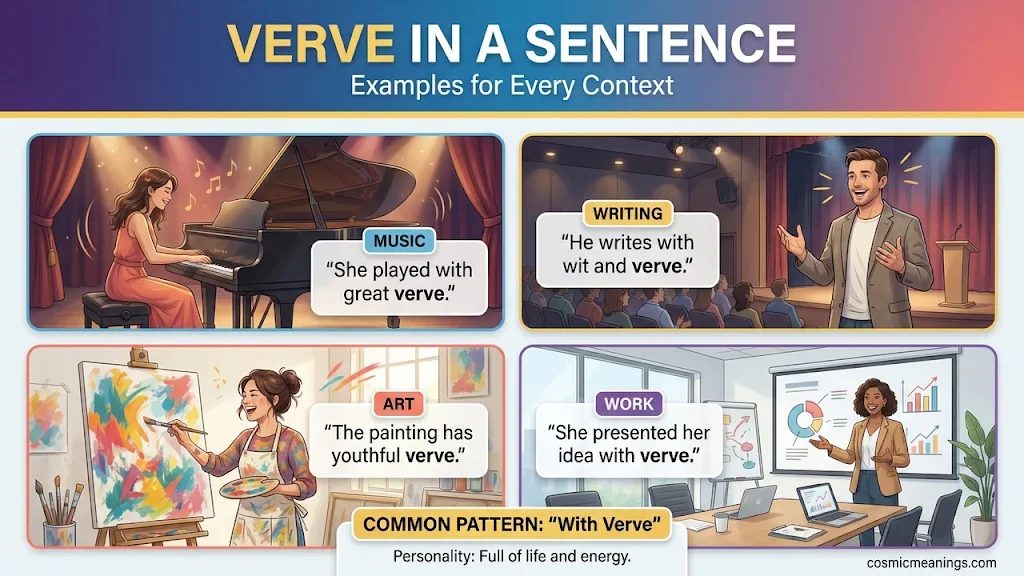
- “The pianist played the final piece with great verve.” (She played with passion and energy.)
- “The Broadway cast sang with verve, even in the last show of the week.” (They stayed lively and expressive.)
Writing and speaking
- “The author tells her story with wit and verve.” (Her writing feels lively and fun.)
- “He gave his speech with so much verve that nobody checked their phone.” (It held the crowd’s attention.)
- “The podcast host brings verve to every episode.” (She makes each show feel fresh.)
Art and design
- “The painting is full of youthful verve.” (It looks bold and alive.)
Work and school
- “The startup founder pitched her idea with verve.” (She spoke with energy and belief.)
- “The new designer brought fresh verve to our team.” (She added creative spark.)
Personality
- “My grandmother still has the verve of a teenager.” (She is full of life.)
Negative use
- “The sequel lacks the verve of the first film.” (It feels flat by comparison.)
Quick chat example
Maya: Did you see Jordan’s talk today? Leo: Yes. He spoke with real verve. Maya: Agreed. It never felt boring.
Sentence patterns to remember: with verve, full of verve, lacks verve, and bring verve to.
How to Use Verve Correctly: Common Mistakes & Collocations
Most errors with how to use verve come from one idea: verve is not just “energy.” It is energy with style and personality.
Common mistakes
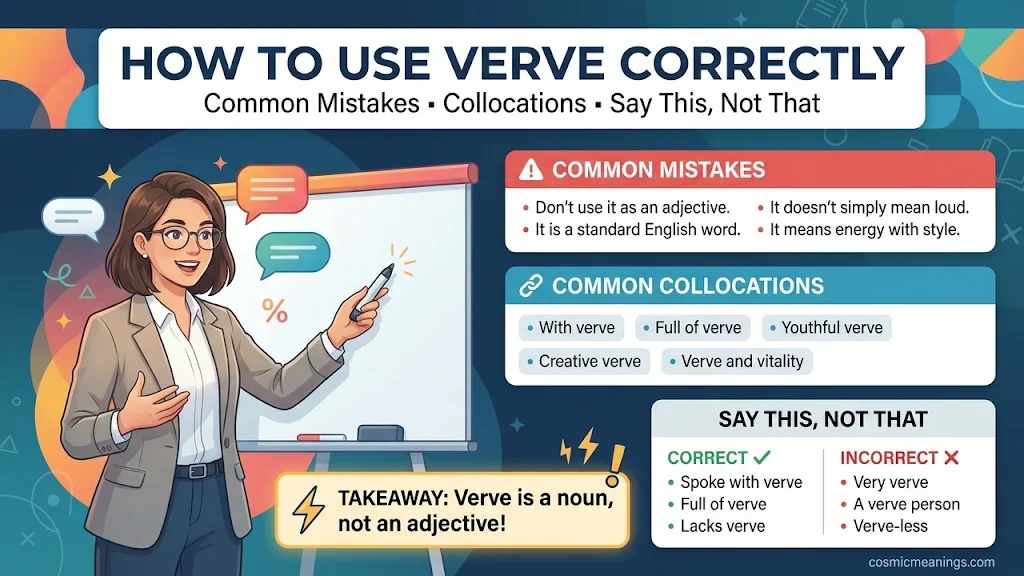
- Using it as an adjective. Say “a dancer with verve,” not “a verve dancer” or “very verve.”
- Thinking it means loud. A quiet pianist can play with great verve.
- Treating it as slang. It is a standard English word with a long history.
- Using it for dull tasks. “She folded laundry with verve” sounds odd unless you are joking.
- Mixing it up with confidence. A person can be confident and still have little verve.
Common collocations (words that often appear with verve)
- with verve
- full of verve
- youthful verve
- creative verve
- verve and vitality
- verve and gusto
Say this, not that
| Say this | Not this |
|---|---|
| She spoke with verve. | She spoke very verve. |
| The show lacks verve. | The show is verve-less. |
| A performance full of verve. | A verve performance. |
When should you use it? Verve fits reviews, speeches, essays, and professional writing. In a quick text, a simpler word like “energy” often sounds more natural.
FAQs
What is the full meaning of verve?
Verve is a noun that means lively energy, enthusiasm, and spirit, especially in creative or artistic expression. An older, archaic sense means special talent. Today, people use it to praise energetic performances, writing, and personalities.
What is a synonym for verve?
The best synonyms are vitality, vigor, zest, gusto, élan, and vivacity. Each one has a slightly different feel. Verve stands out because it ties energy to style and creativity.
Is verve a French word?
English borrowed it from French. The French word comes from Old French and Latin verba, meaning “words.” Today, verve is a fully accepted English word, and you will find it in every major US dictionary.
Does it verve meaning?
This looks like a typo for “What does verve mean?” The short answer: verve means energy and enthusiasm shown in a lively, expressive way. For example, “She danced with verve.”
What is verve used for?
People use verve to describe the energy of a performance, speech, painting, book, or personality. It is common in reviews, news writing, and workplace praise. It is also used as a brand name and a band name.
Conclusion
The meaning of verve is lively, expressive energy. It started as a word for writing talent and grew into a word for passion and style. Strong synonyms include vitality, zest, gusto, and élan, while apathy and dullness are its opposites. Remember that verve is a noun, so use it in phrases like “with verve” or “full of verve.” Try it in your next review, speech, or caption.

Timmy Vicky is a passionate spiritual writer, researcher, and the creative mind behind CosmicMeanings.com. With a deep fascination for the universe, symbolism, and the hidden messages of life, Timmy dedicates his work to helping people uncover the deeper meaning behind everyday experiences.