What does herpetofauna mean? It means the reptiles and amphibians of one place, grouped together. Think of the snakes, lizards, turtles, frogs, and salamanders living in a single forest, pond, or desert.
This guide gives you the herpetofauna definition in plain words. You will also see real examples from the USA, how scientists track these animals, and quick answers to common questions.
Table of Contents
What Is the Herpetofauna Meaning in Simple Words?
Herpetofauna is a collective term for the reptiles and amphibians of a region, habitat, or time period. In everyday English, you can say “the reptiles and amphibians of an area.”
The word is not a species. One snake is not “a herpetofauna.” The whole group is.
The term comes from New Latin. It joins herpet- with fauna, as shown in this dictionary entry. The root traces back to a Greek word for “creeping” animals. That fits, since many of these animals crawl, slither, or hop.
Here is a simple way to keep the related words straight:
Term
Simple meaning
Herpetofauna
The animals: reptiles and amphibians together
Herpetology
The study of those animals
Herpetologist
A scientist who studies them
Herp
Casual word for a reptile or amphibian
Use it like this: “The park supports a rich herpetofauna.” The word is uncountable, so you rarely add an “s.”
One small note: some dictionaries list only reptiles in the entry. In science and wildlife work, the term covers amphibians too.
Understanding herpetofauna highlights the diversity of life and the fascinating ways animals adapt to their environments. Similarly, exploring human behavior and personal choices can reveal different ways people approach relationships and intimacy, including the concept of celibacy and voluntary sexual abstinence.
Examples of Herpetofauna You Can Name
Herpetofauna splits into two big groups. Each one has familiar animals.
Amphibians include:
Frogs
Toads
Salamanders
Newts
Caecilians (legless, worm-like amphibians)
Reptiles include:
Snakes
Lizards
Turtles and tortoises
Crocodiles and alligators
Tuataras
Many US examples fit here. The American alligator, common garter snake, Western rattlesnake, American bullfrog, Western toad, and rough-skinned newt are all herpetofauna.
Birds, mammals, and fish are not. They are different animal groups.
Wildlife agencies show how rich this group can be. Washington State alone is home to at least 25 amphibian species and 28 reptile species.
Two quick sentences show correct use:
Researchers surveyed the herpetofauna of the national park.
Habitat loss can harm local herpetofauna.
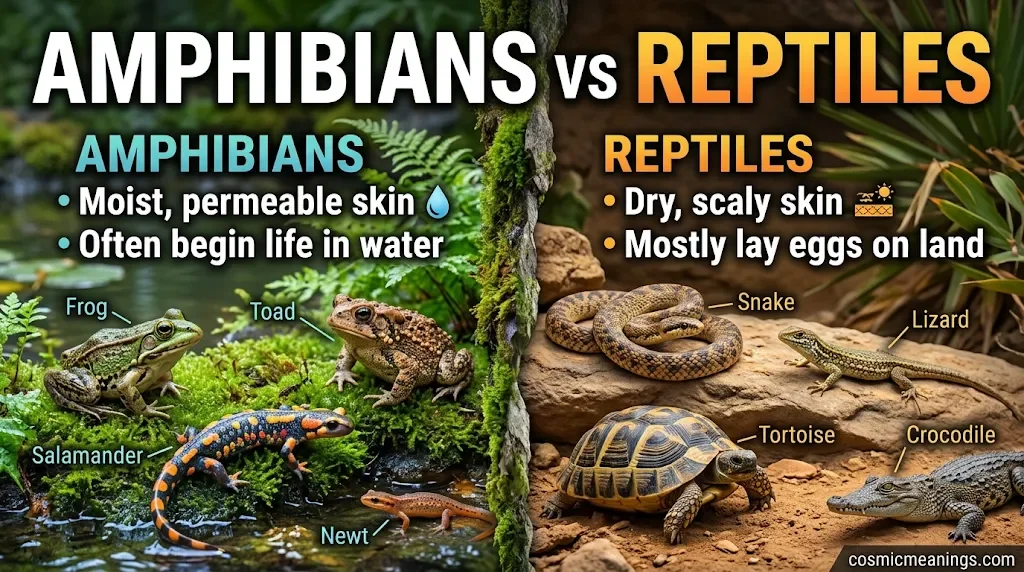
Amphibians vs. Reptiles in Herpetofauna
Scientists study these two groups together. Still, they are not the same.
Trait
Amphibians
Reptiles
Skin
Thin, moist, permeable skin
Dry, scaly skin
Life cycle
Often water first, then land (tadpole to frog)
Mostly land-based
Eggs
Usually laid in or near water
Usually laid on land
Examples
Frog, newt, salamander
Snake, lizard, turtle
Both groups share one key trait. Most are ectotherms. They cannot make their own body heat, so they bask in the sun to warm up and hide in shade to cool down, as the Washington wildlife agency explains.
Amphibians also breathe through their skin. That skin can soak up oxygen. It can soak up harmful chemicals too.
Scales help reptiles hold in water. That is why so many reptiles thrive in dry places.
Why Herpetofauna Matters in Nature
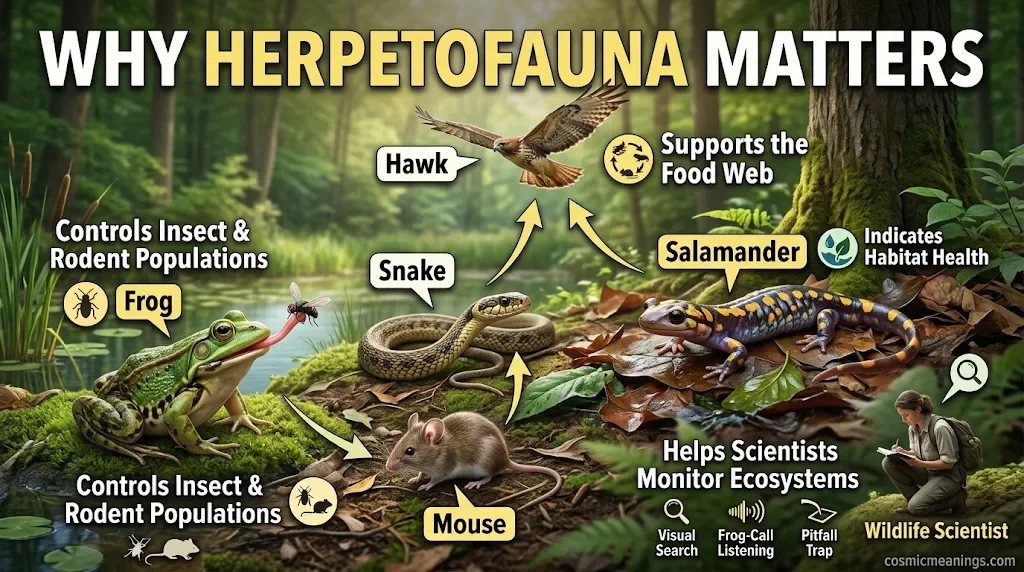
Reptiles and amphibians play two roles in the food web. They are both predators and prey.
Frogs eat insects. Snakes eat rodents. Hawks, herons, and foxes eat them in turn. Western rattlesnakes, for example, eat rodents that can spread diseases such as Hantavirus and Lyme disease. That helps keep small mammal populations in check, according to Washington’s wildlife agency.
They also add up to a lot of living weight. In forests, salamanders often have the greatest biomass of any vertebrate group, even though people rarely see them. This comes from a long-term Missouri forest study.
Amphibians react fast to change. Their permeable skin makes them sensitive to water quality, habitat loss, and shifts in moisture. Scientists often study amphibians to learn how healthy a wetland is.
How do scientists track herpetofauna? They use herpetofauna monitoring. Common methods include:
Visual searches
Listening for frog and toad calls
Drift fences that guide animals into traps
Pitfall traps
Mark-recapture studies
The Missouri study has run since 1992. It uses 108 sampling arrays across nine sites, with traps checked daily and animals released unharmed. One finding so far: no species has severely declined because of forest management.
Where Herpetofauna Lives Across the USA
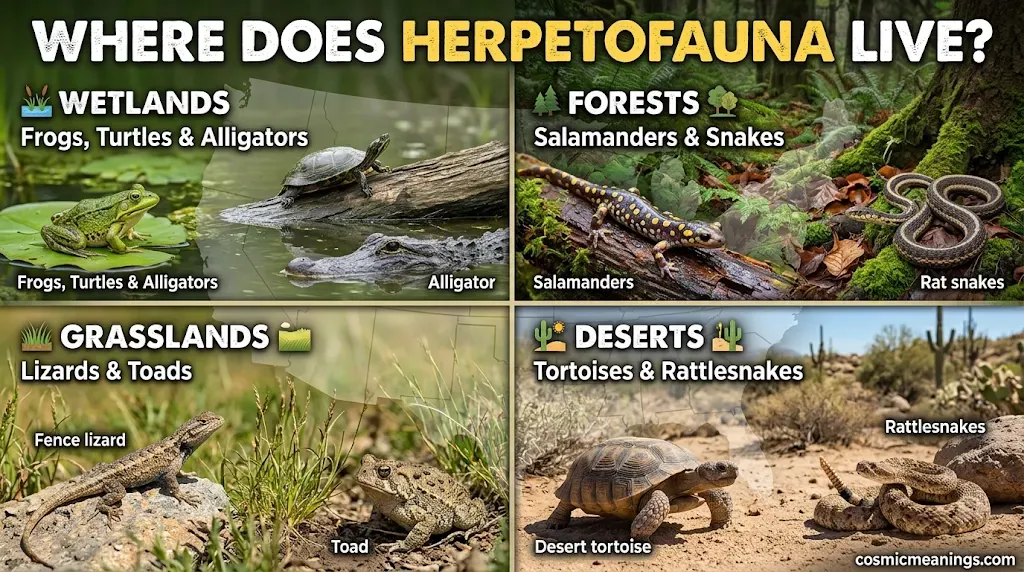
Herpetofauna lives almost everywhere. The mix of species changes with the habitat.
Wetlands: frogs, turtles, salamanders, water snakes, and alligators in warm regions
Forests: salamanders, frogs, snakes, and lizards that use leaf litter and fallen logs
Grasslands: snakes, lizards, toads, and box turtles
Deserts: lizards, snakes, tortoises, and toads built for heat and thin water supplies
Slope direction matters too. In the Missouri study, lizards and most snakes showed up more on drier, sunnier south- and west-facing slopes. Salamanders and some frogs favored cooler, moister north- and east-facing slopes.
Many people enjoy herping. That means walking outdoors to look for reptiles and amphibians. Wear boots, bring a field notebook, and keep your distance from snakes. Stay at least six feet away, and never pick one up if you cannot name it.
You can also help science. Many wildlife agencies accept photo reports of sightings from the public.
FAQs
What do you mean by herpetologist?
A herpetologist is a scientist who studies reptiles and amphibians. Their field is herpetology. They may study behavior, habitat, disease, or population trends.
What is a herpetophile?
A herpetophile is a person who loves reptiles and amphibians. This may be a hobbyist, a pet keeper, or a weekend herper. Unlike a herpetologist, a herpetophile does not need formal science training.
What are some examples of herpetofauna?
Common examples are frogs, toads, salamanders, snakes, lizards, turtles, tortoises, crocodiles, and alligators. In the USA, think of the American alligator, garter snake, bullfrog, and Western rattlesnake.
What is an amphibian?
An amphibian is a cold-blooded vertebrate with thin, moist skin. Most start life in water and later move to land. Frogs, toads, newts, and salamanders are amphibians.
Is a crocodile an amphibian?
No. A crocodile is a reptile. It has dry, scaly skin and lays hard-shelled eggs. It spends time in water, but that does not make it an amphibian.
Conclusion
Herpetofauna means the reptiles and amphibians of a place, seen as one group. It covers frogs, toads, salamanders, snakes, lizards, turtles, and crocodilians. Remember the simple split: herpetofauna is the animals, and herpetology is the study of them. These animals feed on pests, feed other wildlife, and warn us when habitats are in trouble. Learning the term helps you read wildlife news and nature guides with confidence.
Timmy Vicky is a passionate spiritual writer, researcher, and the creative mind behind CosmicMeanings.com. With a deep fascination for the universe, symbolism, and the hidden messages of life, Timmy dedicates his work to helping people uncover the deeper meaning behind everyday experiences.