You see “I’m finna eat” in a text. Or “finna log off” under a TikTok. What does it mean?
Finna means “fixing to.” It tells you someone is about to do something or plans to do it soon. Here is how the finna meaning changes on TikTok, Snapchat, and in texting, plus where the word comes from and how to use it.
Table of Contents
What Does Finna Mean in Texting and Slang?
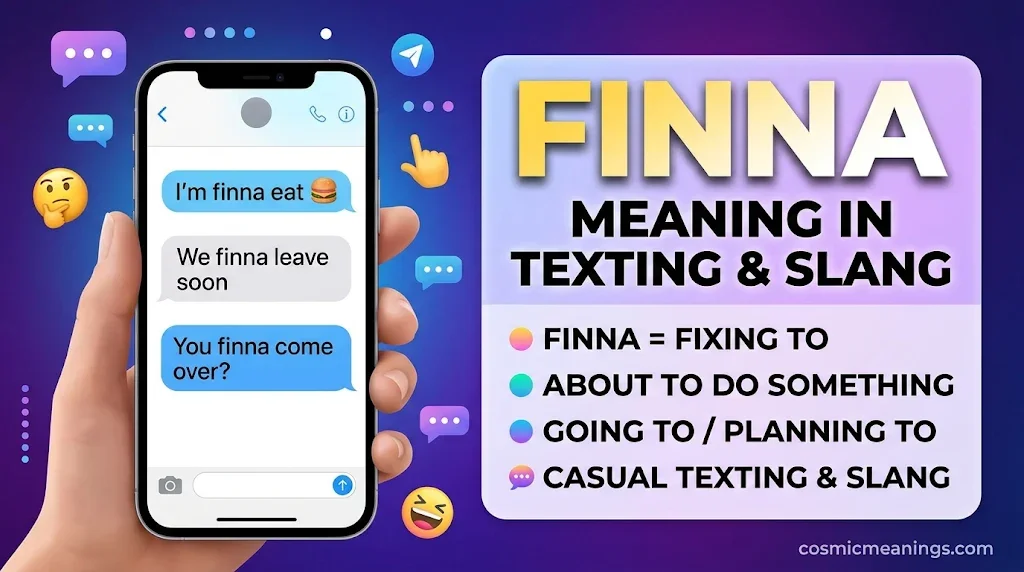
The finna meaning in text is simple. It stands for “fixing to,” “about to,” “going to,” or “intending to.”
Think of it as a quick way to share a plan. It is informal, and it fits casual conversation best.
Here is how it reads in text messages:
| Text | Plain meaning |
|---|---|
| “I’m finna eat.” | I’m going to eat. |
| “We finna leave.” | We’re about to leave. |
| “You finna come over?” | Are you going to come over? |
| “She finna call you.” | She is going to call you. |
Timing depends on context. “I’m finna leave right now” means soon. “I’m finna start studying tonight” is a plan, not an instant action.
Tone also shifts with the message. It can sound like a plan, a warning, or a joke. “You finna miss the bus” is a warning. “I’m finna get my life together” over a messy room is a joke.
While “finna” is commonly used in casual online conversations to express an intention or upcoming action, internet slang also includes terms that describe specific relationship dynamics and personal lifestyles. One example is the meaning of DDLG, a term worth understanding to recognize its context and how it is used in online discussions.
Finna Meaning on TikTok and Snapchat
Finna meaning on TikTok is the same, but the style changes. Creators use it in captions, comments, and voiceovers to set up a quick action or a funny moment.
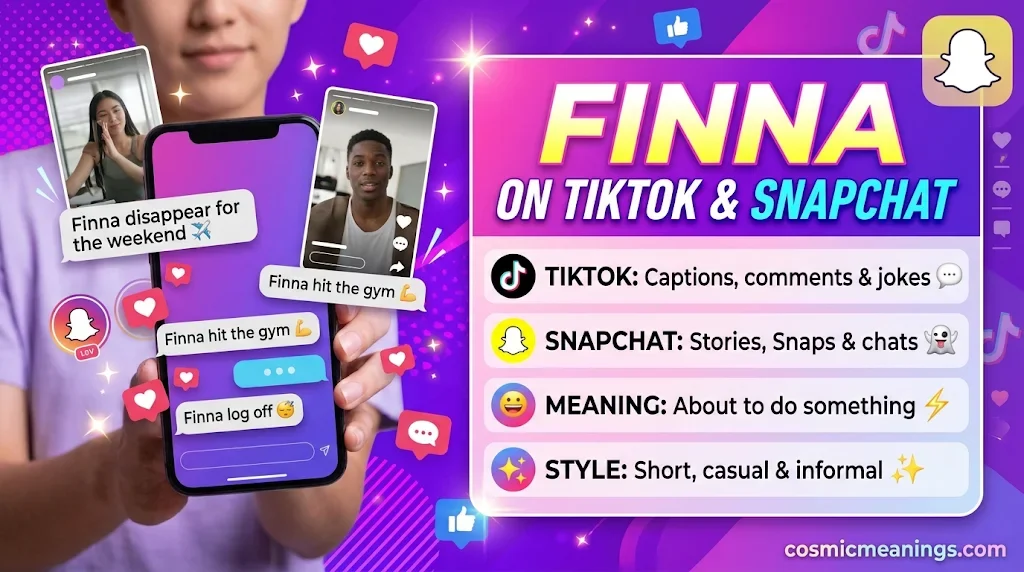
These are examples of the style, not quotes from real posts:
- “Finna disappear for the weekend.”
- “Finna try this recipe. Wish me luck.”
- “Finna log off before I say something wild.”
Finna meaning on Snapchat is more like a live update. People use it in Snaps, Stories, and chats to tell friends what they are doing next. “Finna hit the gym” or “finna grab food” are typical.
Why does it work so well online? It is short. It sounds relaxed. And it sets up a punchline fast, which suits short-form video and social media captions.
Where Does Finna Come From?
Finna is a tight contraction of “fixing to.” The longer phrase has deep roots in Southern American English. The Dictionary of American Regional English traces “fixing to” back to the 1930s. Linguists think it may trace to Scots-Irish speech.
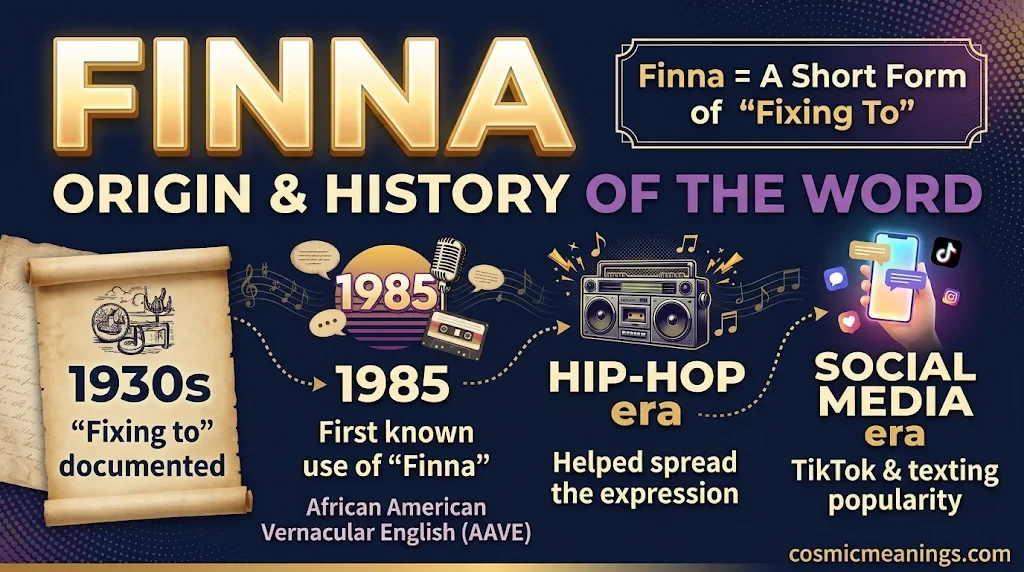
The short form finna is strongly tied to African American English (AAE), also called African American Vernacular English (AAVE). A major U.S. dictionary lists the first known use of finna in 1985.
Hip-hop then carried the word to a much wider audience. A language radio show notes that hip-hop lyrics helped spread finna to people with no Southern or African American ties. Later, social media and texting pushed it even further. In one famous example, Lil Nas X used it while joking before a big show.
Here is a fact many people miss. Finna is not just internet slang. It was in speech long before TikTok.
Linguists also study it as real grammar. Researchers Julia Thomas and Timothy Grinsell wrote that finna works as a marker of the near future in African American English. It often points to a closer moment than gonna does.
How to Use Finna in a Sentence
The common pattern is easy: subject + finna + base verb.
- “I finna leave.”
- “We finna eat.”
- “They finna win.”
Many speakers also say “I’m finna.” Both forms are common.
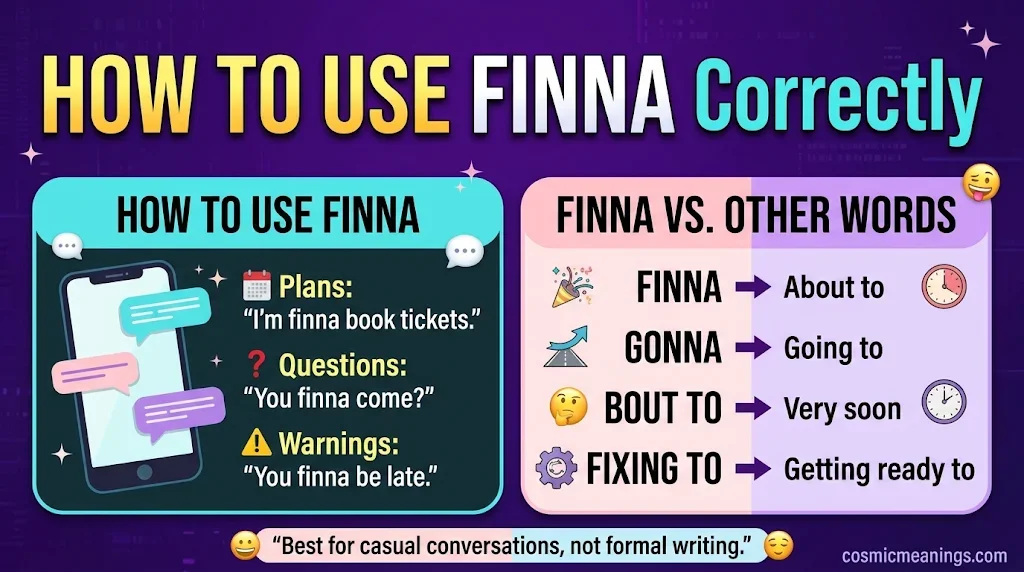
Use it for three things:
- Plans: “I’m finna book my tickets tonight.”
- Questions: “You finna come to the game?”
- Warnings: “You finna be late.”
Avoid these mistakes:
- Mixing it up with “wanna.” “I wanna eat” shows desire. “I’m finna eat” shows intent.
- Assuming it always means “right now.” Context sets the time.
- Using it in formal writing. In a school paper or work email, write “going to,” “plan to,” or “intend to.”
One more tip on respect. Finna is a real part of African American English. Using it naturally is fine. Mocking the dialect is not.
Finna vs. Gonna, Bout To and Fixing To
These words overlap, but they are not identical.
| Word | Meaning | Best fit |
|---|---|---|
| Finna | About to, intending to | Near-future plans in casual talk |
| Gonna | Going to | Near or far future, used widely |
| Bout to | About to | Something happening very soon |
| Fixing to | Getting ready to | Southern speech, often more relaxed |
For example, “I’m gonna visit Japan next year” sounds natural. “I’m finna visit Japan next year” may sound odd to some speakers, since finna leans toward the near future.
FAQs
What does finna slang mean?
Finna means “fixing to.” It says someone is about to do something or plans to do it soon. For example, “I’m finna eat” means “I’m going to eat.”
Is finna black slang?
Finna is strongly linked to African American English (AAE). It also has Southern roots through “fixing to.” Dictionaries and linguists treat it as a real feature of speech, not just slang. People from many backgrounds use it today.
How to use finna correctly?
Put it before a verb. Say “I’m finna leave” or “We finna eat.” Use it for plans, questions, and warnings in casual talk. Skip it in formal writing.
Why does Gen Z say finna?
It is short, casual, and fast to type. Hip-hop, TikTok, and Snapchat made it common among young people. It also works well in captions and jokes.
Why do people say I’m finna?
People say “I’m finna” to share what they plan to do next. It is a relaxed way to say “I’m about to” or “I’m going to.” The phrase comes from “fixing to,” so it carries a Southern and AAE flavor.
Conclusion
Finna means “fixing to,” or about to do something. You will see it in texts, on TikTok, and on Snapchat. Its roots go back to Southern speech and African American English, long before social media. Context tells you if it is a plan, a warning, or a joke. Use it in casual talk, and switch to “going to” in formal writing.

Timmy Vicky is a passionate spiritual writer, researcher, and the creative mind behind CosmicMeanings.com. With a deep fascination for the universe, symbolism, and the hidden messages of life, Timmy dedicates his work to helping people uncover the deeper meaning behind everyday experiences.